
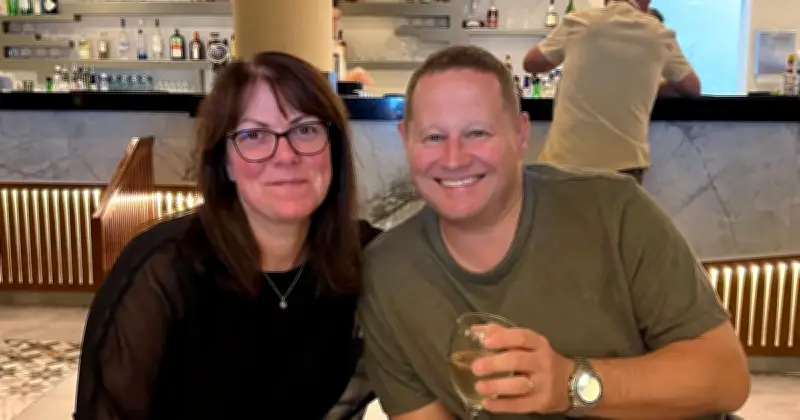
The first patient on a cutting-edge UK-led clinical trial has shared his hopes that it will transform blood cancer treatment and help thousands of others. The TOPICAL trial, launched by The Christie NHS Foundation Trust in Greater Manchester, is testing an experimental anti-inflammatory drug called POLB 001 to prevent a dangerous side-effect of immunotherapy.
Blood cancers such as leukaemia, lymphoma, and multiple myeloma develop in the bone marrow, where they multiply and affect blood cells. Immunotherapy is a powerful treatment, but 70% of patients can suffer Cytokine Release Syndrome (CRS), a potentially dangerous reaction that sends a quarter of them into intensive care.
First patient's story
Jason Walker, a decorator from Longridge, Lancashire, is the trial's first recruit. He was 45 when persistent back pain and double vision led to a diagnosis of stage 3 multiple myeloma in February 2014, which he was told was terminal. After starting chemotherapy, he suffered a heart attack at work, which he fears was caused by a blood clot possibly due to the treatment. He said: "It was frightening, but thankfully I recovered."
Over the past decade, Jason has had two stem cell transplants and enjoyed five years in remission. However, last November, soft lumps on his head led doctors to discover his myeloma had relapsed. After being unable to tolerate a three-drug combination, he was referred to The Christie's trial team and became the TOPICAL trial's first recruit.
Three weeks ago, Jason, now 57, started 14 cycles of treatment. He has been feeling great and even attending circuit training, as the new drug appears to be stopping the side-effects of immunotherapy. He said: "I feel very lucky to be on the trial and I hope it works, not just for myself, but for the wider myeloma warriors out there. If taking part helps improve treatment for others, that's really worthwhile."
He added: "I've been living with this disease for 12 years and you have to keep looking forward. I'll keep fighting and making the most of every day. Any hope in a difficult situation is good. I feel blessed to be on the trial, it's like I've won something better than the lottery."
Hope for home treatment
Jason and his wife Michelle have two grown-up children and are grandparents to their son Oliver's seven-year-old daughter Harper. They are also looking forward to their daughter Abbey's wedding in Montenegro next May. Jason said: "I need to get through this as I'm giving her away and want to be well enough to walk my beautiful daughter down the aisle!"
Dr Emma Searle, consultant haematologist at The Christie, said: "Immunotherapy treatments are transforming survival rates for patients with difficult-to-treat blood cancers, but their use will continue to be restricted until we find a way to deliver them safely outside of specialist hospitals. Because of the risk of CRS, which can be dangerous, many patients can't be treated near to home which is a real problem."
She added: "Many patients have to stay in hospital to receive immunotherapy and some must travel long distances for treatment in specialist centres. If this new therapy can safely reduce the risk of CRS, it could help give these treatments near to or in peoples' homes. Ultimately, our aim is to help more patients benefit from these life-saving therapies while reducing the burden of treatment on patients, families and the NHS."
Cyclist's life-changing trial
Bob Munro, 66, from Windsor, can testify to the effectiveness of one of the immunotherapy drugs used in the trial. Diagnosed with myeloma in 2012, he was kept alive by a series of new treatments until 2022, when he had exhausted them all. He then joined a clinical trial for teclistamab, a T-Cell engaging immunotherapy now used in the TOPICAL trial. That decision proved life-changing.
Although Bob suffered CRS, multiple infections, and COVID-19 during the teclistamab trial, it proved effective. By early 2023, he was in remission for the first time in 11 years, where he remains today. He has just completed the biggest amateur cycling challenge there is – riding all 2,000 miles of the 2025 Tour de France route, one week ahead of the professional race. His team aims to raise £1 million for the blood cancer charity Cure Leukaemia, which will fund a research nurse for the TOPICAL trial.
Bob believes POLB 001 could transform the experience of many patients and free up hospital beds. He said: "This drug is very encouraging and could have made a huge difference to me and my family, both by alleviating the side effects and reducing the time spent in hospital. It has real potential to help patients and give them more access to new drugs because they can be treated closer to home and not in specialist centres. There are also significant health economic benefits, as patients would not need to take up a hospital bed for as long."
Trial details
The TOPICAL trial plans to recruit around 30 patients with relapsed or treatment-resistant multiple myeloma. Participants will receive POLB 001 alongside an approved bispecific antibody therapy like teclistamab. The research will take place at the National Institute for Health and Care Research (NIHR) Clinical Research Facility (CRF): Manchester, at The Christie, among other sites.
Co-chief investigator Dr Rakesh Popat, a consultant haematologist at University College London Hospitals NHS Foundation Trust, said: "While CRS in the most part is manageable, it leads to increased use of hospital resources for close monitoring and administration of treatment once it occurs. Having an oral preventative treatment can help reduce this and make the treatment easier for patients."




