

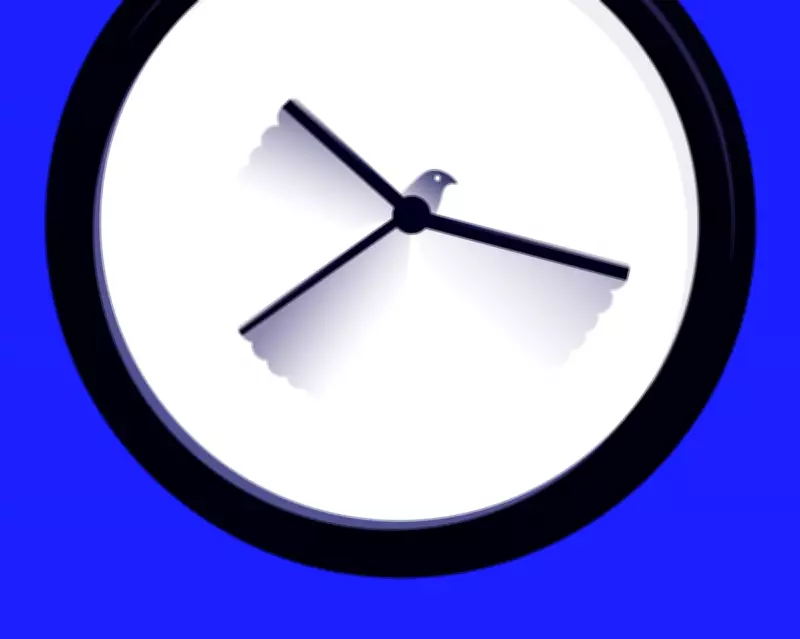
The Elusive Nature of Time: A Scientific and Psychological Exploration
When was the last time you found yourself racing against an unforgiving clock? Perhaps you skipped breakfast, broke a sweat, hailed a costly taxi, or sacrificed precious moments with loved ones. Many of us have become slaves to time, dedicating huge portions of our days to chasing appointments and deadlines. But what exactly is this intangible force we are so desperately trying to beat?
We often imagine time as incessant and non-negotiable, ticking away somewhere in the external world, impossible to slow or halt. However, an emerging scientific perspective suggests that such "clock time" is not a standalone, physical phenomenon at all. Instead, it functions as a mathematical tool or book-keeping device—useful for coordinating our interactions but lacking any independent existence of its own. Similar to other key innovations like money, we can no longer function without it. Yet, debunking the myth of the clock might help us focus on how life truly progresses and the power we hold to shape it.
The Rise of Time Famine and Its Impact on Quality of Life
The importance of being "on time" is one of the first lessons children learn, and we are rarely out of reach of some form of clock. Paradoxically, time itself seems scarcer than ever. Psychologists have identified the rise of "time famine," where increased efficiency and productivity—through precise time measurement and packed schedules—actually make us feel we have less time. This phenomenon significantly impacts quality of life: studies show that individuals experiencing time famine are less likely to engage in enjoyable activities, eat healthily, seek medical attention when needed, or help others. We can become trapped in a vicious cycle, perpetually chasing seconds as time seems to dwindle.

Time proves elusive in other ways as well. We possess no sensory organs for detecting it, nor any dedicated brain areas for tracking it. Our experience of time can vary dramatically: minutes drag during boredom or discomfort, while hours race by in excitement or fun. We can easily be deceived about how much time has elapsed, and in certain circumstances, our sense of time can even loop, fragment, or cease entirely.
Personal Experiences and Scientific Insights into Time Perception
Consider Lara, who suffers from akinetopsia, a condition where events no longer progress smoothly but in sudden jumps. When she pours tea, the liquid appears as a frozen column in the air before suddenly overflowing the cup. Another individual with psychosis described repeatedly reliving the same half-hour period. In a classic study involving the psychedelic drug mescaline, an intoxicated volunteer ate a spoonful of soup, glanced away, and then looked back, exclaiming, "It had been in front of me for hundreds of years."
Rather than mere distortions, these effects highlight a deeper truth: we all play a role in creating our own time. Even cosmologists, who measure the universe, find no evidence of a moving river of time; most believe there is no physical flow of events beyond our perception, no moment of "happening" or "becoming" where the future slips into the past. Quantum physicists also come up empty-handed. The famous double-slit experiment demonstrates that a physicist's choice of measurement influences whether a photon behaves like a particle or a wave. A lesser-known variant shows that decisions made at the last possible moment can seemingly affect not just the particle's current state but its past journey, suggesting that even "past" events unfold as we observe them. As novelist William Faulkner wrote, "The past is never dead. It isn't even past."
Cultural Perspectives and the Concept of Lived Time
Time, therefore, is less a universal truth and more a feature of how we interact with the world. This insight is reflected in the experiences of some indigenous communities. For example, the Aymara people of Chile do not see the future as laid out before them but hidden behind, unseeable and unknowable. The Amondawa of the Amazon have no clocks and no word for "time." When we release ourselves from the cosmic clock, what remains is "lived time": our personal, malleable experience of change.

This concept offers a different way of thinking about life's progression, potentially freeing us from the relentless beat of the clock. Lived time differs from clock time because it is not defined by a numerical counter that chops existence into seconds, milliseconds, or microseconds. Each moment resembles a tapestry, woven from changes occurring across multiple timescales.
Practical Strategies to Combat Time Famine
When you hear music, notes only make sense as part of a longer phrase or piece; tasting a favourite dish or recognising a loved one requires not just one instant but a lifetime of sensations and experiences. This creative process is vital not only for our sense of time but for our identity. If you sit in a cafe, sipping coffee, anticipating a friend's arrival while recalling a shared memory, you are weaving past, present, and future into a single, human "now."
To combat time famine, remind yourself that the clock is a tool, not a master. Be cautious of digital alerts and alarms that fragment your day into ever-smaller pieces; consciously zoom out from fast-changing sensations to stable, longer-term threads. While deadlines are unavoidable, pay attention to the rich pattern of changing connections that anchor us in each moment: the immediate back-and-forth of a conversation, the daily rhythm of a commute, the emergence of spring flowers, and natural cycles of light and dark.
In contrast to clock time, lived time expands the more we focus on it, becoming richer rather than narrowing or contracting. Instead of something we chase and never catch, it is a flow that carries us and connects us with others. Rather than being imposed from the outside, lived time originates from within—shaped by what we pay attention to and how we interact with the world.





