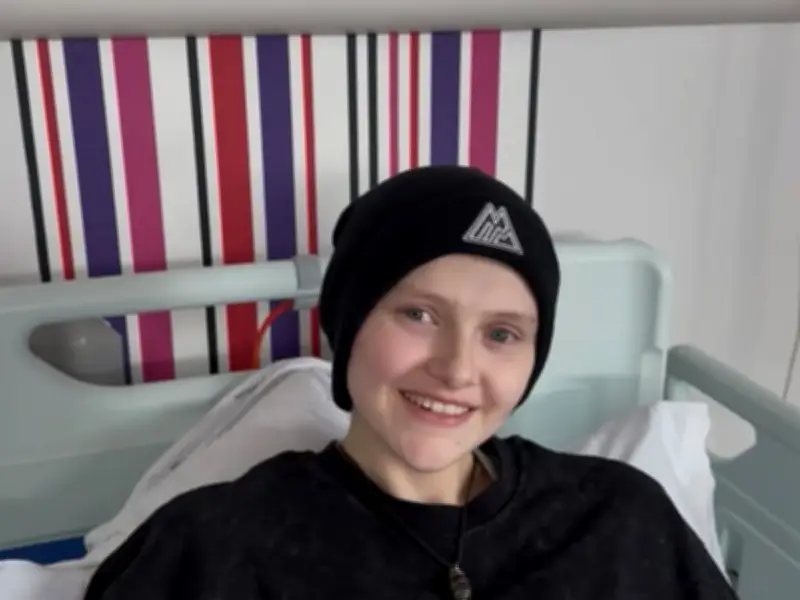
An 18-year-old from North Ayrshire is currently cancer-free after taking part in a clinical trial at the Great North Children’s Hospital (GNCH), part of Newcastle Hospitals.
Diagnosis and initial treatment
Noah Hyslop started experiencing leg pain in September 2023 and attended hospital, assuming he had a stress fracture. Tests revealed that the Ardrossan youngster had Ewing sarcoma, a rare cancer which affects the bones and soft tissue.
Noah underwent 14 rounds of chemotherapy and 33 rounds of radiation at a hospital in Glasgow and was in remission by July 2024. However, in January 2025, scans revealed pain in Noah’s shoulder was due to the cancer returning.
Relapse and the trial
Noah joined a clinical trial in Glasgow and his disease stabilised until July. When Noah started experiencing shoulder pain again in December 2025, tumours were found in the lungs.
The Hyslop family started looking into clinical trial options when they received a call from Noah’s consultant in Glasgow about a trial taking place in Newcastle. Noah started on the trial in February 2026 and has now completed 11 cycles of treatment. Scans currently show no sign of tumours in the lungs.
How the trial drug works
The trial is testing a new drug (known as an investigational medicine) for Ewing sarcoma that has worsened and not responded to previous treatment. The antibody drug works by targeting a protein called a ‘death cell receptor’ (DR 5), which plays a key role in removing damaged or abnormal cells from the body. Researchers hope that, by triggering the death cell pathway, the drug can help prevent tumour growth and spread.
As part of the trial, Noah receives the trial drug every three weeks at GNCH, along with two other chemotherapy medicines that are already approved for use in the UK.
Family and expert reactions
Noah said: “The team at Newcastle is fabulous and without them I may not have made my 18th birthday in July this year. They really are life savers. The trial is truly amazing.”
Noah’s dad, Paul, added: “Finding out Noah had Ewing sarcoma was such a shock to our family. We assumed the leg pain was caused by a fracture or something harmless. Seeing Noah go through treatment was incredibly difficult and at one point we feared we wouldn’t see him reach his 18th birthday. When we found out about the trial in Newcastle, we thought it was worth trying but didn’t expect such positive results. The fact that there is currently no sign of cancer feels like a miracle. We cannot thank the Newcastle team enough for everything they have done for Noah and our family.”
Dr Quentin Campbell-Hewson, a consultant paediatric oncologist at GNCH and associate clinical lecturer at Newcastle University, is leading the trial locally, with support from the paediatric oncology research team. He said: “Clinical trials provide a lifeline to patients like Noah who have limited options, particularly when cancer has spread or hasn’t responded to treatment. As well as this being a great result for Noah, we are excited that this may be a new treatment for this difficult cancer which is more effective and kinder to the patient. The trial is ongoing, but we are very encouraged with results to date.”
Professor Sandra Strauss, chief investigator for the trial and professor of medical and teenage and young adult oncology at the University College London Cancer Institute, added: “Clinical trials that involve novel treatments are urgently needed to improve outcomes in rare cancers such as Ewing sarcoma, particularly when the cancer has returned or spread. We are delighted to hear of the positive impact this treatment combination has had on Noah’s disease. The trial is being conducted in many centres across the world in patients of all ages, with encouraging preliminary results, and we look forward to hearing more about its effectiveness and impact on patients in the longer term.”