T-Rex Could Outpace Usain Bolt with Toe-First Running, Study Finds
A new scientific study has dramatically reshaped our understanding of how the mighty Tyrannosaurus rex moved, suggesting the prehistoric predator ran on its toes and could have been fast enough to beat Olympic champion Usain Bolt in a 100-metre sprint.
Revisiting Dinosaur Locomotion
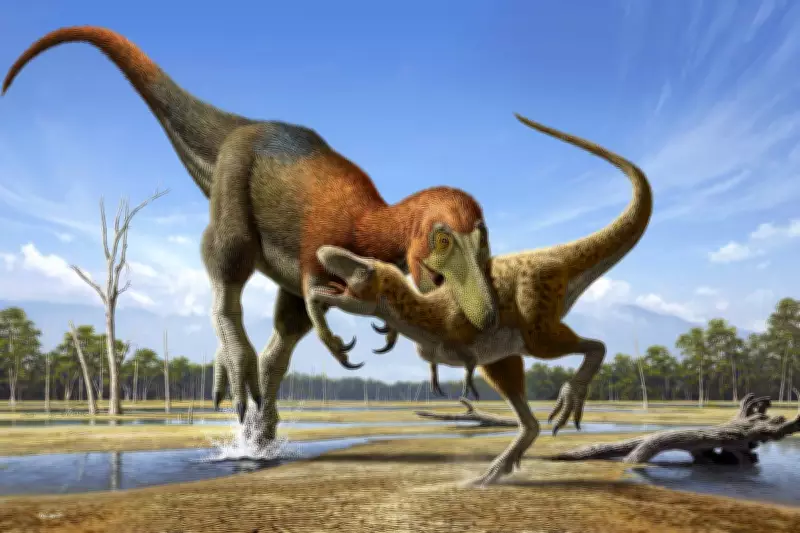
For decades, popular culture and scientific theory have depicted T-rex as a heavy-footed creature that created ground-shaking tremors with each step, much like in the Jurassic Park films. However, fresh analysis of the dinosaur's anatomy indicates it likely employed a much more agile, bird-like gait.
"Rather than stomping heel-first, the Tyrannosaurus rex might have taken shorter, toe-first steps," researchers explained. This foot-strike pattern, where the forward part of the foot contacts the ground first, mirrors the running mechanics of modern birds and human athletes.

Quantifying the Speed Increase
The study, published in the prestigious journal Royal Society Open Science, utilized biomechanical modeling to calculate how this toe-running would affect velocity. The findings are startling.
According to the research team from the College of the Atlantic in Maine, USA, this method of locomotion would have made T-rex approximately 20 per cent faster than previous estimates suggested.
- A T-rex weighing around 1.4 tonnes could achieve a top speed of 11.4 metres per second.
- This translates to covering 100 metres in just 8.77 seconds.
- In comparison, Usain Bolt's world record stands at 9.58 seconds.
- Even larger specimens, weighing up to 6.5 tonnes, could still reach speeds of 9.5 metres per second.
Contradicting Previous Theories
This new evidence directly challenges long-held beliefs about dinosaur movement. Earlier interpretations of T-rex footprint fossils had led scientists to conclude the animals walked with a heel-first strike.
"Our study represents, to our knowledge, the first quantitative biomechanical analysis of the effects of foot-strike patterns on the gait of Tyrannosaurus," the authors stated. Their analysis of anatomy, fossil tracks, and comparisons with modern bird locomotion provided the basis for this paradigm shift.
The research describes the T-rex as having a "very bird-like gait defined by higher stride frequencies" which enabled "elevated speeds." This toe-first running is not just a stylistic difference; it results in "more effective running in terms of kinematics and linear speed."
Broader Implications for Paleontology
This discovery adds another layer to our evolving picture of Tyrannosaurus rex. A separate recent fossil study revealed that T-rex grew much more slowly than previously assumed, taking several decades to reach their full colossal size of around eight tonnes.
Analysis of 17 tyrannosaur specimens showed these carnivorous kings required about 40 years to attain their maximum dimensions, from early juveniles to massive adults.
Together, these studies paint a more nuanced portrait of one of history's most formidable predators: a creature that combined slow, decades-long growth with potentially surprising agility and speed, enabled by a sophisticated, toe-first running technique that science had previously overlooked.