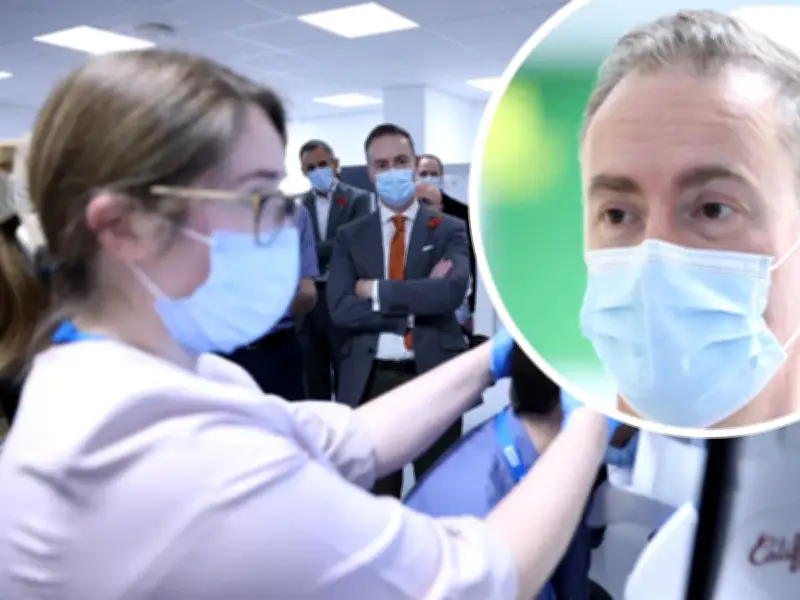
The Government is investing more than £12 million in a Sunderland health hub that will use artificial intelligence (AI) to analyse routine eye scans and identify early signs of conditions such as diabetes and heart disease. Science minister Chris McDonald visited the Northern Ophthalmic Research and Innovation (NORI) hub on Thursday to announce the funding, which forms part of a wider £52 million investment in five similar projects across the country.
AI analysis of retinal scans
The NORI hub, based at the new Sunderland Specialist Eye Hospital on Plater Way in the city centre, will use AI to examine scans alongside NHS health records and community data. The aim is to detect "subtle changes" in retinal images that could indicate the early stages of illness, allowing doctors to plan investigation, monitoring and preventative treatment for patients who may need it.
In the North East, where health outcomes are among the worst in England, the project is intended to tackle "pressing issues" and reduce pressure on the NHS. Chris McDonald, the Labour MP for Stockton North, told ChronicleLive: "We have this amazing facility here in Sunderland in the new eye hospital and this Government is announcing an incredible investment in that. We are putting more than £12m into the centre here."
Tackling health inequality
Mr McDonald said the funding builds on Sunderland's history as a leading centre for eye health and stressed the importance of addressing health inequality through the new technology being developed at NORI. He said: "This is of particular concern to me, as an MP in Stockton. Within a couple of postcodes in my constituency you have a chasm of ten years in life expectancy, and that's typical of the North East. A lot of that is down to poverty. Poverty and inequality is driven by health inequalities and so we need to ensure that people in the North East have the best access to healthcare."
He added: "Sunderland has long been a centre of innovation and scientific endeavour, from glassmaking to shipbuilding, and now in the pioneering use of technology to diagnose illnesses like diabetes and heart disease earlier. Earlier diagnosis means better outcomes for patients and less pressure on our NHS, and technology has a vital role to play. These healthcare hubs offer a powerful example of how scientific research can improve lives, whether that is using scans to catch heart disease earlier, or using AI to assess head injuries quicker."
Building a health innovation ecosystem
Prof Majed Habib, a consultant ophthalmologist and one of the leading clinicians at NORI, said: "NORI is a research institute which has been funded to try to see how we can improve population health in Sunderland and beyond. And the way we are looking at doing that is to see how we can predict disease using scientific data - whether that's images [of patients' eyes] that we already have or other health data."
Matthew Campbell, Sunderland University's interim pro vice-chancellor for health and co-director of NORI, is leading the project. He said: "The £12.2 million funding is the foundation, not the destination. This investment creates a new health innovation ecosystem for the north-east bringing together Sunderland's clinical and research infrastructure, Durham's complementary scientific expertise and an exceptional network of civic and industry partners. We now have the scale to develop technologies, test them in real-world healthcare settings and take them into national and international markets. Our ambition is to use it to attract further investment, businesses, highly skilled jobs and international partnerships to the region."
Professor Charlotte Deane, executive chair of the engineering and physical sciences research council, part of UK Research and Innovation (UKRI), said: "These five new hubs will improve the lives and livelihoods of people and patients right across the UK. They build on proven investment from our previous hubs, which are already translating research into real benefits, advancing knowledge through cutting-edge health research, including the world's first AI-assisted brain tumour surgery. By working closely with patients, the NHS and industry, we're helping people live healthier lives and preventing ill health before it starts."
Elsewhere in the country, the funded projects include the BRANIAC Hub in Exeter, which will combine blood tests, brain scans and memory data to speed up dementia diagnosis. The centres are designed to work together, with insights from Sunderland's work on predicting dementia's progression feeding into projects such as the one in Exeter. Partners include the NHS, charities such as Alzheimer's Society, and global industry partners including Apple, Google, Siemens and Medtronic.