Controversial Claim of Buried 'Second Sphinx' Near Pyramids Ignites Archaeological Debate
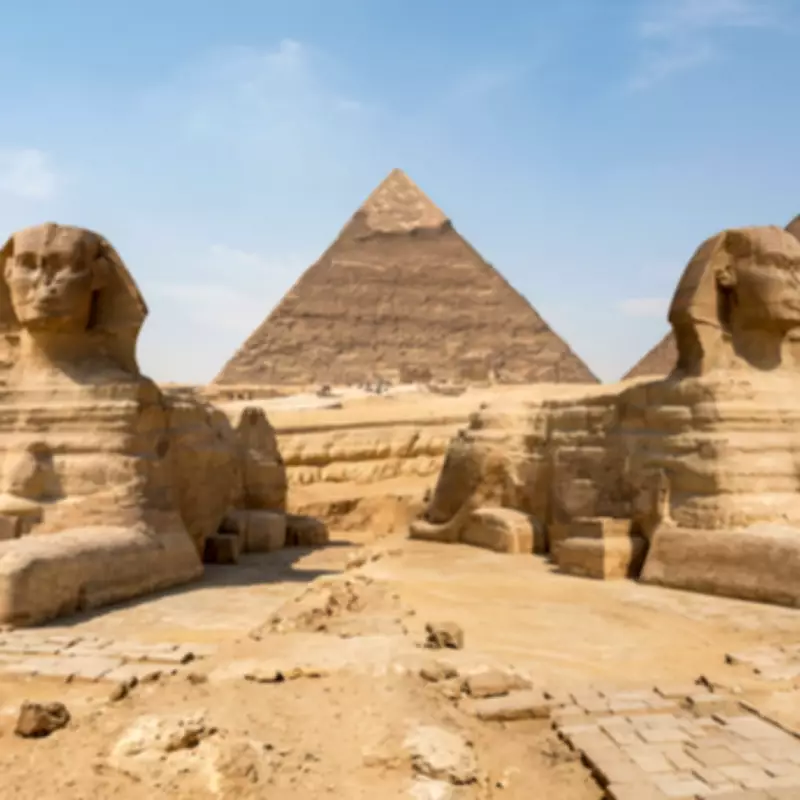
A team of Italian researchers has made a startling announcement that could rewrite ancient Egyptian history, claiming to have discovered evidence of a second Sphinx buried beneath the sands of the Giza Plateau. The controversial assertion, based on remote scanning technology, suggests a colossal structure mirroring the famous lion-bodied guardian lies hidden opposite the original monument.
Ancient Clues and Modern Technology
Engineer Filippo Biondi and his research team point to an ancient artifact as their primary clue. The 'Dream Stele,' a stone slab positioned between the paws of the existing Sphinx, appears to depict not one, but two sphinxes standing in perfect symmetrical guard of the pyramids. This visual evidence, they argue, has been overlooked for centuries.
Using advanced radar-style surveys and geometric analysis tracing lines from the Pyramids of Khafre and Khufu, the researchers claim to have identified what they describe as a 'small mountain' of sand covering not bedrock, but a massive carved structure. Their preliminary readings indicate dense vertical features and horizontal passages that remarkably echo the known shafts and tunnels beneath the established Sphinx.

Confidence and Concrete Plans
"I am approximately 80% confident in this discovery," Biondi stated during a recent interview. The team has reportedly drafted a formal proposal for Egyptian authorities, complete with detailed sketches pinpointing potential access points between the Great Sphinx and the Pyramid of Khafre.
One particularly promising feature is a sizable shaft currently blocked by debris, which Biondi believes could serve as a key entry point to a wider, hidden network beneath the Giza complex. He elaborated on this possibility during an appearance on the Matt Beall Limitless podcast, suggesting this could unlock unprecedented archaeological understanding.
Strong Skepticism from Egyptian Authorities
Despite the researchers' confidence, they face significant opposition from Egypt's archaeological establishment. Renowned Egyptologist Zahi Hawass, former Minister of Tourism and Antiquities, has long dismissed theories about a second Sphinx, maintaining the area has been thoroughly investigated for decades without yielding such evidence.
Hawass was particularly critical of Biondi's previous claim last year about a secret underground city beneath the Pyramid of Khafre, calling the idea "completely wrong and without scientific basis." He has consistently questioned the validity of radar techniques in this context, describing their application as "false" and asserting such methods are "not scientifically approved nor validated" for archaeological discovery.
The Broader Implications
This discovery claim arrives amid growing interest in re-examining ancient sites with modern technology. If verified, a second Sphinx would fundamentally alter our understanding of Giza's ceremonial landscape and the symbolic architecture of ancient Egyptian civilization.
The debate highlights the ongoing tension between traditional archaeological methods and emerging technological approaches. While remote sensing offers non-invasive exploration possibilities, established experts emphasize the need for rigorous scientific validation before accepting extraordinary claims.
The Italian team's formal presentation to Egyptian authorities will likely determine whether excavation permits are granted, potentially setting the stage for one of archaeology's most significant discoveries—or another controversial chapter in the study of ancient Egypt.