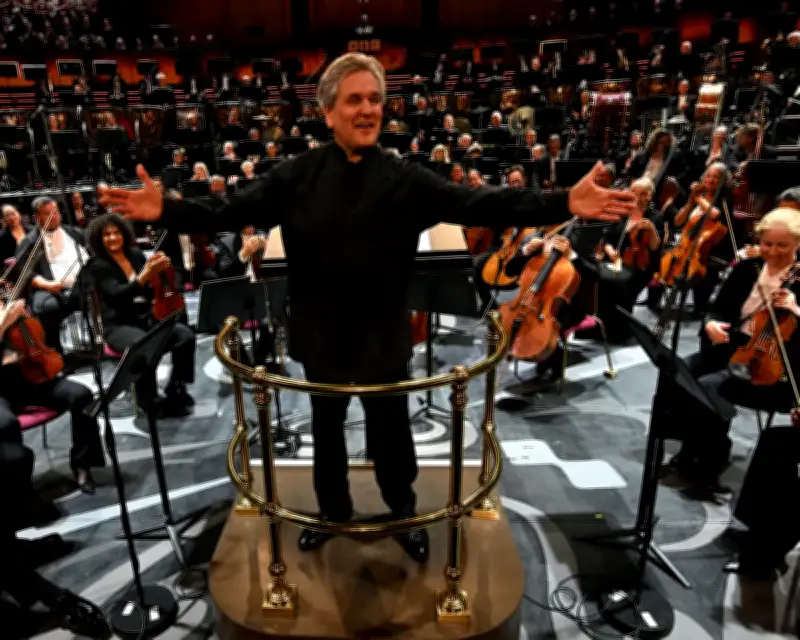
Antonio Pappano conducted the combined forces of the London Symphony Orchestra, LSO Chorus and BBC Symphony Chorus in Berlioz's Grande Messe des Morts at the Royal Albert Hall, in a performance that captured the work's viscerality and desperation.
Grand forces and special effects
The piece requires a huge choir, an expanded orchestra, four brass bands and a warehouse-full of percussion, including enough timpani to occupy 10 players simultaneously. Berlioz had lost his faith by the time he wrote it, so the work is less a personal expression of devotion than a painting of the Requiem's text.
In the Tuba Mirum, thrilling brass yielded to a blur of drumsticks as the timpani and four tam-tams created an enveloping low-frequency swell felt through the feet. Pappano placed all four brass bands at the focal end of the hall rather than around the gallery, which was probably wise for coordination, but loud moments from high-up players ricocheted off opposite walls, achieving a surround-sound effect.
Choral excellence
In the Sanctus, seven pairs of cymbals were picked up, but the sound framing Julien Henric's tenor solo was almost comically gentle, like the beat of angelic wings. Much of the work is thinly scored, with long passages accompanied by only a handful of instruments or, in the Quaerens Me, a cappella.
The choral writing is mercilessly exposed and difficult to tune, particularly for tenors. The two amateur choruses, around 250 strong, combined to do a magnificent job, singing with chant-like innocence or fierce desperation.
Available on BBC Sounds until 12 October. The Proms continue until 12 September.