

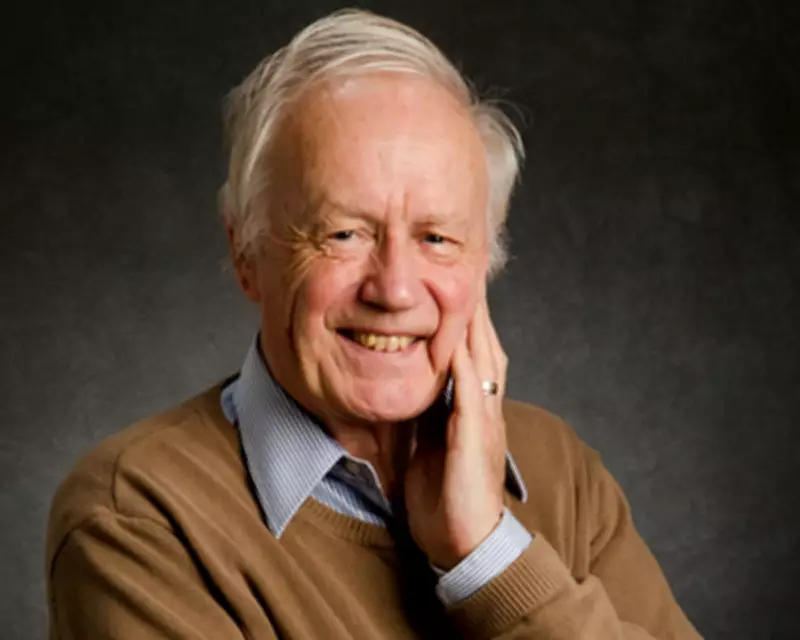
Nobel Laureate Anthony Leggett, Pioneer in Superfluidity, Dies at 86
Professor Anthony Leggett, a distinguished physicist who was awarded the Nobel Prize in Physics in 2003 for his groundbreaking contributions to the understanding of superfluidity, has died at the age of 86. His passing marks the end of an era for the scientific community, where his work has profoundly influenced the field of quantum mechanics and condensed matter physics.
Early Life and Academic Career
Born in 1938, Anthony Leggett developed an early interest in science, leading him to pursue studies at the University of Oxford. He later earned his doctorate and embarked on a prolific academic career, holding positions at several prestigious institutions, including the University of Sussex and the University of Illinois at Urbana-Champaign. Throughout his life, he was known for his meticulous research and dedication to advancing theoretical physics.
Groundbreaking Work on Superfluidity
Leggett's most notable achievement was his theoretical explanation of superfluidity in helium-3, a rare isotope of helium that exhibits frictionless flow at extremely low temperatures. His research, conducted in the 1970s, provided key insights into how quantum effects manifest in macroscopic systems, challenging conventional understandings of physics. This work was instrumental in earning him the Nobel Prize, shared with other scientists, and has had lasting impacts on technologies such as superconductors and quantum computing.

Legacy and Impact on Science
Beyond his Nobel-winning research, Anthony Leggett made significant contributions to various areas of physics, including quantum mechanics, cosmology, and the foundations of quantum theory. He authored numerous influential papers and books, mentoring generations of physicists and advocating for interdisciplinary approaches in science. His legacy is celebrated for pushing the boundaries of human knowledge and inspiring future innovations in both theoretical and applied physics.
Personal Life and Tributes
Outside of his scientific pursuits, Leggett was described as a humble and thoughtful individual, deeply committed to education and public engagement with science. He received numerous awards and honors throughout his career, including knighthood in the United Kingdom. Tributes from colleagues and institutions worldwide have highlighted his intellectual curiosity, kindness, and enduring influence on the global scientific community.
In summary, Anthony Leggett's death is a significant loss to physics, but his pioneering work on superfluidity and quantum phenomena will continue to resonate for years to come, shaping ongoing research and technological advancements.






