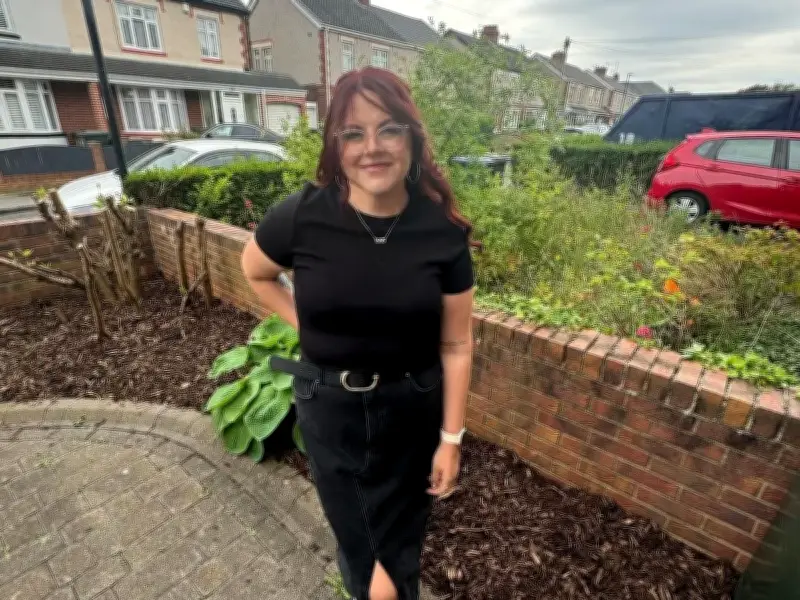
Ellyn Laws, 31, who has lived with kidney failure since childhood and is awaiting her fifth kidney transplant, is supporting a push to increase use of technology that gives surgeons extra time to check the health of donor kidneys.
Laws, who was born and brought up in Newcastle's East End but now lives in Ingleby Barwick in Teesside, is currently reliant on at-home dialysis. She works in the public sector and told how a suspected allergic reaction to antibiotics before the age of two was the only thing medics can think of that triggered her kidneys to fail. She has spent the best part of 30 years receiving treatment.
She told ChronicleLive she "simply wouldn't be here" if it were not for organ donation. Laws was speaking amid news that teams at the Freeman Hospital on Tyneside, where she has had her transplants, and researchers at Newcastle University will be part of a new £5.2m network of transplant centres designed to pioneer a technique likely to boost successful transplant rates.
New network to pioneer perfusion technology
The network, funded by Kidney Research UK and the Stoneygate Trust, will see the use and development of "normothermic machine perfusion" to boost transplants. The hope is that by keeping a kidney "perfused" with warm, oxygenated blood while en route to wherever it may be transplanted, the quality of the organ can be preserved for longer.
This could have been vital in Laws's case, as in one of her transplants she understands the quality of the organ may have been compromised by how long it was outside a body. The study, PERFUSE-UK, is led from Cambridge but, along with Newcastle, will also involve experts in London, Oxford and Edinburgh.
The hope is it will provide improvements in care for people in kidney failure. There are an estimated 25,320 people living with chronic kidney disease (CKD), and when that becomes failure, the only options are dialysis and a transplant. The number of people around the country on dialysis was 110 in 2023 but is projected to hit 500 by 2033.
Patient shares transplant journey
Laws told ChronicleLive: "I have had a total of four kidney transplants so far and I am currently on dialysis waiting for my fifth. My first transplant was when I was four and I have been in kidney failure, we think, since I was around two. Between my second and third birthdays, I became really poorly."
She added: "An allergic reaction to antibiotics is all they could really put it down to. I had my first transplant when I was four, and then ended up on dialysis again when I was eight. I received a kidney from my dad when I was 10 - and that lasted pretty much until I was 23. It was October 2020 when I got the call for the next transplant, but that didn't last long."
Laws's fourth transplant has not worked long-term either, and she is now waiting for another. She said the new technology is "so exciting": "It's definitely the case that had this been available a few years ago, at least one of the transplants may have had a better chance. It may have still failed, but I may have worked better. Last year I got my aunt's kidney but that unfortunately has not worked either and I am still on dialysis and am a patient at James Cook for that."
Hope for better quality of life
Six people a week in the UK die while waiting for a kidney transplant, and the waiting list is rising. It is hoped the trial will see medical teams spend five years progressing the technology in the hope it can be rolled out nationwide. This will, the theory is, reduce the figure that sees some 300 donated kidneys found to be unsuitable for transplant each year.
Laws said she felt robbed of opportunity by her illness: "All these years later, I still don't feel like I've had the chance to fully start my life. After experiencing rejection post-transplant and knowing what it's like waiting for the call for my next chance of life away from the dialysis machine, reading about this investment gives me hope for a future where transplants are more readily available and can provide myself and other patients with a better quality of life for longer."
Speaking about the importance of organ donation, she added: "If it wasn't for organ donation, I wouldn't be here now. I would have died at the age of two. I know that the organ transplant lists are getting longer - people really need to know that it changes lives."
The study teams hope that organs currently found unsuitable could be healthy enough for the perfusion treatment, meaning more possible transplants. The trial will also see clinical research considering how to "optimise and repair" donor kidneys and lower the risk of organ rejection. The new network will complement the recently announced "Assessment and Recovery Centre" at the Freeman, which NHS Blood and Transplant hopes will also boost the number of organs available for transplant by utilising perfusion technology.
Emily Thompson, consultant transplant surgeon at the Freeman and senior clinical lecturer at Newcastle University, said: "We urgently need innovation in kidney transplantation to enable more people to receive the precious gift of a new kidney. The new PERFUSE-UK programme offers just that. [It does so] by supporting the development and implementation of normothermic machine perfusion - a technology which will enable surgeons to make the best decisions for their patients and may in future lead to new ways to help donated kidneys function well for longer."
Sir Will Adderley, founder of the Stoneygate Trust, said: "Funding medical research is about believing in the future and the potential it holds. Stoneygate Trust are excited to support the creation of PERFUSE-UK. This builds on years of groundbreaking research focussed on the development of transplant techniques funded by the trust. I'm confident this latest phase will help deliver real change for the patients who need it most."
In addition to funding PERFUSE-UK, the Stoneygate Trust is partnered with Kidney Research UK to fund programmes to accelerate kidney transplant science, with £1m available this autumn for further innovative research.