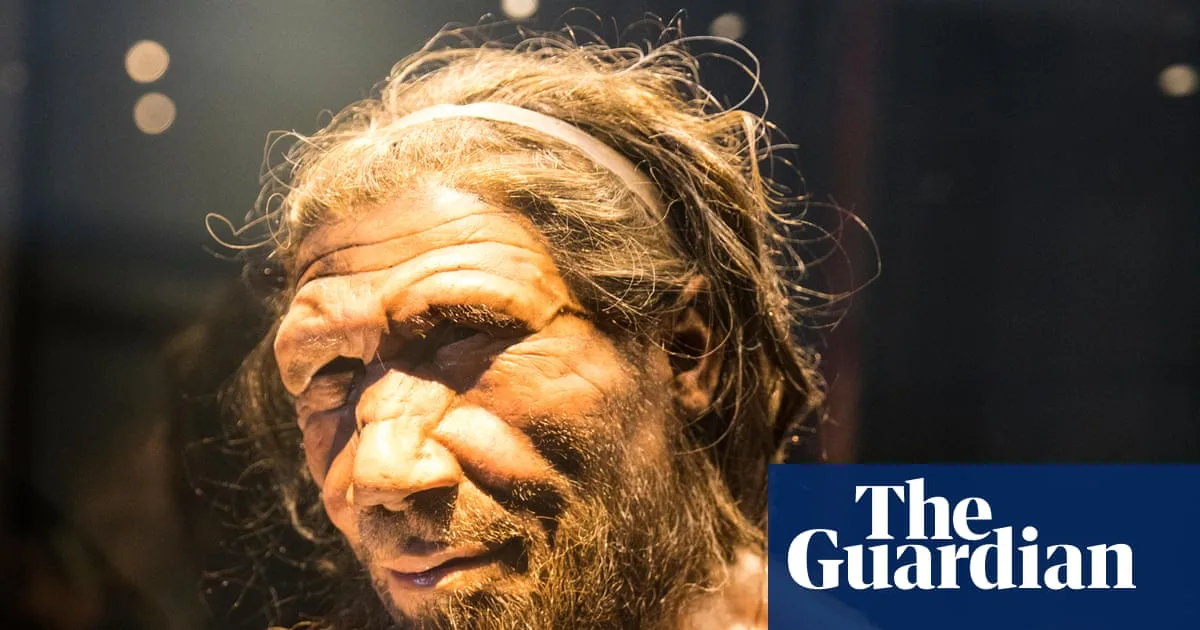
Ancient Mating Patterns Revealed: Neanderthal Males Preferred Human Females
Neanderthal Males Mated with Human Females, Study Finds

Ancient Interbreeding Patterns Uncovered in Neanderthal-Human Study

Neanderthal men were characterized by their short, stocky, and powerful physiques—attributes that apparently appealed to our female ancestors, according to groundbreaking new research. While it has long been established that ancient humans and Neanderthals engaged in sexual relations, with many modern individuals carrying traces of Neanderthal DNA, the specific dynamics of these prehistoric encounters have remained largely mysterious until now.

Genetic Evidence Points to Sex-Biased Mating

Scientific experts have made a significant discovery: when these two distinct ancient species interbred, the pairings predominantly involved male Neanderthals and female Homo sapiens. This finding substantially enhances our comprehension of the interbreeding that occurred between 45,000 and 50,000 years ago, shedding new light on a crucial chapter of human evolution.

Sarah Tishkoff, Professor of Genetics and Biology at the University of Pennsylvania, explained the historical context: 'Roughly 600,000 years ago, the ancestors of anatomically modern humans and their closest-related species, the Neanderthals, diverged, forming two distinct groups. Our ancestors evolved in Africa, while the ancestors of Neanderthals evolved in and adapted to life in Eurasia. But that separation was far from permanent.'

Wide Pickt banner — collaborative shopping lists app for Telegram, phone mockup with grocery list

Chromosomal Analysis Reveals Telling Patterns

For their comprehensive study, the research team meticulously analyzed Neanderthal and modern human genomes. They uncovered a remarkable pattern: in contemporary humans, genetic contributions from Neanderthals are exceptionally scarce on the X chromosome. Given that females possess two X chromosomes while males have only one, this strongly indicates that minimal DNA from female Neanderthals ever entered the human gene pool.

Furthermore, the researchers discovered that Neanderthals themselves carried more human DNA on their X chromosomes than in any other part of their genomes. This distinctive genetic signature reinforces the theory that preferential mating occurred between Neanderthal males and human females, creating a clear sex bias in these ancient relationships.

Challenging Established Scientific Assumptions

The findings, published in the prestigious journal Science, directly challenge long-held assumptions that natural selection alone eliminated potentially harmful Neanderthal genes from the X chromosome. Dr. Alexander Platt, a senior research scientist in the Tishkoff Lab, elaborated on this paradigm shift: 'Along our X chromosomes, we have these missing swaths of Neanderthal DNA we call "Neanderthal deserts." For years, we just assumed these deserts existed because certain Neanderthal genes were biologically "toxic" to humans—as tends to be the case when species diverge—so we thought the genes may have caused health problems and were likely purged by natural selection.'

The discovery offers a more socially nuanced interpretation of the genetic data, suggesting that mating preferences played a crucial role in shaping these ancient interactions. Dr. Platt added: 'Mating preferences provided the simplest explanation. Interbreeding may have been strongly sex biased due to the right combination of being more attractive or simply less repulsive.'

Communication and Consent in Prehistoric Encounters

When questioned about how Neanderthals and humans might have communicated during these encounters, Dr. Platt offered intriguing insights: 'I’m not sure communication is necessary to know what the heart wants. Or to understand who is unappealing. Or maybe tolerable. The data also do not give any insight into whose opinion mattered on the subject, or which of the parties were making the choices.'

He further clarified: 'We knew that there were at least several times when the two groups met and interbred. What we’re learning now is that that process of interbreeding may have been selective, and that men and women did not participate in it in exactly the same way.'

Pickt after-article banner — collaborative shopping lists app with family illustration

Broader Implications and Future Research Directions

The research team noted that now that the 'who' and 'how' of these ancient trysts have been established, they are turning their attention to the 'why'—seeking to understand the underlying motivations and social dynamics that drove these specific mating patterns.

Recent complementary research has uncovered evidence suggesting that ancient humans and Neanderthals engaged in kissing approximately 50,000 years ago. By examining modern primate species that exhibit kissing behavior—including chimpanzees, bonobos, and orangutans—and employing sophisticated statistical modeling, researchers concluded that Neanderthals likely participated in this intimate behavior.

This finding builds upon previous studies that identified shared oral microbes between humans and Neanderthals, indicating saliva transfer. Combined with the genetic evidence of interbreeding, it strongly suggests that kissing accompanied sexual interactions between these ancient species.

Paul Pettitt, professor of archaeology at the University of Durham, provided additional context: 'We of course assume that mating was consensual. But a sad fact of the ancient world may suggest that this was far from the truth and perhaps one "partner" had little choice in the matter. Thus, in the rough and tumble of the prehistoric world perhaps mating just occurred—impromptu, with little thought or intention. If it was consensual then we can certainly assume there was foreplay—even sensual kissing and cuddling.'

The Mysterious Decline of the Neanderthals

The first Homo sapiens arrived in Europe around 43,000 years ago, ultimately replacing the Neanderthal population approximately 3,000 years later. Numerous theories attempt to explain the Neanderthals' disappearance:

  • Early humans may have introduced tropical diseases from Africa that devastated their Neanderthal cousins
  • Drastic temperature drops due to climate change could have wiped out the species
  • The predominant theory suggests Homo sapiens' superior cognitive abilities and hunting techniques created unsustainable competition for resources
  • Recent analyses of Neanderthal skulls indicate they lacked key brain regions essential for memory, complex thinking, and communication, potentially limiting their adaptability

This groundbreaking research continues to reshape our understanding of human evolution, revealing complex social and biological interactions that occurred tens of thousands of years ago between our ancestors and their closest evolutionary relatives.




