

First Lab-Grown Oesophagus Breakthrough Offers Hope to Children with Rare Condition
In a landmark development for regenerative medicine, scientists have engineered the first oesophagus in a laboratory setting, offering new hope for children born with a rare and life-threatening condition affecting their food pipe. The breakthrough, which involved implanting the engineered tissue into pigs, demonstrated that the animals could swallow and eat normally after six months without requiring immunosuppressant drugs.
Revolutionising Treatment for Long-Gap Oesophageal Atresia
Babies born with long-gap oesophageal atresia (LGOA) face a severe medical challenge, as their food pipe is separated by a wide gap, making survival impossible without surgical intervention. This rare condition affects approximately 180 births annually in the UK, with about 10% of cases classified as LGOA, where the gap is too large for immediate closure after birth. Traditional treatments often involve multiple surgeries, feeding tubes, and complications such as reflux into the lungs, which can lead to long-term lung disease.
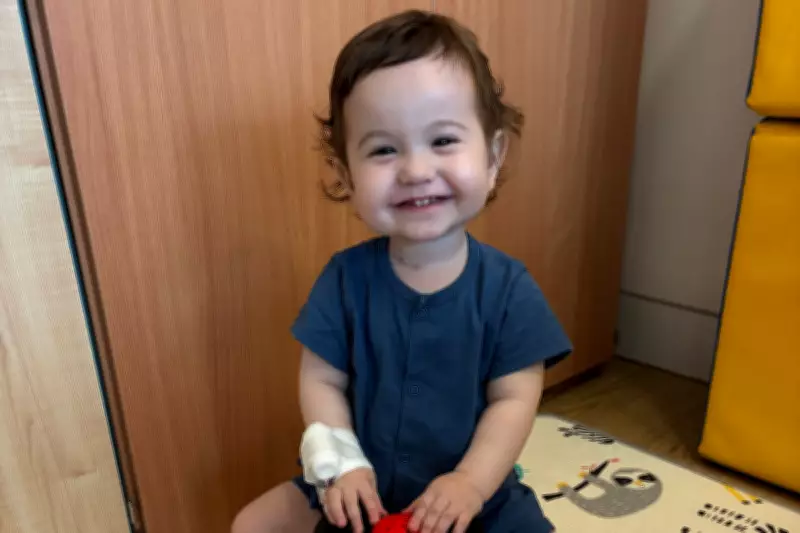
Experts from Great Ormond Street Hospital (Gosh) and University College London (UCL), who have been refining this technology for over a decade, are optimistic that engineered tissue treatments could be available for young patients within the next five years. This advancement could transform the lives of children like two-year-old Casey McIntyre from London, who was born with 11cm of his oesophagus missing and has endured numerous operations.

How the Lab-Grown Oesophagus Was Created
The process of engineering the oesophagus took about two months and involved several innovative steps:
- A scaffold was created using a donor pig's oesophagus, which was stripped of all pig cells to serve as a tube-shaped base for the new organ.
- Muscle cells were harvested from the recipient pig, multiplied in the laboratory, and then injected directly into the scaffold.
- The tube was placed in a specialised container that circulated growth fluids through the tissue for one week to promote development.
All eight pigs in the study survived the initial 30 days post-transplant, and after six months, five remained alive. The lab-grown scaffolds had developed functional nerves, blood vessels, and muscle, enabling them to contract and move like a natural oesophagus. The animals ate normally and grew at a healthy rate, with genetic mapping confirming that the implanted tissue's gene activity aligned with that of native tissue.
Personalised Medicine and Future Applications
Dr Marco Pellegrini, senior researcher at UCL Great Ormond Street Institute of Child Health, highlighted the potential for personalised treatments: "Our technology could allow us to build a child a new oesophagus, using their own cells collected during surgery, combined with a ready-prepared scaffold from pig tissue. Because the graft contains the child's own muscle progenitor cells, it would be recognised as their own tissue, growing with them over time without rejection risks or long-term immunosuppression."
If adapted for human use, researchers suggest that different-sized scaffolds could be stored and personalised for newborns or children with LGOA. Biopsies could be taken when feeding tubes are fitted, streamlining the process. Professor Paolo De Coppi, NIHR and Nuffield professor of paediatric surgery at UCL GOS ICH, compared this advancement to the historical use of pig heart valves, stating: "I believe we are now standing at a similar new frontier in regenerative medicine. We designed the study to do exactly what can be done eventually in children."
Family Perspectives and Life-Changing Potential
For families affected by LGOA, this breakthrough represents a beacon of hope. Casey McIntyre's mother, Silviya Lukanova, described their son's arduous journey: "He's had major operation after major operation as we simply couldn't get the gap to close using his own tissue. The repeated surgeries have left him with some damage to his vocal cords." His father, Sean McIntyre, added: "The idea that there could be one operation early in your child's life, that could transplant a working piece of oesophagus, and then we could move on would be life-changing."

Dr Natalie Durkin, paediatric surgical registrar and lead author of the study, emphasised the milestones achieved: "After successful implantation, our grafts grew, matured and began to function like native tissue. Each one of these steps represents a key milestone in being able to deliver this as a viable treatment option for children in the near future."
This pioneering research not only addresses a critical medical need but also sets the stage for broader applications in regenerative medicine, potentially revolutionising how congenital conditions are treated worldwide.





