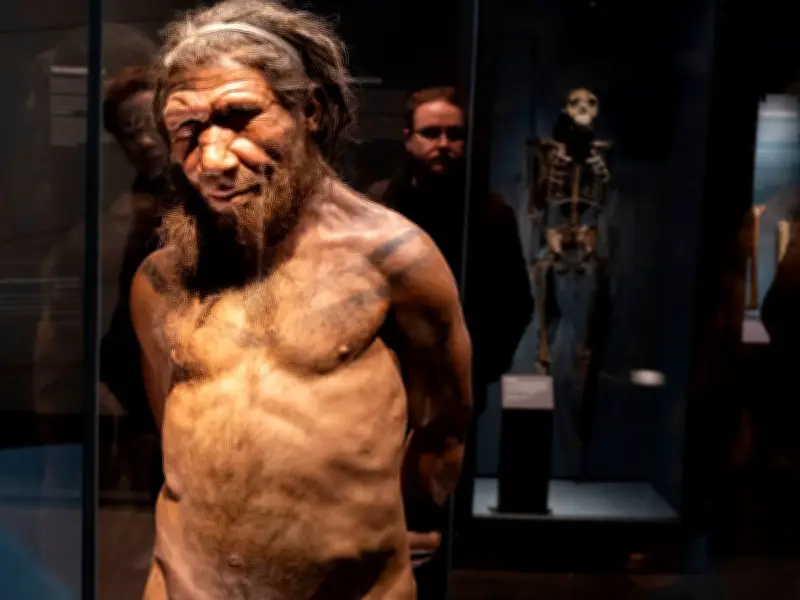
Early modern humans and Neanderthals may have lived together in the same caves, according to new research. The two different species even collected the same seashells, suggesting a cultural exchange that crossed the biological divide, say scientists.
Previous studies have shown that tens of thousands of years ago, our own species, Homo sapiens, coexisted with Neanderthals, Homo neanderthalensis. Many people living today carry a small amount of Neanderthal DNA, indicating that the two species may have shared much more than just the same land.
Breakthrough Discovery in Turkey
Now, a breakthrough archaeological discovery has revealed that the two species did not merely cross paths: they possibly shared a common culture that spanned over 20,000 years. Humans migrated from our original home in Africa to other parts of the world, but human fossils from around that time have been scarce in the Levant, a primary corridor between Africa and Eurasia. In search of more evidence of both modern humans and Neanderthals, an international team of researchers headed to Üçağızlı II Cave in Hatay Province, southern Turkey.

Five years of meticulous millimetre-by-millimetre excavation revealed evidence of both species living in the same space, utilising identical stone tool technologies and survival strategies. The findings, published in the journal Proceedings of the National Academy of Sciences (PNAS), suggest shared behaviour extended beyond practical aspects and included the use of non-utilitarian materials.
Shared Symbolic Preferences
The research team discovered that both Neanderthals and modern humans selectively collected a specific type of marine seashell that had virtually no value as food, and which had previously been associated exclusively with modern humans. The researchers say that the shared preference for a non-utilitarian, potentially symbolic object suggests that cultural exchange occurred across the biological divide, transcending species barriers.
Study corresponding author Dr Naoki Morimoto, of Kyoto University, Japan, said: “Our findings indicate a deep level of cultural interaction. These two distinct but closely related human groups were not just adapting to the same environment: they were probably sharing symbolic preferences.”
Filling a Gap in the Fossil Record
The modern human fossils recovered from Üçağızlı II Cave date to a period between around 50,000 and 60,000 years ago. Dr Morimoto said: “This suggests that these individuals found between Eurasia and Africa may represent a close relative of the founding lineage of all living non-African populations today. Alternatively, they could be previously unknown survivors of an earlier, preceding wave of modern humans migrating into the Levant.”
He added: “By capturing this critical window of co-existence, the discoveries at Üçağızlı II Cave fill a long-standing gap in the global archaeological and paleontological record, potentially rewriting our understanding of how early human species interacted, communicated, and shared their worlds with each other.”