
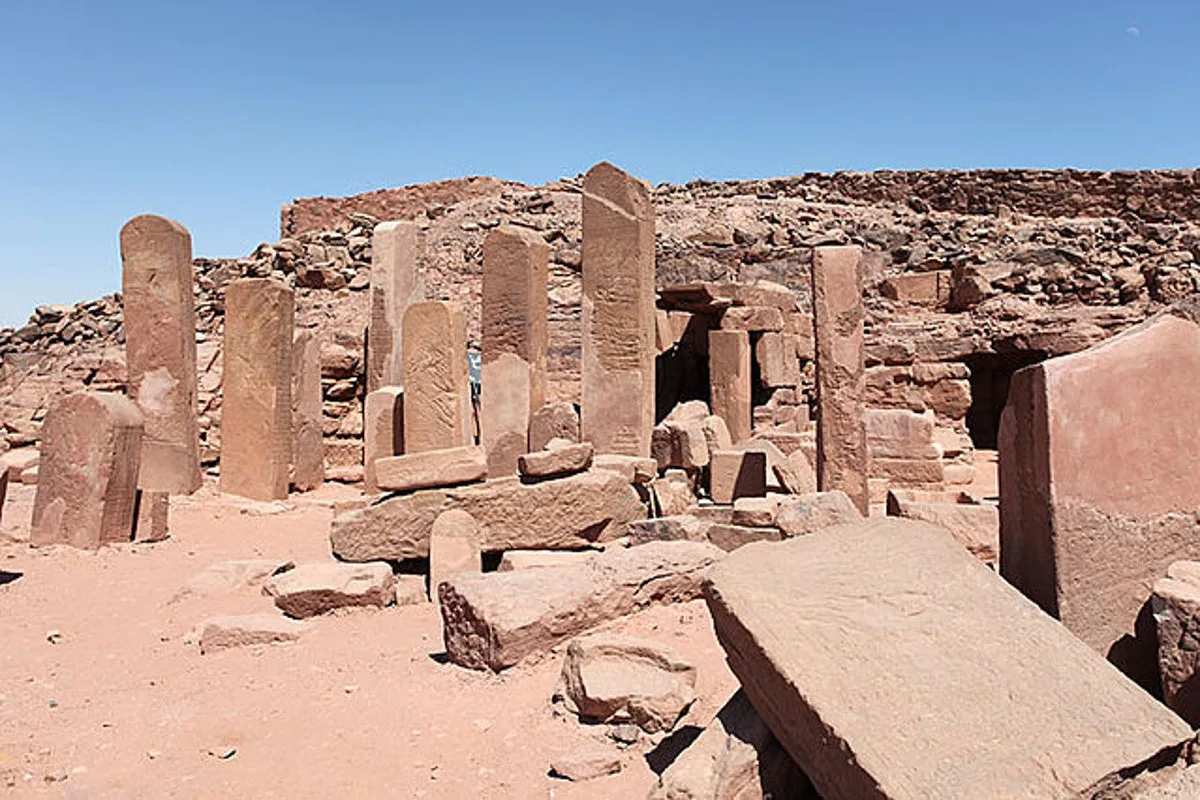
A researcher has claimed that two inscriptions dating back 3,800 years discovered in the Egyptian desert may contain the oldest written references to Moses. The etchings, found at Serabit el-Khadim in the Sinai Desert, are being re-examined by American-Israeli epigraphist Michael S. Bar-Ron, a graduate student at Ariel University.
The Proto-Sinaitic inscriptions date from between 1800 and 1600 BC, centuries before the earliest biblical texts were written. Bar-Ron argues that they read "Zot M’Moshe" and "Ne’um Moshe", meaning "This is from Moses" and "Declaration of Moses", which would make them the earliest known written references to Moses outside the Bible.
The site was a turquoise mining operation worked by Semitic labourers during the Middle Bronze Age and housed a temple to the goddess Ba’alat. Bar-Ron suggests the inscriptions resist worship of Ba’alat, containing words of warning and rebuke, including terms translating as "for shame" and "let us leave".
However, the interpretation has met with scepticism. Thomas Schneider, an Egyptologist at the University of British Columbia, told the Daily Mail that the reading was "completely unproven and misleading". Bar-Ron defended his work, saying the readings are part of a coherent framework and are based on patterns across the full set of inscriptions.
Bar-Ron, who spent eight years working on the translations, said the findings were "nonessential icing on the cake" within a broader thesis examining "a Mosaic-type leadership" in the region. He stressed that his research will be subject to peer review and has already been revised more than 100 times.




