

CERN Scientists Embark on Historic Antimatter Road Trip in Geneva
In a groundbreaking scientific endeavour, researchers at the European Organization for Nuclear Research (CERN) in Geneva have initiated a first-ever test drive to transport antiprotons, a form of antimatter, on a delicate journey by road. This experiment marks a significant step towards advancing the study of antimatter, with potential implications for future research collaborations.
The Delicate Nature of Antimatter Transport
Antimatter, such as antiprotons, poses a unique challenge due to its volatile properties. According to experts at CERN, if antimatter comes into contact with ordinary matter, even briefly, it annihilates in a rapid flash of energy. To mitigate this risk, approximately 100 antiprotons are suspended in a vacuum within a specially designed box, secured by supercooled magnets. The entire transport process is estimated to take about four hours, including a half-hour drive, to test the feasibility of moving these infinitesimal particles without leakage.
The transportable antiproton trap, weighing 1,000 kilograms (2,200 pounds), is compact enough to fit through standard laboratory doors and onto a truck. It utilises superconducting magnets cooled to -269 degrees Celsius (-452 Fahrenheit) to maintain the antiprotons in a vacuum, preventing contact with the inner walls made of matter. CERN spokeswoman Sophie Tesauri emphasised that the trap is engineered to contain the antiprotons under various conditions, such as sudden stops or starts during transit.

Challenges and Safety Measures
Manipulating antimatter is a complex task, as each particle has a corresponding antiparticle with an opposite charge. When these opposites meet, they annihilate each other, releasing energy based on their masses. Any unforeseen bumps or disturbances during the road trip could compromise the experiment, but the specially designed box aims to compensate for such factors. Experts note that the mass involved in this test is minimal—slightly less than that of 100 hydrogen atoms—meaning the worst-case scenario is merely the loss of the antiprotons, with any energy release being undetectable without specialised equipment like an oscilloscope.
This test serves as a preliminary effort towards a larger goal: delivering CERN antiprotons to researchers at Heinrich Heine University in Dusseldorf, Germany, an eight-hour drive under normal conditions. The university is considered a more suitable location for in-depth antiproton studies, as CERN's extensive activities generate magnetic interference that can skew antimatter research. However, the current trap can only contain antiprotons autonomously for about four hours, highlighting the need for further development to extend this duration.
Background and Future Implications
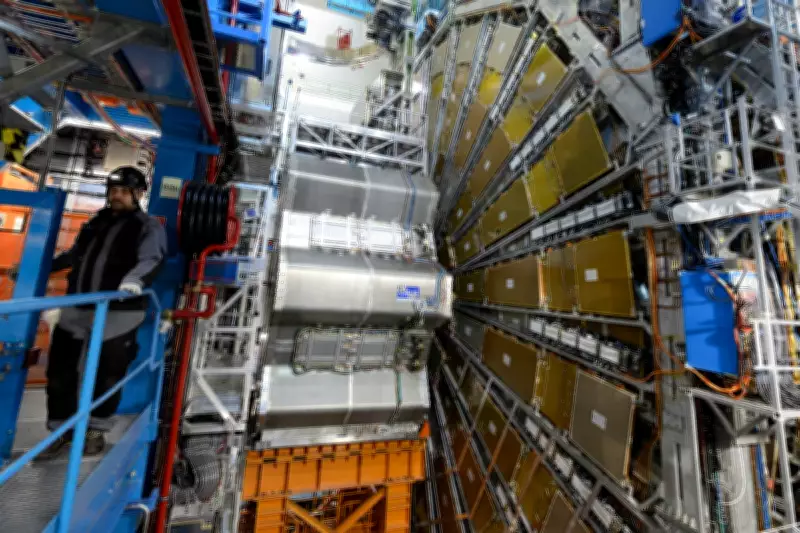
CERN, renowned for its Large Hadron Collider—a 27-kilometer (17-mile) underground tunnel where particles are accelerated and collided—has a rich history of scientific innovation, including the invention of the World Wide Web by Tim Berners-Lee in 1989. The centre's Antiproton Decelerator produces low-energy antiprotons for antimatter studies, making it the only facility globally capable of storing and researching these particles. Over the years, CERN has achieved breakthroughs in measuring, storing, and interacting with antimatter, building on past experiments like transporting a cloud of protons across its campus two years ago.
According to Christian Smorra, head of the team behind the transport apparatus, this test requires a superior vacuum chamber compared to previous efforts due to the sensitivity of antiprotons. While test teams were unavailable for interviews before the exercise, they are expected to share results and insights afterward. This pioneering road trip not only pushes the boundaries of particle physics but also opens doors for enhanced collaboration and discovery in the field of antimatter research.






