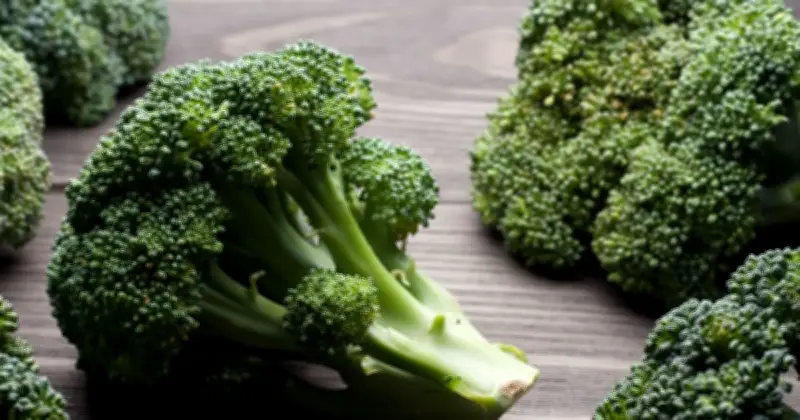
A natural compound found in broccoli is being investigated as a potential treatment for Friedreich ataxia, a rare and currently incurable neurological disorder that affects movement, coordination and speech.
Researchers at Swinburne University of Technology have found that sulforaphane, present in broccoli, can raise levels of the protein frataxin, which is deficient in people with the condition. The compound also appears to protect vulnerable nerve cells from damage and influences related processes such as cellular stress and inflammation.
Progressive disease with no cure
Friedreich ataxia is an inherited disorder in which neurons in the brain and spinal cord deteriorate over time. This progressive damage affects walking, speaking and ultimately survival. Around 200 Australians live with the disease. There is currently no cure.
Children account for most of those affected, yet no approved treatments exist specifically for them.
Associate Professor Faith Kwa, the study's lead author, described the condition as “a devastating rare genetic disease that progressively steals a child's ability to walk, speak, play, and ultimately survive.”
Targeting the underlying cause
The Swinburne team's preclinical work used induced pluripotent stem cell-derived sensory neurons. Results showed that sulforaphane could increase frataxin production and offer neuroprotective effects.
The compound is already known to have a good safety profile in both children and adults, and a pure, bioactive form is commercially available.
Prof Kwa said: “This novel therapeutic agent can target the underlying cause of the disease, while delivering an affordable and accessible therapy worldwide, improving treatment opportunities for families affected by this life-limiting disease.
“This discovery brings us closer to a future where children with Friedreich ataxia experience a better quality of life, greater independence, and an improved chance of long-term survival.”
Path to clinical trials
Because Friedreich ataxia is so rare, public awareness remains limited and research funding can be hard to secure. The researchers are now seeking support to move into clinical trials.
Prof Kwa continued: “We are hoping to gain funding to conduct clinical trials and further prove the positive impact the broccoli compound could have on those suffering from Friedreich ataxia.
“Sulforaphane already has an established safety record in children and adults, and its pure and bioactive form is commercially available. This means if clinical trials prove successful, its rollout could accelerate the path to patient impact.”
She added: “Even if we can raise awareness of this debilitating condition or improve one person's quality of life, our efforts will have been worth it.”
The findings were published in the journal Antioxidants & Redox Signaling. While the results are promising, further clinical research is required before any treatment based on sulforaphane could become available for patients.