

Ancient Sling Bullet Unearths Sarcastic Message from Greek Defenders
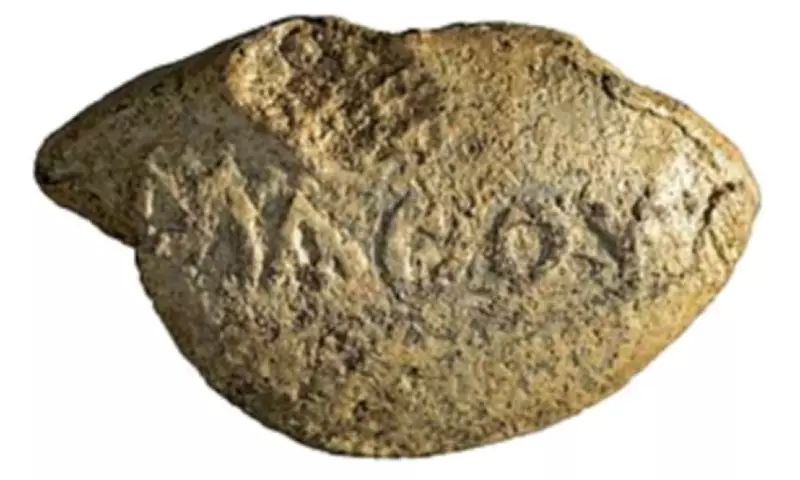
Archaeologists have made a remarkable discovery at the ancient site of Hippos in Israel, unearthing a 2,000-year-old sling bullet inscribed with a taunting message for its intended target. The small, almond-shaped weapon bears the Greek command 'Learn your lesson,' providing a unique glimpse into the psychological warfare and dark humour of ancient Greek defenders.
Details of the Discovery
The lead sling bullet measures 3.2 by 1.95 centimetres and weighs 38 grams, though experts estimate it originally weighed 45 grams before being damaged in a powerful impact. It was found using a metal detector in 2025, approximately 260 metres from the city walls of Hippos, now known as Sussita, located near the Sea of Galilee. This distance highlights the impressive range these projectiles could achieve, with some calculations suggesting they could fly up to 400 metres.
While dozens of similar sling bullets have been recovered from the site, this particular artefact stands out as the first to bear this specific inscription. The Greek letters ΜΑΘΟΥ were likely created by pouring molten lead into a mould, and researchers interpret them as a form of the word 'mathaíno,' meaning 'learn.'

Historical Context and Interpretation
Dr Michael Eisenberg, an archaeologist at the University of Haifa, explained that sling bullets were a cheap and widely used munition for millennia. He noted, 'This is the first instance of the Greek word 'learn' attested on sling bullets – probably the local defender's sense of sarcasm.' The inscription is believed to be a mocking order directed at enemies advancing along a road towards the city's main gate.
The bullet dates back to the second half of the second century or the beginning of the first century BC. Dr Eisenberg suggested it might have been used during conflicts such as the battle between the Jewish Hasmonean kingdom and Greek forces in the region, including a possible confrontation in 101 BC when Alexander Jannaeus attempted to conquer Hippos. Other scenarios include earlier clashes between Greek kingdoms or training exercises.
Broader Archaeological Significance
This discovery adds to a collection of similar bullets found in the region inscribed with dark humour, including messages like 'catch' and 'take a taste.' While most sling bullets are blank, some feature inscriptions of gods, military units, cities, personal names, or victory acclamations, as documented in the journal Palestine Exploration Quarterly. The team emphasised that this bullet is unique for its specific inscription, unlike others decorated with symbols like scorpions or thunderbolts.
Sling bullets were crafted by placing a lead or stone projectile into a sling's central pouch, then rotating it to build momentum before release. They were effective for targeting individuals at short ranges and clusters of enemies at longer distances, making them a versatile tool in ancient warfare.
Implications for Understanding Ancient Culture
The find sheds light on the psychological tactics employed by ancient soldiers, using sarcasm and intimidation to demoralise adversaries. Dr Eisenberg remarked, 'This represents local sarcastic humour on the part of the city's defenders, who wished to teach their enemies a lesson with a wink.' It underscores how humour and messaging were integrated into military strategies, offering a humanising perspective on historical conflicts.
Further analysis of the site and artefacts may reveal more about the daily lives and combat techniques of the Greek defenders, enriching our understanding of ancient Mediterranean history.






