Ancient DNA Study Reveals Human-Neanderthal Mating Patterns
A groundbreaking genetic analysis has unveiled new insights into the ancient couplings between humans and Neanderthals, suggesting that these interactions may have occurred more frequently between female humans and male Neanderthals. Published in the journal Science, this research offers a fresh perspective on prehistoric relationships that have long puzzled scientists.
Unraveling Prehistoric Mysteries
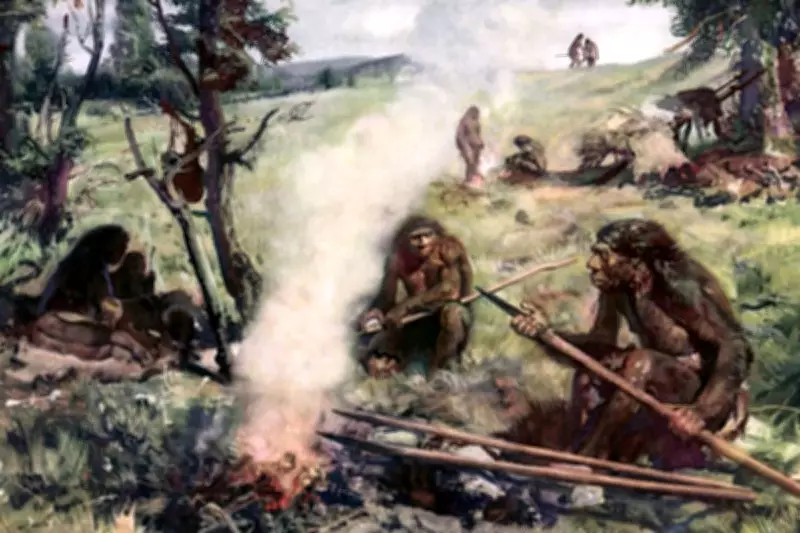
Humans and Neanderthals coexisted in various regions tens of thousands of years ago, occasionally engaging in intimate encounters. However, the specifics of these pairings—such as who mated with whom and under what circumstances—have remained largely unknown. The new study, led by Alexander Platt from the University of Pennsylvania, provides compelling evidence that female humans and male Neanderthals were the more common pairing.
How these interactions unfolded is still a subject of intense speculation. Did human women venture into Neanderthal territories, or were Neanderthal males drawn to larger human communities? Were these encounters peaceful, confusing, secretive, or even violent? As population genetics expert Xinjun Zhang from the University of Michigan noted, "I don’t know if we’ll ever get a definitive answer to how this happened, since we can’t travel back in time."

Genetic Clues and Evolutionary Implications
Scientists have long known that Neanderthals and humans interbred, as evidenced by the small but significant percentage of Neanderthal DNA found in most modern humans outside of sub-Saharan Africa. This genetic legacy includes genes that can aid in fighting certain diseases or increase susceptibility to others. However, Neanderthal DNA is not evenly distributed throughout the human genome.
Notably, there is a surprising scarcity of Neanderthal DNA on the human X chromosome, one of the sex chromosomes, compared to other non-sex chromosomes. Previous theories suggested this might be due to evolutionary filtering, where harmful or non-beneficial genes were eliminated over time. Alternatively, the disparity could be linked to the nature of interspecies mingling.
To investigate further, Platt and his colleagues examined the Neanderthal genome and human DNA interspersed during a mating event approximately 250,000 years ago. Their analysis revealed a higher human genetic footprint on the Neanderthal X chromosome, mirroring the pattern observed in humans. This finding points strongly to mating behavior as the explanation.
The Role of Sex Chromosomes
The study highlights how sex chromosomes are inherited, which supports the mating pattern hypothesis. Genetic females possess two X chromosomes, while genetic males have one X and one Y chromosome. On average, two out of every three X chromosomes in a population come from mothers. If female humans mated with male Neanderthals more frequently than the reverse, over millennia, this would result in more human DNA in Neanderthal X chromosomes and less Neanderthal DNA in human X chromosomes—exactly what the researchers observed.
Joshua Akey, an evolutionary genomics expert at Princeton University who was not involved in the study, praised the research, stating, "I think that they’ve taken some really important steps in filling missing pieces to the puzzle."
Alternative Explanations and Cultural Insights
While the study cannot entirely rule out other possibilities—such as the offspring of human males and Neanderthal females having lower survival rates—the simplest and most likely explanation is also the most intriguing. Platt emphasized that this pattern is "not the result of a strictly Darwinian survival of the fittest. It’s really the result of how we interact with each other, and what our culture and society and behavior is like."
This research not only sheds light on ancient genetic exchanges but also underscores the complex social and behavioral dynamics that shaped human evolution. As scientists continue to decode our prehistoric past, such studies offer valuable clues about the interactions that have influenced the genetic makeup of modern humans.