AI Creates Groundbreaking 'Mental Map' of Human Emotions
Scientists have developed an incredible new map of the human brain that could explain why anger feels remarkably similar to fear, and why being in love creates a sensation of warmth. Researchers from Emory University in the United States have harnessed artificial intelligence to analyse comprehensive brain imaging data, revealing precisely how our minds process different emotional states.
The Science Behind Emotional Mapping
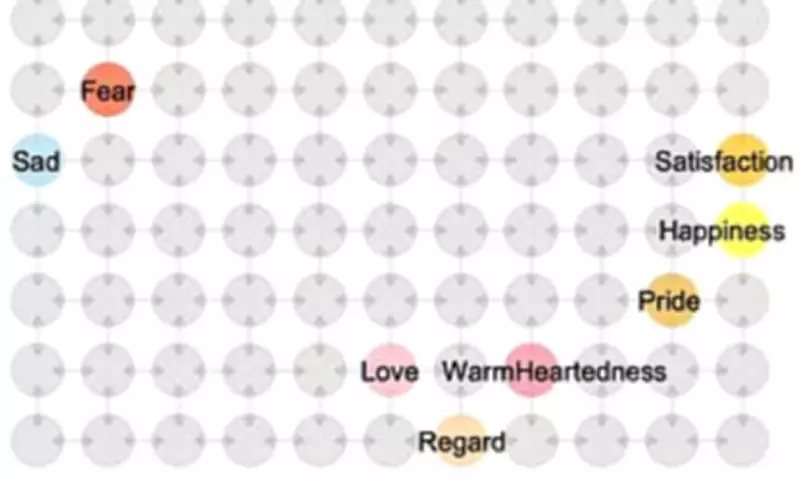
The research team created an artificial 'mental map' with two primary axes: pleasantness along one dimension and bodily reactions along the other. They meticulously charted how the brain responded while participants watched emotionally evocative film clips. The results demonstrated clear, distinct groupings in how our brains represent emotion.
Negative emotions including guilt, anger, and disgust clustered together in one corner of the map, while positive emotions like happiness, satisfaction, and pride occupied the opposite corner. This groundbreaking discovery helps explain why fear, anxiety, and anger all elicit identical bodily responses – rapid breathing and an accelerated heartbeat – while sharing comparable levels of unpleasantness.

Positive Emotions Share Neural Territory
Meanwhile, love, pride, and warmheartedness were mapped closely together, demonstrating how these uplifting emotions are neurologically comparable. First author Yumeng Ma from Emory University explained: 'People's emotional experiences are subjective. We're using technology to understand the mechanisms underlying emotions in an objective, scientific way.'
For their pioneering study, the team recruited thirty participants who watched short, emotionally charged film clips while continuously rating their emotional responses. These subjective ratings were then compared directly to functional MRI brain scans captured during the viewing sessions.
Connecting Experience to Brain Patterns
The researchers discovered significant links between self-reported emotional experiences and distinct MRI patterns within the brain. Their analysis revealed that brains systematically 'embed' emotions in a map-like structure. 'For example, occurrences of anger and fear are often closer together compared to those of happiness and excitement,' Ms Ma elaborated.
The emotional groupings identified by the research were remarkably consistent:
- Anger, Disgust, Guilt, Anxiety, Surprise, Fear, Sadness
- Satisfaction, Happiness, Pride, Warmheartedness, Love, Regard
Implications for Mental Health Research
The researchers now plan to build upon their findings by investigating how this mental map might differ among individuals with mental health conditions. Senior author Philip Kragel noted: 'Research has shown that individuals with depression and anxiety represent emotions in a more compressed, less differentiated way. And that people who represent emotion with more granularity and differentiation tend to have better health outcomes.'
Beyond mental health applications, the team aims to explore how this emotional map develops throughout human lifespan. Dr Kragel posed fundamental questions: 'Are you born with the ability to form broad categories of emotion, such as good or bad, and then you gradually learn where to add more nuanced nodes on the graph? Or maybe you're born with the ability to learn general relational structures. Do the emotions come first? Or is it the other way around?'
Published Findings and Broader Context
The paper, published in the prestigious journal Nature Communications, states that the findings 'shed light on the long-standing observation that people report their feelings using a mental map.' The researchers suggest this map-like structure could result from computational processes within specific brain regions rather than representing actual structural representation.
This research follows another significant study from last year that mapped how the human body physically responds to fourteen common emotions. That investigation found fear creates sensations in the chest, while depression causes numbness in limbs and head. Happiness manifests as full-body sensation, and anger primarily affects arms and hands.

Both studies represent significant advances in understanding the complex relationship between emotional experience, brain function, and physical sensation. As Dr Kragel emphasized: 'Emotions are central to human experience, they are not simply reactions to things. They are important to our success and to our well-being. They help us to communicate better, learn from our experiences, and empathize with others.'