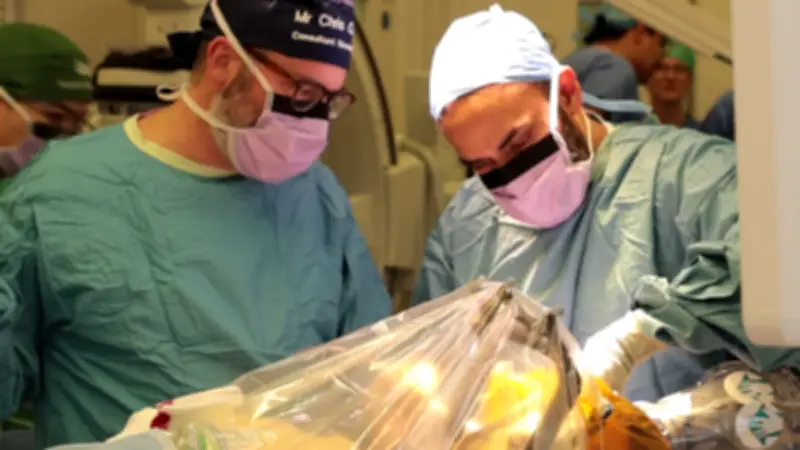
The National Centre for Neurotechnology and Neurorestoration (NCNN) in Newcastle has been awarded £6.2m from the Advanced Research and Invention Agency (ARIA) to expand its work trialling devices that restore brain function lost to conditions such as Parkinson's disease and Motor Neurone Disease (MND).
The centre, a collaboration between Newcastle's hospitals and Newcastle University, was established in 2025 and is dedicated to testing new devices and treatments for conditions affecting the brain or central nervous system. Its work includes brain-computer interfaces (BCI), which use implanted chips in a patient's brain to aid communication and "read brainwaves".
The technology has so far helped patients with a range of conditions, including epilepsy and spinal cord injuries. The aim is that as understanding of how the brain works accelerates, more can be done to interact with the electrical activity the brain produces.
Three aspects of the technology
There are three aspects of the technology: BCIs, neuromodulation and neuroprosthetics. Neuromodulation involves altering the activity of nerves by delivering "targeted electrical impulses", which can interrupt or adjust nerve signals that cause pain or seizures. Neuroprosthetics are devices or systems that connect directly to the nervous system and can "replace, restore or enhance" lost function, for example by translating thoughts into actions.
Mr Mohammed Akbar Hussain, clinical director of the NCNN and consultant neurosurgeon at Newcastle Hospitals, welcomed the investment. He told ChronicleLive: "We have always hoped and had the dream of expanding the remit of the centre - and to not just be there running one or two trials but to be a hub for any sort of neurological devices or technology across the country.
"The only way we can do this is to build the right base - that's the right research team, the right nurses, enough beds and the right hardware. With this funding from ARIA we are able to look forwards and to say how we now have the facility to become a nationwide hub whereby people can come to us and we can help them to develop projects. We can now become a powerhouse - a beacon for this kind of technology.
"This is not only about growing Newcastle and the North East as a centre for this technology - it's helping to put the UK right at the forefront."
Expansion of facilities and workforce
Mr Hussain added: "Neurological conditions are the leading cause of disability worldwide and can be life-changing, causing seizures, loss of movement and communication, issues with mood and difficulties with thinking.
"This funding will support a major boost in our capacity to use the latest neurotechnology to help people who have lost some or all of their normal ability. In the last couple of years, we've already seen some amazing successes through the use of innovative implant technology, in particular for patients who are living with Parkinson's disease, paralysis or severe pain.
"It's very exciting to think about the possibilities that will now be released through the early adoption of even more pioneering technology, to improve the abilities and independence of a wider range of people living with different neurological disorders."
The funding will enable an expansion of clinical facilities and a larger specialist workforce. Dr Luke Bashford, scientific director of the NCNN and researcher at Newcastle University, said: "The National Centre for Neurotechnology and Neurorestoration was created to enable and accelerate the delivery of clinical studies of neurotechnologies, advance research and development, and bridge the gap between scientific discovery and patient benefit. This investment will enable us to scale up this vital work.
"By working with people who have lived experience, innovators and policy makers, we can accelerate the development of safe and effective neurotechnologies, establish new treatments for neurological conditions and strengthen the UK's position as a global leader in this rapidly growing field."
More NHS organisations to take part
The investment will mean more NHS organisations can take part in the research, and more people will be able to access the treatment. Dr Jacques Carolan, programme director at ARIA, said: "There is an extraordinary amount of innovation in neurotechnology right now. The hard part is not simply inventing a new device — it is working out how to get it to the people who need it most. NCNN gives us a real-world place to do that.
"ARIA's investment will help build the clinical and regulatory capability needed to translate the most promising neurotechnologies, both within our programmes and across the broader ecosystem, into real-world impact."