
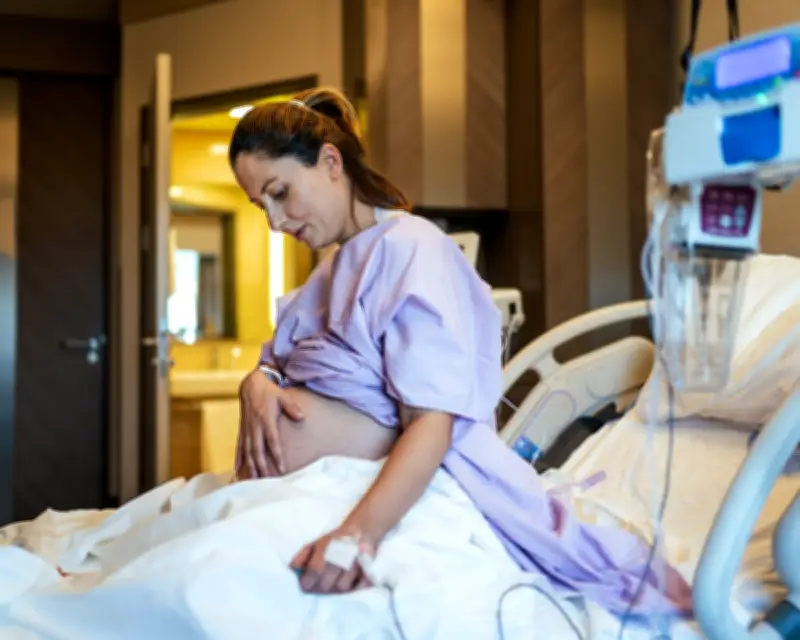
Sharon Gaffka, a reality TV star and political activist, has chosen to have an elective caesarean section for her upcoming birth. She says the decision stems from a desire for control amid what she describes as failing maternity services in England. NHS figures from 2024-25 show that caesarean sections, both planned and unplanned, have overtaken natural vaginal births in England for the first time.
Gaffka writes that since announcing her pregnancy, she has faced constant questions about her birth plan, including whether she will breastfeed, have an epidural, or "try naturally." She explains that her choice is personal and not a judgment on others: "I'm not writing this because I think everyone should have an elective caesarean. Far from it. Birth is unpredictable and there isn't one right way to do it."
Hearing Traumatic Birth Stories
Through her work, Gaffka has heard harrowing accounts of birth trauma. In February, she attended a parliamentary event where women described forceps injuries causing lifelong damage and one woman who repeatedly told healthcare professionals something felt wrong during her pregnancy, only to discover later that her baby had died. That woman requested a caesarean after the stillbirth but was refused.
Gaffka notes a common thread: "I wasn't listened to." She points to the Donna Ockenden report on maternity services at Nottingham University Hospitals NHS Trust, which found a pattern of women experiencing loss of autonomy, poor communication, and exclusion from decisions about their care. Additionally, Valerie Amos's review of maternity services across England, released this week, found that care had not adapted to older motherhood and the rise in caesarean sections.
Pressure and Lack of Informed Choice
A report from the charity Birthrights this year revealed that many women feel pressured to undergo medical procedures, including caesareans, and are denied "genuine informed choice" in birthing options. Gaffka says this made her question whether she would be listened to during birth.
As a British-Asian woman, she was also aware of statistics showing Black and Asian women experience worse outcomes in pregnancy and childbirth than white women. "Reading them while you are pregnant feels completely different. Statistics suddenly become personal," she writes.
Personal Trust Under Investigation
Gaffka's own maternity trust was included in a national maternity investigation. Although her personal care has been positive, with kind midwives and healthcare professionals, knowing the trust was under investigation "occupied a space in the back of my mind." It made her question how to increase her chances of a good birth.
She says pregnancy involves losing control over body changes, discomfort, and how birth will unfold. "People often say to me: 'The birth never goes to plan anyway.' Maybe they are right. But if there was one decision I could make before everything became unpredictable, I wanted it to be mine."
A Choice for Calm, Not Against Vaginal Birth
Gaffka emphasises that her choice is not about being "too posh to push" or thinking every woman should do the same. It is simply the option that gives her the greatest sense of calm. She acknowledges that caesareans are major surgery with risks, but for her, it mitigates the uncontrolled risks highlighted in the Ockenden report.
She concludes: "This isn't an argument against vaginal birth. It's an argument for making sure women feel so safe, so listened to and so well supported that, whatever birth they choose, it genuinely feels like a choice and not the 'least worst option.'" Gaffka hopes for a maternity system where every woman can go into labour with confidence that she will be heard.




