
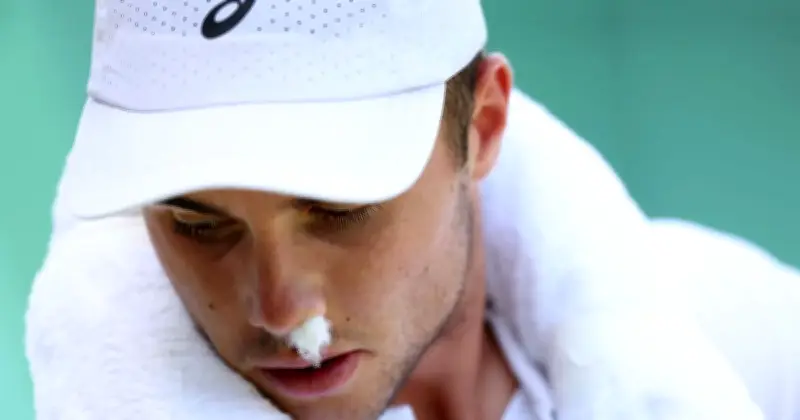
Arthur Fery, the last British player standing at Wimbledon, has been battling repeated nosebleeds during his remarkable run at the tournament. The condition, which flared up most prominently in his third-round victory over Zizou Bergs, stems from a combination of environmental and physical factors common during the grass-court season.
Medical Causes of Fery's Nosebleeds
Elevated pollen levels and arid summer conditions dry out and inflame the delicate nasal membranes. The intense cardiovascular demands of marathon five-set tennis matches also elevate blood pressure, making fragile, dehydrated blood vessels in the nose more prone to rupturing. According to Fery, the problem is not a regular occurrence for him but has "dogged" him throughout the competition.
Impact on Matches
During his exhausting four-and-a-half-hour third-round win, Fery experienced three separate nosebleeds that required medical timeouts to stem the bleeding. The interruptions disrupted his rhythm and exasperated his opponent. Fery confirmed that it is a particular medical concern he plans to address and will pursue treatment once the tournament finishes.
Historic Achievement and Ranking Leap
Fery becomes the first British male wildcard to reach the fourth round at Wimbledon since Andrew Foster in 1993, a 33-year milestone. His live ranking has soared to world No. 91, propelling him into the top 100 for the first time in his career. This secures him direct entry into the forthcoming US Open, meaning he will not need to qualify.




