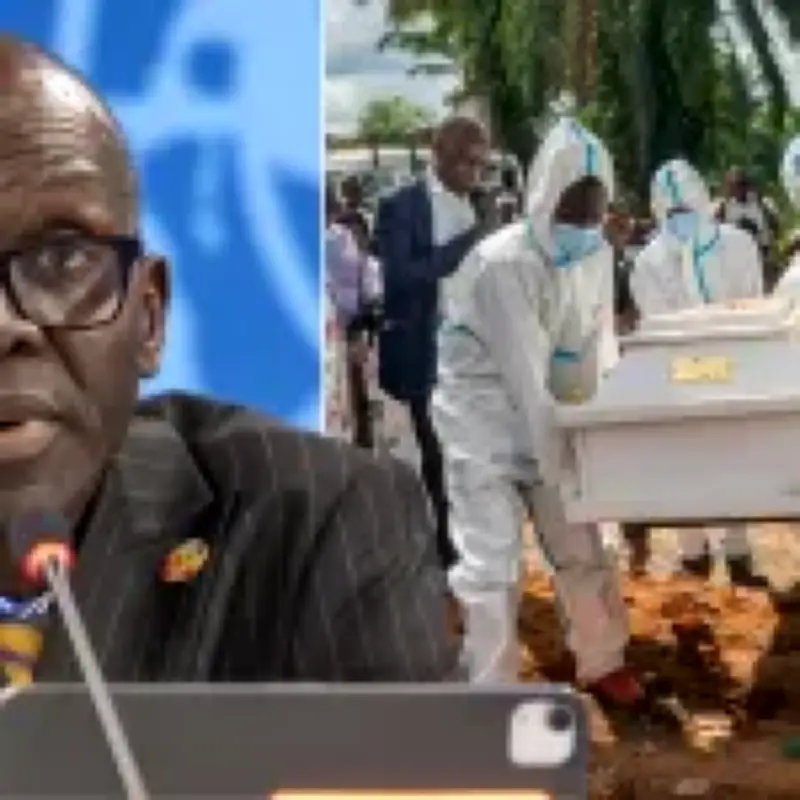
The World Health Organisation's Regional Director for Africa has warned that international spread of the Ebola virus is 'still possible' and called on the UK and allies to do more to tackle the outbreak, which has killed more than 5,500 people in the Democratic Republic of Congo.
Dr Mohamed Janabi said support from the West 'must go further' as cases of the Bundibugyo strain have spiralled to more than 11,000, with 10 other countries now at high risk. The virus has appeared in France, Uganda and Nigeria, while a British healthcare worker was evacuated back to the UK and treated for Ebola earlier this month.
Virus 'ahead of us for four months'
Dr Janabi told Metro that the virus was 'ahead of us for four months' and that 'insecurity, population movement, and transmission in hard-to-reach areas is making it harder to break the chains of transmission'. He added: 'As long as the outbreak continues to spread further, I have to say that spread [internationally] is possible.'
The scientist said officials are 'turning the tide' in places hit hardest at the beginning of the outbreak, such as the city of Bunia, where cases have 'fallen sharply'. However, he warned that health officials are unable to intervene in areas dogged by militia conflict.
Attacks cut off access
'These areas are not safe and we need to protect humanitarian workers and patients,' he explained. 'We have had over 100 attacks since we were there, cutting us off from the people who need us most. Politicians and international partners need to negotiate a truce so our staff can go in.'
Dr Janabi also asked the UK and other Western countries to step up support, saying the organisation needed 'fast, flexible funding' to continue its work. He said: 'They must be partners, not bystanders, in shaping the response… Why don't we equip countries with modern equipment for screening? Why don't we equip them with treatment centres? My request is about capacity building, so we can be equipped not with a fish, but with a fishing rod.'
Vaccine access and global risk
There is currently no vaccine for this strain of Ebola, which begins with sudden flu-like symptoms and progresses to severe gastrointestinal symptoms, organ failure and bleeding. Dr Janabi said a vaccine is in development but warned that future vaccines will not be able to get into the DR Congo and have an effect if sold at 'common market price'.
'What I am asking the UK, UK, and other big pharma is to give us priority. What I want is accessibility and affordability. You can even have two prices, with one just for low-income countries,' he added.
Because Ebola can take as long as three weeks to show symptoms, some cases have travelled abroad. A doctor returning from a humanitarian mission became France's first case in June, while another patient travelled to the United Arab Emirates before going on to Uganda. Dr Janabi said 'global risk is still low' but warned that similar 'spread is possible' if the outbreak worsens.
No travel restrictions, UK response
He warned countries not to impose travel and trade restrictions on hotspots in Africa, saying: 'They will make these countries hide their cases. There is no scientific evidence that if you restrict people travelling, you are safe.'
Dr Janabi also called for more international support to help the million people in Congo displaced by the virus, stressing the need for 'support with food security, water sanitisation, and protecting children'. A Reuters analysis of graves dug in Bunia claimed that more people have died from Ebola than authorities are reporting, with nine new graves buried a day in June compared to an average of 2.4 per day in 2025.
Despite this, Dr Janabi remains optimistic, saying: 'I strongly believe inside me we are going to put a halt in Ebola Bundibugyo. We have my data shows we have discharged over 3000 cases of confirmed Ebola. We started with zero treatment centres and now we have over 40 in the region. The trials with a vaccine are continuing well, and I think early next year we are going to be ready to share the outcome.'
A UK Government spokesperson said: 'We share Dr Janabi's determination to bring this outbreak under control. The UK is deeply concerned by the Ebola outbreak in the Democratic Republic of the Congo, and our priority is to help stop transmission, save lives and prevent wider regional spread. The UK is providing £78.7 million to support the response, alongside technical expertise and diplomatic engagement, helping to strengthen surveillance, treatment and infection prevention and support frontline health workers and affected communities. We are working closely with the DRC authorities, Africa CDC, WHO and other partners on the immediate response, as well as supporting efforts to develop new vaccines, treatments and diagnostics and ensure they can reach the people who need them.'