
Prince Philip Hospital in Llanelli, Carmarthenshire, has closed two wards and restricted visitors this week due to an outbreak of scabies, a highly contagious skin infection caused by parasitic mites. Health officials confirmed they are taking direct action to curb the spread, including deep cleaning and treating infected patients, staff and contacts.
Sharon Daniel, executive director of nursing, quality and patient experience at Hywel Dda University health board, said: "Scabies is highly contagious and difficult to eradicate, and we are grateful to everyone for their continued support." She added: "We will be contacting individuals whose planned care appointments may be impacted by this, as soon as possible." The board also said it is dealing with a number of cases in healthcare and community settings across its area, and it appears it isn't the only place they're thriving.
Rising cases across England
While government guidelines state "reliable estimates of current scabies incidence are not possible," the most recent available UK Health Security Agency (UKHSA) figures suggest a sharp increase post-pandemic. Between 2022 and 2024, diagnoses at sexual health services in England more than tripled, while clinicians also noted a rise in "persistent scabies infections" that didn't respond to treatment.
The Royal College of General Practitioners' Research and Surveillance Centre's latest data shows a weekly uptick as people return to schools and universities and spend more time indoors. However, the true number of people dealing with this rash is likely even higher, as Professor Kamila Hawthorne, chair of the Royal College of GPs (RCGP), tells Metro that "social stigma" may stop people going to the GP.
What causes scabies?
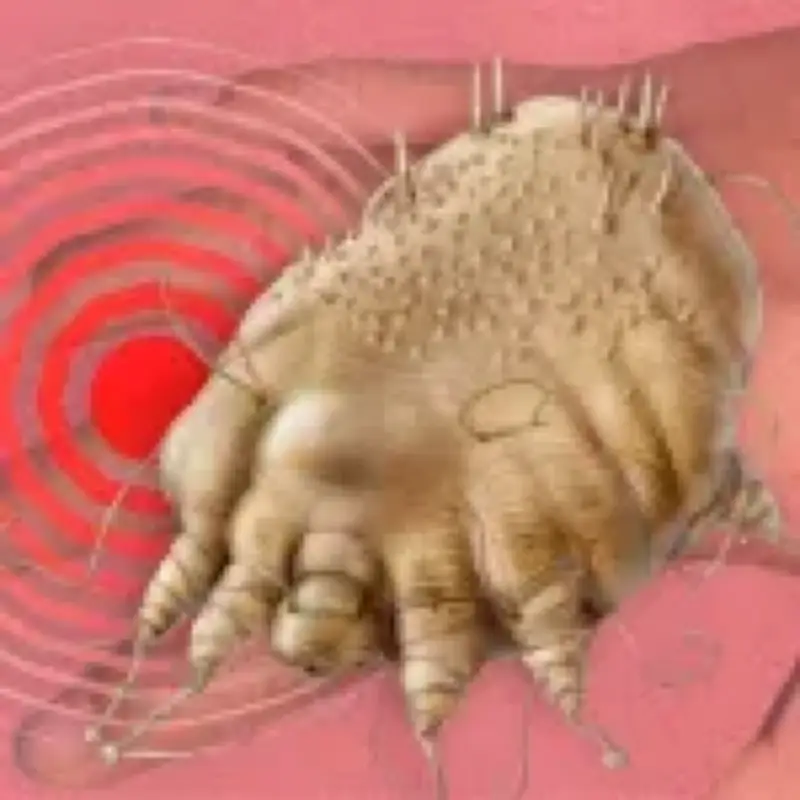
Scabies is a skin condition triggered by tiny mites, formally known as sarcoptes scabiei, that burrow and lay eggs under human skin, as well as infecting the likes of dogs and sheep. Each animal tends to have its own specific variant of this mite, a member of the arachnid family, meaning they can't reproduce in other species. In dogs, for example, a scabies infestation is called mange.
The mites can't jump or fly, but once they land on a new victim, they can crawl at 2.5cm a minute to hunt down a hiding spot. For humans, you only need about 10 egg-producing females to cause itchy agony. At just 0.4 millimetres in length, they're barely visible to the human eye.
Symptoms and treatment
The blotchy rash that follows can feel like it has come out of nowhere as symptoms take up to weeks to surface. Professor Hawthorne explains: "While not a serious condition, scabies can be very itchy and irritating. If not properly treated, it can spread and increase a patient's risk of complications such as secondary skin infections or make existing skin conditions worse."
Dr Tess McPherson, of the charity British Association of Dermatologists, says: "There can be a rash which can appear similar to conditions such as eczema but typically there may be small spots in between fingers, toes and genital areas." She stresses: "Anyone can get scabies and it is not caused by lack of hygiene."
The mite is usually transmitted through direct, prolonged skin-to-skin contact, such as sexual intercourse or sharing a house with someone. It can also spread through contaminated clothing, bedding or towels. Randall Higgins, a pharmacist and skincare specialist at Good Glow, tells Metro: "So if one person has scabies, their closest contacts should also be evaluated and potentially treated to prevent mite spread or re-infections even without symptoms appearing yet."
Treatment typically involves topical creams such as permethrin cream and malathion lotion. Dr Will Welfare, director of regions at the UK Health Security Agency, previously highlighted that everyone from members of the same household and sexual partners to care home residents and workers must be treated. He advised washing all bedding and clothing at 60°C or higher on the first day of treatment and putting clothing that cannot be washed in a sealed bag for three days until the mites die.




