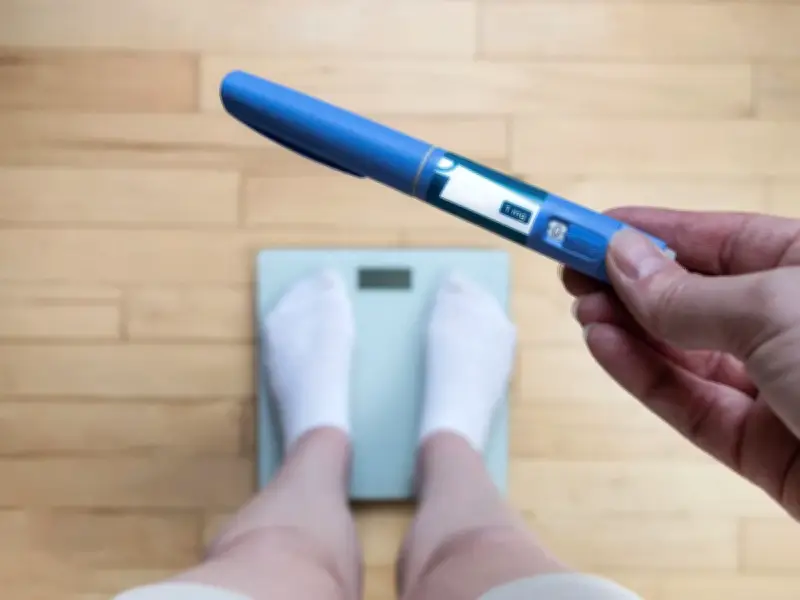
Health authorities have warned of a possible link between certain weight-loss and diabetes medicines and a rare condition that can cause sudden sight loss. The UK's Medicines and Healthcare products Regulatory Agency (MHRA) has advised people taking semaglutide to seek urgent medical attention if they experience sudden loss of vision or rapid worsening of eyesight in one or both eyes.
What is NAION and how common is it?
The condition, known as non-arteritic anterior ischaemic optic neuropathy (NAION), can cause vision to suddenly become blurry or cloudy. It occurs when blood flow to part of the optic nerve is reduced. The MHRA update came after the European Medicines Agency concluded that NAION was a very rare side effect of semaglutide, potentially affecting up to one in 10,000 people taking it. A review cited by the MHRA estimated around one extra case of NAION a year for every 10,000 adults with type 2 diabetes treated with semaglutide.
Global regulatory actions
The World Health Organization and Australia's medicines regulator have also issued safety alerts. Health Canada opened a safety review in October 2025 into a possible link between semaglutide and NAION, with findings yet to be published. On 9 November, the US Food and Drug Administration ordered manufacturers to add the potential risk of NAION to the "Warnings and Precautions" section of labels for all GLP-1 receptor agonist medicines. This requirement extends beyond semaglutide to include tirzepatide, sold as Mounjaro and Zepbound.
Expert advice and patient experiences
Sharon Heng, a consultant ophthalmic surgeon at Moorfields Eye Hospital, told Optometry Today: "The most important message is that we need to see the eye health risks in the context of the overall health benefits of this medication." She noted that some patients had stopped taking GLP-1 medicines due to eyesight concerns, adding: "We would ask that patients speak to their prescribers or GP prior to stopping the medication." Heng also advised optometrists to be aware of potential ocular effects of GLP-1s and to consider symptoms that may be linked to the medication when taking patient histories.
In Denmark, four patients experienced vision loss after using Novo's GLP-1 drugs and were granted compensation, according to the Danish Patient Compensation. In the US, patients have filed lawsuits alleging sight loss after taking GLP-1 medicines. The New Jersey Supreme Court grouped claims involving NAION in Bergen County for coordinated management. Danielle Gold, an attorney at Weitz & Luxenberg, said her firm had filed more than 100 cases, with around another 100 to 150 pending in New Jersey Superior Court in Bergen County.
Jay Vandegriff, 70, who took Ozempic for type 2 diabetes, is among those suing. He was diagnosed with NAION after noticing a "smudge" in his left eye on Christmas Day 2024. The risk of NAION was not listed as a side effect on the US label for Ozempic, manufactured by Novo Nordisk, when he was taking it. Vandegriff has just 33% of his vision left in one eye and has lost most of his depth perception. He said: "I first thought it was a smear on my glasses, but I took them off, cleaned them, and realised it was still there. It was like an opaque smudge, and the next day, it was a lot darker and bigger. I was told nothing would bring the vision back, and it continued to get worse for another six weeks." He added: "I feel depression and anger, because if I had been warned it could affect my vision I wouldn't have taken Ozempic in the first place."
Novo Nordisk has asked the court to dismiss Vandegriff's case. A spokesperson described the personal injury lawsuits as "without merit" and said they are "vigorously defending them". The spokesperson added: "Novo is aware of reports and epidemiological data concerning non-arteritic anterior ischaemic optic neuropathy (NAION) in patients treated with semaglutide. The available clinical, epidemiological and post-marketing data are being continuously assessed, and a causal relationship between semaglutide and NAION has not been established. Patient safety is a top priority for Novo and we take all reports of adverse events associated with our medicines very seriously, collaborating closely with health authorities and regulatory bodies worldwide."
A spokesperson for Eli Lilly, which makes Mounjaro and Zepbound, said: "FDA's drug safety communication applies to all medicines with GLP-1 RA activity and does not reference any findings specific to Lilly medicines. We are carefully evaluating the update and will respond to FDA promptly."