
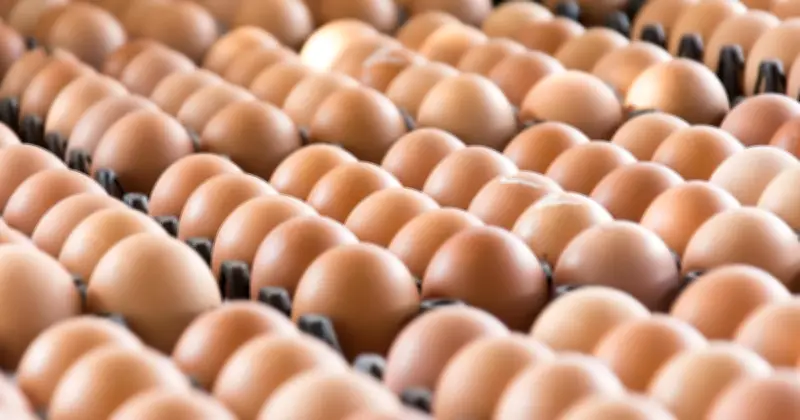
UK shoppers are being urged to check a tiny mark on eggs before buying them, particularly when purchasing food for people who may be more vulnerable to salmonella. The small red Lion mark stamped directly onto the shell identifies eggs produced under the British Lion Code of Practice, a food safety scheme introduced to help reduce the risk of salmonella.
Guidance changed after salmonella decline
For many years, pregnant women, babies and older people were advised against eating raw or lightly cooked eggs because of concerns over salmonella poisoning. That guidance was changed around a decade ago following a dramatic reduction in Salmonella cases. The British Egg Industry Council's Lion Code of Practice has been credited with playing a major role in improving egg safety.
The Food Standards Agency says the risk of contracting salmonella from eggs produced under the scheme is extremely low, with the eggs described as virtually free from the infection. More than 90% of British eggs are now produced under the British Lion scheme.
Strict requirements for producers
Producers operating under the scheme must follow strict requirements, including vaccinating hens against salmonella, increased hygiene controls and testing for the bacteria. Eggs must also carry a best-before date on the shell and on the box, and producers are independently audited.
However, shoppers should not assume that every British egg carries the same level of protection. Only eggs produced under the British Lion scheme are covered by the guidance for vulnerable groups, making the mark on the shell an important detail to look for.
How to read the egg code
The Lion mark is a small red image of a lion stamped onto the egg. Additional information is printed alongside it. Class A eggs must also carry a production code showing how they were produced and where they came from. The first number identifies the farming method. A 0 indicates an organic egg, 1 means free range, 2 means barn and 3 means cage.
This is followed by the country of origin, such as the UK, and a code identifying the farm where the egg was produced. A best-before date is also displayed. For example, a code reading 3UK54321, followed by a best-before date of April 15, would indicate a caged egg produced in the UK at a farm with the identification number 54321.
Where to find British Lion eggs
The British Lion mark can be found on eggs sold through major supermarkets and independent retailers. Stockists include Aldi, Asda, Co-op, Iceland, Lidl, M&S, Morrisons, Ocado, Sainsbury's, Tesco and Waitrose. Egg Info says British Lion eggs are also widely available to foodservice businesses through major wholesalers, regional traders and cash-and-carry outlets.
The scheme has become increasingly widespread since its introduction, with more than nine in 10 British eggs now produced under its requirements. The change in advice followed a significant fall in Salmonella infections and increased confidence in the safety controls surrounding British Lion eggs. Former health minister Edwina Currie, whose comments became closely associated with the major salmonella scare of the 1980s, described British Lion eggs as the “safest in the world” in 2013.
For shoppers, the advice is straightforward: when buying eggs for someone who is vulnerable to foodborne illness, look for the red Lion mark stamped directly onto the shell and check the best-before date. The mark is particularly important because not every egg sold in the UK is necessarily produced under the British Lion scheme.




