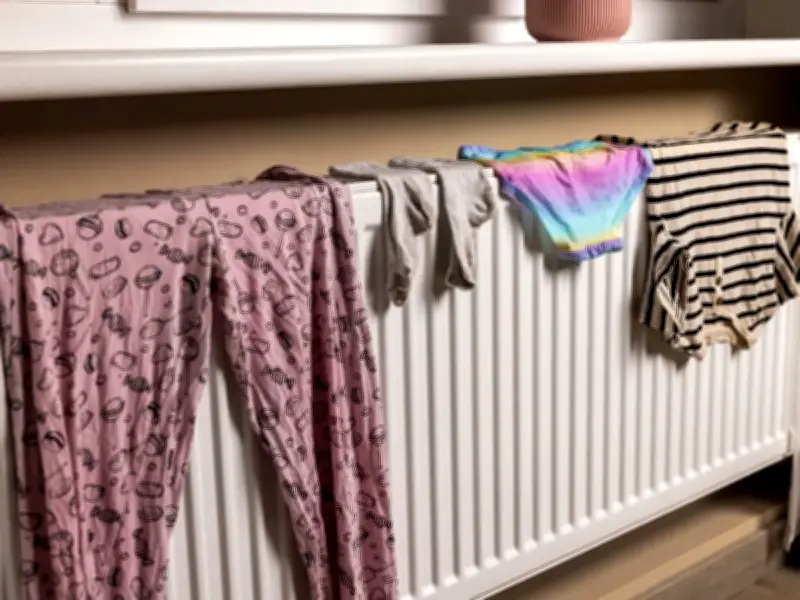
Households across the UK are being advised not to dry clothes on radiators this autumn. As temperatures drop in October, many people struggle to dry washing indoors, but experts warn that placing laundry on radiators can lead to condensation and mould.
Energy bills rose by 4 per cent on October 1 under the latest energy price cap, making tumble dryers expensive, while outdoor washing lines take longer in cooler weather. This often pushes people to use radiators for faster drying, a practice experts now caution against.
Expert advice on moisture and mould
Price comparison site idealo has partnered with Guillaume Drew, founder of Or & Zon, to share advice on drying methods. Drew explains that lower indoor temperatures and tighter window seals slow moisture evaporation, trapping it inside the home. A single load of wet laundry can release multiple litres of moisture into the air.
“Condensation develops when this retained moisture cools sufficiently to create toxic mould and mildew, especially when it settles on cold surfaces such as walls and window frames. Clothes may have a lingering musty odour; or become brittle and stiff because they are taking longer than usual to dry,” he says.
What to avoid when drying indoors
Drew outlines several mistakes to avoid. Placing wet clothing on radiators is “one common way to exacerbate the problem. This causes a rapid spike in local humidity, restricts heat flow and warps some fabric types.” Overcrowding drying racks also blocks air circulation, increasing drying time. Running the heating continuously with windows closed, or leaving wet laundry in poorly ventilated areas like closed bedrooms, rapidly fills the air with moisture.
Tips for effective indoor drying
For safer drying, Drew recommends using the additional spin cycle on most modern washing machines to remove excess moisture before hang-drying, and leaving space between items on the rack for airflow. He also suggests investing in a portable dehumidifier placed near the drying rack to remove moisture from the air before it settles on walls. Finally, he advises using a small fan to circulate air over wet clothing or opening a window slightly during drying, while closing other doors to prevent humid air spreading through the house.