
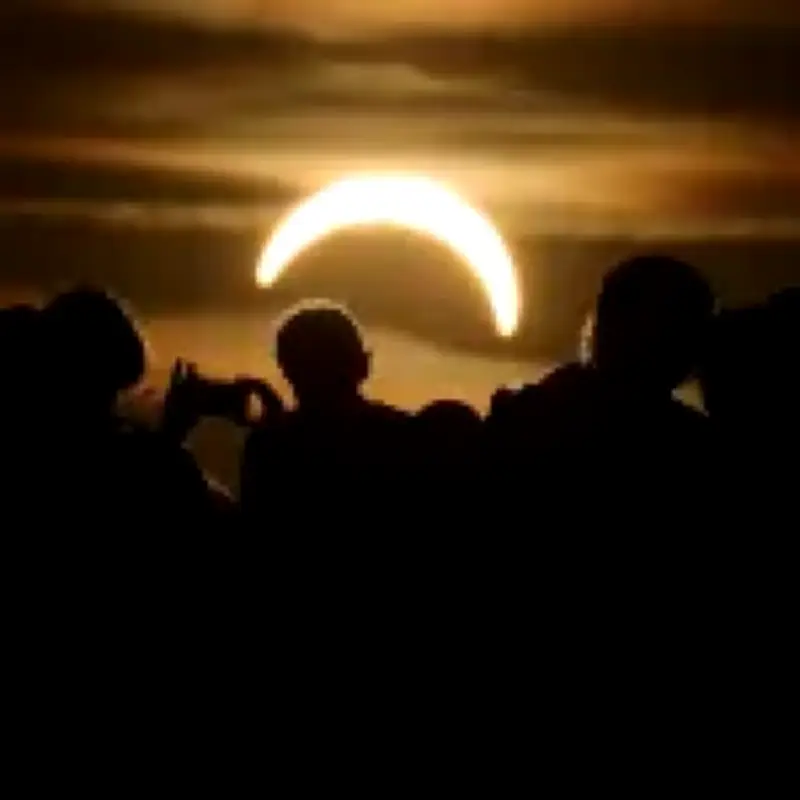
Google searches for 'eye injury' in the UK skyrocketed by 5,000% on the day of the solar eclipse, according to Google Trends data. The surge began from 6pm, as the moon started to slide in front of the sun.
Search spike and expert warnings
'Eclipse eye injury' became a breakout query, while searches for 'eyes hurt' also rose by around 5,000%, peaking at 100 people searching at 7.08pm, around the peak of the partial solar eclipse. Experts had previously warned that symptoms of eclipse burn can take hours or even days to appear.
Risks of viewing without protection
Eclipse burn occurs when leftover sunlight singes a hole in the cornea, which detangles light into nerve signals. Damage can occur in less than a minute, and people may see a sunspot carved into their vision in the shape of the sun's crescent-shaped edges. This condition, called solar retinopathy, isn't always painful, meaning people may not realise they have injured themselves at first.
Within a few hours, people may see black dots, and their eyes may become watery and sensitive to light. Blind spots may appear in the centre of their vision, with patients reporting difficulty reading and objects appearing distorted and blurred. Symptoms usually resolve, but it may take several weeks to a year, and blind spots have lingered for years in some cases.
Permanent damage and protection
Researchers have found that the light injures the macula, a small yellow part of the back of the eye that helps see colours and detail. There is no treatment that can reverse the scarring caused by solar retinopathy. Eclipse glasses, also called solar viewing glasses, are cardboard frames with a special film in the eyeholes that filters out harmful rays, including ultraviolet and infrared light, which is why sunglasses don't provide adequate protection.




