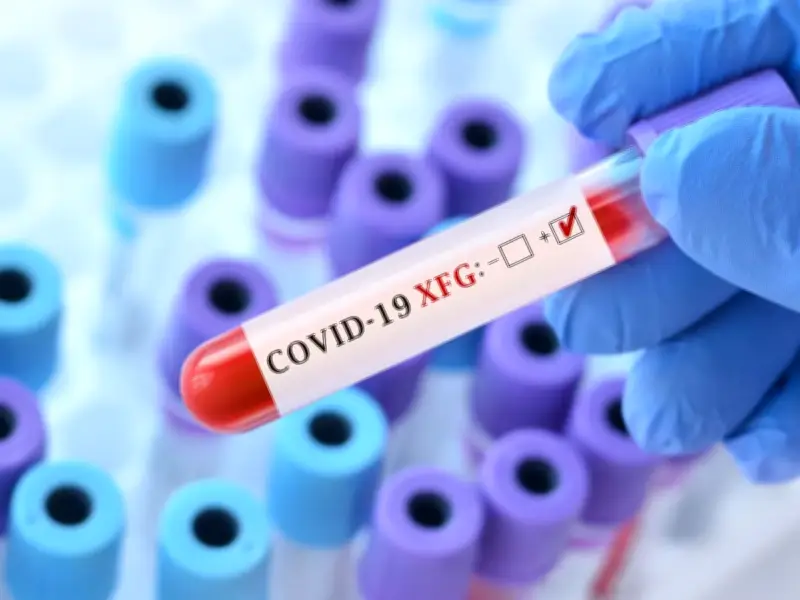
Brits are being warned to watch out for signs of a nasty bug creeping across the nation as cases of "American Covid" continue to soar. The XFG variant, given its nickname after causing chaos in the United States, has been making its rounds in the UK for roughly a year.
But health chiefs have issued an urgent alert as rates jump, with Covid-19 positive test rates climbing to around seven per cent in September and hospital admissions surging by approximately 50 per cent over the same period.
Cases and hospital admissions rise
Data from the UK Health Security Agency (UKHSA) shows cases rose by 13.5 per cent week on week to October 7, while deaths soared by 46.4 per cent week on week to October 2, reaching 41 weekly fatalities. Hospital admissions also jumped 33.5 per cent as cold, wet weather drives people indoors.
Experiencing a sore throat, headache and muscle aches can leave you questioning whether you've come down with a seasonal bug or something more serious. With infections on the rise once more, people might be inclined to self-diagnose based on how they're feeling, but medical professionals warn that symptoms frequently overlap, reports the Irish Mirror.
How to tell Covid from flu
Dr Neel Patel, Associate Medical Director at LloydsPharmacy Online Doctor, suggests that the duration and progression of an illness might provide some indication, though these factors alone cannot definitively identify which infection you're dealing with.
He said: "People with flu normally feel very unwell for two or three days and will continue to experience symptoms for around another five days. After that, you may feel tired and run down for a further two or three weeks. However, people with coronavirus usually begin to show symptoms five to six days after being exposed, and symptoms commonly last up to two weeks."
Dr Patel also warned that the two illnesses can be difficult to distinguish. He said: "It can be difficult to tell coronavirus apart from the flu as they share many of the same symptoms; however, they may feel more intense than having the flu."
Testing and official guidance
He said the only dependable method of checking for Covid-19 is to take a test, rather than relying solely on how long symptoms last. Dr Patel added: "While Covid-19 tests are no longer freely available on the NHS, you can still buy lateral flow, PCR and antibody tests online."
If you feel too unwell to carry out normal activities, official guidance suggests staying at home. For those who cannot, the UKHSA recommends wearing a "well-fitting face mask" with multiple layers or a surgical face mask, avoiding crowded spaces, exercising outdoors, and washing hands regularly.
Dr Patel advises that urgent medical attention is required for difficulty breathing at rest, confusion, loss of consciousness or unusual drowsiness, persistent chest pain or pressure, cold or blue-tinged skin, or a sudden loss of speech or movement. The NHS recommends calling 999 for severe breathing difficulties, sudden chest pain, collapse or other potentially life-threatening symptoms.
Symptoms to watch out for
According to the NHS, potential symptoms of American Covid to watch out for include:
- A high temperature – you might feel hot, cold or shivery, or your skin may be hot to touch on your chest or back (you don't need to measure your temperature)
- A new, continuous cough – this means coughing a lot for more than an hour, or three or more coughing episodes in 24 hours
- A loss or change to your sense of smell or taste
- Shortness of breath
- Feeling tired or exhausted
- An aching body
- A headache
- A sore throat
- A blocked or runny nose