
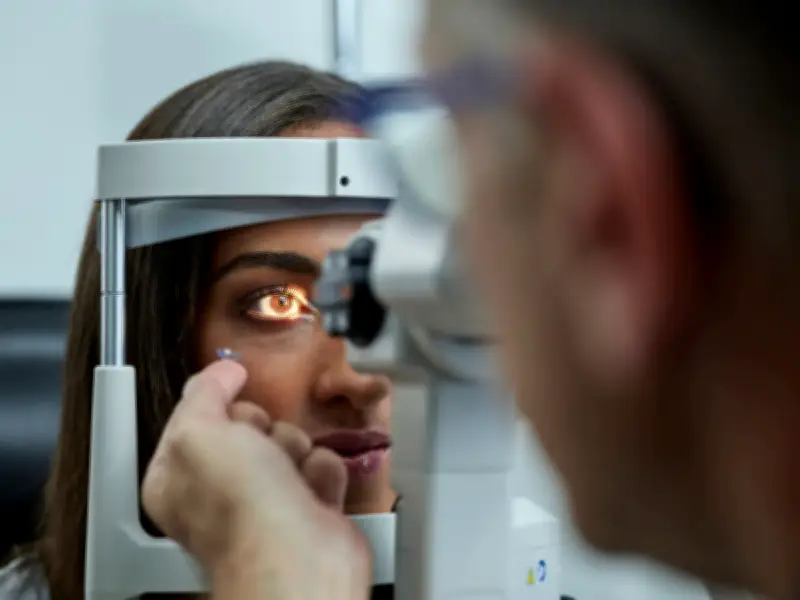
New analysis reveals that hundreds of thousands of people are turning up at A&E for eye complaints that could be treated for free at high street opticians. The Association of Optometrists (AOP) estimates that between 62% and 78% of the 780,000 eye-related A&E visits in England could safely be managed by community opticians. This means up to 400,000 visits to overburdened A&E departments could be saved by better use of high street services.
Common conditions treatable by opticians
Eye infections such as conjunctivitis and dry eye are among the conditions for which 400,000 people went to hospital last year but could have been treated on the high street. Less serious eye abrasions can also be treated at NHS-funded clinics at optometrists. Known as minor and urgent eye care services, these clinics allow patients with red eyes, infections, flashes and floaters, or sudden changes in vision to be assessed and treated for free. Patients can attend some on a drop-in basis but are usually advised to book ahead over the phone.
Call for better funding
The AOP is calling for better funding of urgent and minor eye care services in optometrists so all can offer the NHS clinics as an alternative to A&E. Chief executive Adam Sampson said: “Emergency departments should not be the default destination to manage eye problems. What this research tells us is that hundreds of thousands of patients each year end up in A&E because they conclude it’s their only option, but they could be treated by the highly trained optometry workforce based in the community.”
Not all opticians are funded by the NHS to provide these free clinics, and the industry body is calling for an end to this postcode lottery. Sampson added: “The challenge is not capability, it's consistency. It’s essential we have a service in place for everyone everywhere in England to treat eye problems in the community. The reality of the postcode lottery is that it deprives patients of access to care close to home. It is simply a no-brainer that the Government acts to ensure that every member of the public who has an eye problem should be able get the help they need on the high street, in the same way the public can go to a community pharmacy for a range of health issues, regardless of where they live.”
A&E pressure remains high
A&E waits have remained stubbornly high since Labour came to power despite some progress on the elective NHS waiting list. Eye problems are among the top 10 most common reasons people attend A&E. Waiting time standards collapsed under various conservative governments, and the NHS target for 95% of patients to be treated or admitted within four hours of arriving in A&E has not been achieved in any month since July 2015.
Labour and NHS England have set an interim target of March 2026 for 78% of patients attending A&E to be admitted, discharged or transferred within four hours. Latest data shows 75.4% of patients in England were seen within four hours in A&Es, improving in recent months. Dr James Gagg, vice president of the Royal College of Emergency Medicine, said: “It’s no secret that emergency departments in England are under immense pressure at the moment, and we know our patients are being let down due to overcrowding and unacceptably long waits. We would welcome better-resourced community eye care, which could help deflect demand from A&E, accompanied by further measures from government to tackle the root causes of overcrowding and corridor care elsewhere in the system.”




