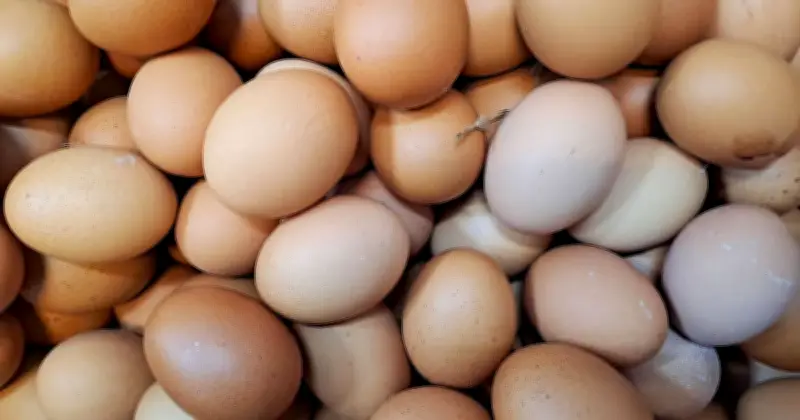
The UK Health Security Agency (UKHSA) has reported a rise in Salmonella cases potentially linked to imported eggs, with 259 cases and one death recorded as of August 25. This is up from the 207 cases reported the previous week.
Officials have reiterated that babies, young children, pregnant women and older people should only eat thoroughly cooked eggs in restaurants and cafes. There is no evidence to suggest that eggs produced in the UK are affected, and the risk to the public remains low.
Investigation into Salmonella clusters
Earlier this year, UKHSA launched an outbreak investigation into a single strain, t5.9411, after identifying an increase in cases of Salmonella Enteritidis (SE) caused by it. SE is a particular strain of Salmonella that can cause food poisoning.

Since initiating the investigation, UKHSA has also identified an increase in two other SE clusters (t0.24068 and t5.9765). These two additional clusters are genetically distinct to the t5.9411 cluster but are part of the wider family of SE, which have seen increased case reporting from June 2026.
Case numbers and sample dates
Cases across all three clusters have risen since June, and their genetics suggest they may all be linked to imported eggs. There have been 38 cases and one death linked to the t5.9765 cluster in England, with sample dates ranging from January 27 to July 29.
Meanwhile, some 177 cases in England are linked to the t0.24068 cluster, with sample dates ranging from May 27, 2025, to August 5 this year.
Health advice and ongoing investigation
Hannah Charles, lead epidemiologist at UKHSA, said: “It’s important to emphasise that the overall risk to the general public remains low.” She explained that Salmonella infection typically causes diarrhoea, stomach cramps, vomiting and fever for a short period in most people, but can lead to more serious illness, including sepsis requiring hospital admission, particularly in those who are more vulnerable to infection.
Ms Charles said the agency is working with the Food Standards Agency (FSA) and other public health agencies to investigate the Salmonella clusters. Professor Ian Young, chief scientific adviser at the FSA, said: “The exact causes of these outbreaks have not yet been identified, but investigations so far have identified links to imported eggs. There is no evidence that UK-produced eggs are affected.”
Prof Young said babies, young children, pregnant women and older people should only eat running eggs if they carry the British Lion mark or are produced under the Laid in Britain scheme. These groups should make sure eggs are thoroughly cooked if eating in restaurants and cafes, and should avoid dishes containing mousses, fresh mayonnaise or hollandaise sauce.
Prof Young added: “As with any foodborne illness, good hygiene remains your best protection: store and cook food according to the packet instructions, wash your hands thoroughly before handling food and always after handling raw meat, poultry and eggs.”