
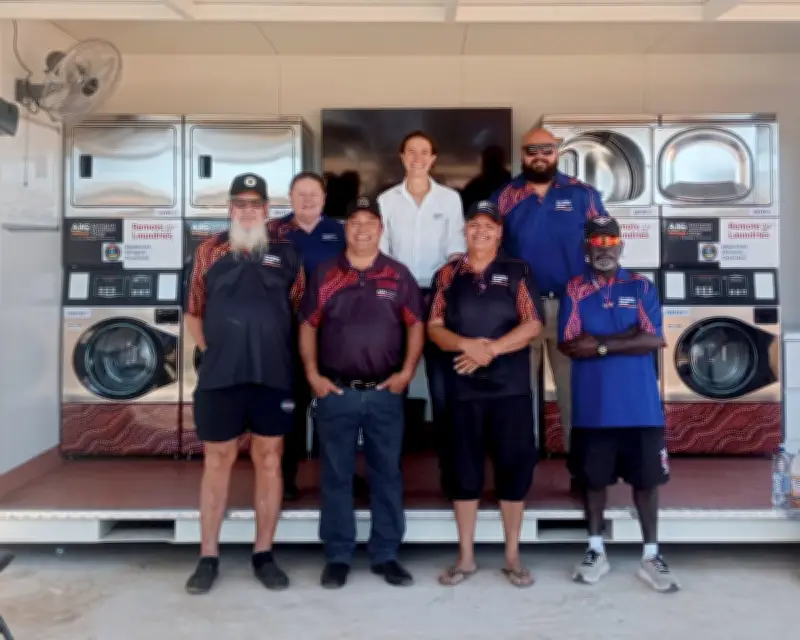
The Aboriginal Investment Group (AIG) has built seven free laundry sites across the Northern Territory, dramatically reducing scabies infections and preventing new cases of rheumatic heart disease. In Barunga, scabies dropped 60% within two years of the first laundry's operation, with no new cases of rheumatic heart disease reported.
Health Crisis in Remote Communities
Rheumatic heart disease, largely eliminated in developed nations by the mid-20th century due to access to running water, persists in many remote Indigenous communities due to overcrowded housing and lack of hygiene facilities. Up to 70% of Indigenous children in these areas contract scabies before their first birthday. Untreated scabies sores can become infected with group A streptococcus bacteria, leading to acute rheumatic fever and rheumatic heart disease.
Community Impact
Former Olympian Liz Morgan-Brett, CEO of AIG, says she witnessed the devastating impact of unsafe living conditions during a 2018 tour. “We knew the drivers from our communities were overcrowded housing and a lack of access to commercial-grade washers and dryers,” she told Guardian Australia. The first prototype was built in 2019 and shipped to Barunga. The seven laundries have now processed over 88,000 washing cycles.
Gemma Brogan, a teacher in Gunbalanya, says the cost of laundry supplies is prohibitive. “The cheapest washing machine is about $800. No one around here has that kind of money spare.” She believes every remote community should have such facilities.
Personal Stories
Perpethua Ali, a Warumungu and Warlpiri woman, was diagnosed with acute rheumatic fever at age 38. She now manages both the condition and type 2 diabetes. “A lot of our mob get diagnosed with diabetes but they are mostly dying of heart attacks,” she says. As of late December 2024, over 11,700 Australians had rheumatic heart disease or a history of acute rheumatic fever, with at least 80% being Aboriginal or Torres Strait Islander, who are 20 times more likely to die from it.
Experts Call for Comprehensive Approach
Associate Professor Aunty Vicki Wade, a Noongar elder and First Nations principal research fellow at Menzies School of Health Research, says remote laundries play an important role but are just one part of a broader strategy. “It’s a basic human right that we’ve got access to water and washing. It’s part of healthy living practices.” She emphasises the need for community education, culturally safe care, and funding for preventive measures.




