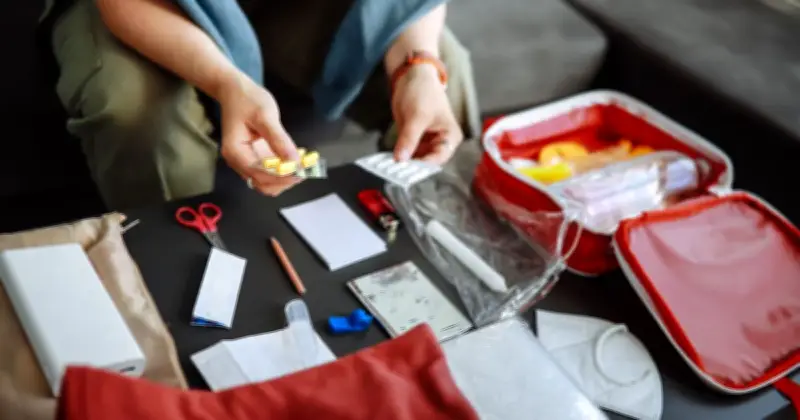
A pharmacist has outlined 22 essential items households should keep for emergencies, arguing that official Government advice does not go far enough. The Be Ready campaign encourages families to stock supplies to manage for at least three days if services are disrupted, but the guidance lacks detail on specific contents.
Pharmacist's warning on official advice
Jason Murphy, Head of Pharmacy and Superintendent Pharmacist at Chemist4U, said: "The Government's new Be Ready guidance is a useful reminder that households should be prepared to manage for a few days if an emergency disrupts access to shops, pharmacies, or other services."
He added: "But when it comes to health, simply saying 'first aid items' and 'essential medication' can leave people wondering what they actually need."
The full list of recommended items
Murphy's list includes first aid supplies such as assorted plasters, sterile gauze dressing, adhesive or medical tape, crepe or cohesive bandages for sprains, and a triangular bandage for use as a sling.
Other recommended items are antiseptic wipes, burn gel or burn dressings, tweezers for splinters, scissors, disposable gloves, an instant cold pack, a foil emergency blanket, eye wash or saline pods, a first aid guide with emergency contact numbers, and an optional CPR face shield.
For medicines and health essentials, the list includes paracetamol, ibuprofen where suitable, antihistamines, anti-diarrhoea medicine such as loperamide, oral rehydration salts, indigestion or heartburn remedies, and a thermometer.
Focus on basics and special needs
Murphy said households should prioritise supplies for everyday injuries and minor illnesses rather than stockpiling unnecessary medicines. He said: "Being prepared doesn't mean filling your cupboards with every medicine on the pharmacy shelf. You need enough to deal with common injuries and illnesses at home, plus enough of your prescribed medication and equipment that a few days of disruption to pharmacies or healthcare doesn't put your health at risk."
He added: "For most households, the best approach is to focus on the basics needed to deal with everyday cuts, burns, sprains and minor illnesses, alongside anything specific to the health needs of the people in your home."
For those with special conditions, Murphy highlighted asthma inhalers and EpiPens as particularly important, while people with diabetes should keep spare testing strips, sensors and other everyday equipment. Insulin users should consider how to keep their medication cool during a power cut.
"If you rely on prescription medication, don't wait until you're down to your last few doses," Murphy warned. He also advised households to check their emergency supplies every six months, replacing expired medicines and sterile dressings to ensure everything remains safe and effective.