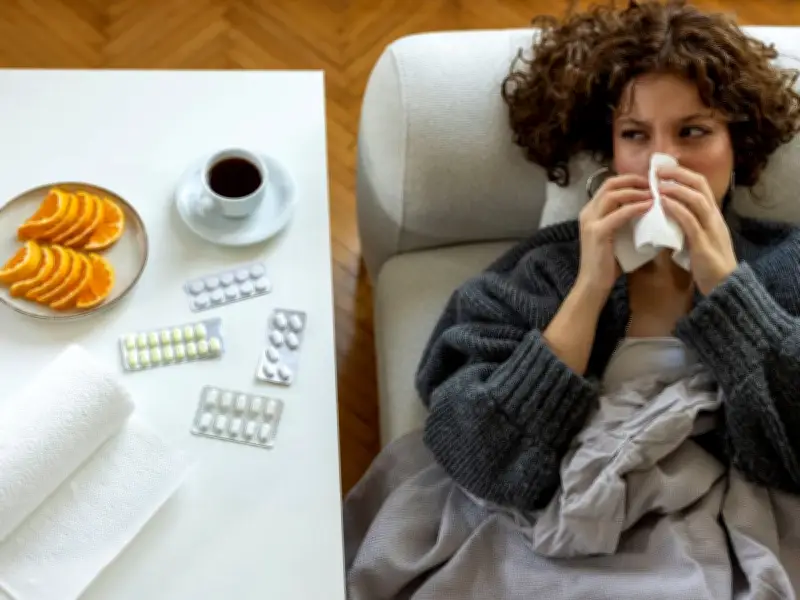
There is no need to follow separate eating rules depending on whether you have a cold or a fever, according to Omar El-Gohary, superintendent pharmacist at iQ Doctor, who has put the old saying 'feed a cold, starve a fever' to rest.
The advice instead is to keep drinking fluids and eat whatever you feel able to manage. If your appetite has disappeared, smaller meals can be easier than trying to force yourself to eat a full dinner. Soup can also be a good option, providing warmth, fluid and something to eat while you recover.
Wet hair and sweating myths
The pharmacist also warns against another familiar tale, stating that going outside with wet hair will not make you more ill. Colds are caused by viruses, meaning washing your hands regularly and catching coughs and sneezes in tissues are much more useful ways to reduce the spread of infection.
If you have been tempted to wrap yourself up in extra layers to 'sweat out' an illness, it is another habit worth reconsidering. Resting and staying comfortable is more important than deliberately overheating yourself.
Spotting the difference between cold and flu
Knowing whether you have a cold or flu can also help you understand what to expect. A cold tends to develop gradually, often starting with a sore throat, sneezing, a runny nose and a cough. On the other hand, the flu can come on suddenly, leaving people feeling exhausted, achy and too unwell to carry on with their usual routine.
However, similar symptoms can also be caused by Covid-19 and other respiratory infections, so how you feel is not enough to confirm exactly which illness you have.
Safe remedies and common mistakes
When it comes to easing symptoms, paracetamol or ibuprofen can help with aches and a high temperature, provided they are taken according to the instructions on the packet. A warm lemon and honey drink may also soothe an irritated throat, although honey should never be given to babies under one.
For a blocked nose, saline drops or sprays may help, while suitable decongestants can provide temporary relief. However, nasal decongestant sprays and drops should not be used for more than five days, as using them for longer can actually make congestion worse.
The pharmacist also advises people to think twice before stocking up on vitamin C as soon as they feel a sneeze coming on. Taking it after cold symptoms have started has not consistently been shown to shorten the illness or make it less severe. Zinc may help shorten a cold, but the evidence is uncertain and it can cause side effects such as an altered taste or an upset stomach.
Another common mistake is taking several different cold and flu remedies without checking their ingredients first. Flu sachets, daytime capsules and headache tablets can all contain paracetamol, even if they look like completely different products. Taking them together could mean accidentally exceeding the recommended dose. Anyone who has taken more paracetamol than the packet or leaflet recommends should contact NHS 111 urgently, even if they feel well.
Antibiotics are also not a treatment for ordinary colds or flu, as they are caused by viruses and antibiotics do not speed up recovery.
When to seek medical advice
While most people will recover at home, there are certain symptoms that should not be ignored. Anyone who feels very unwell, becomes short of breath or has not started to improve after seven days should seek advice from their GP or NHS 111. It is also important to get medical advice if a cough or fever appears to improve before returning or getting worse.
People who are pregnant, aged 65 or over, have a weakened immune system or live with a long-term health condition should seek advice early, as some may need antiviral treatment. For children, parents should seek urgent medical advice if a baby under three months has a temperature of 38°C or above, or if a child shows signs of dehydration. A child who is difficult to wake, floppy or unresponsive, has a rash that does not fade when pressed with a glass or experiences a fit for the first time needs emergency help.