
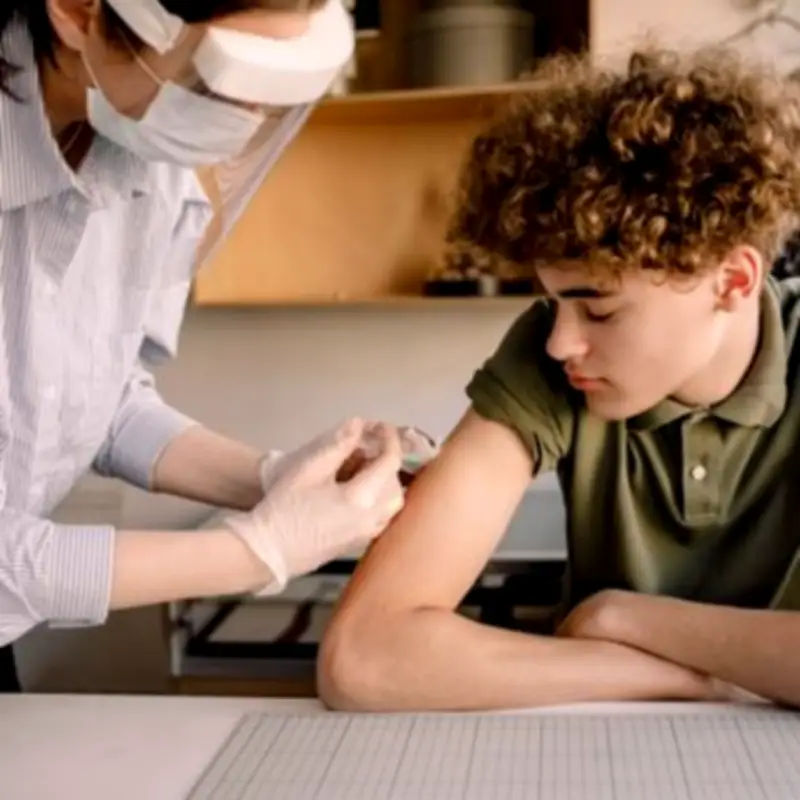
The UK government has announced that approximately one million Year 13 pupils and individuals under 25 starting university this autumn will be offered the meningitis B (menB) vaccine. This one-off programme aims to provide two doses to those aged 17 to 18 in Year 13, as well as under-25s entering university or residential further education.
Vaccination Timeline and Eligibility
The first dose will be available from July 20, with a second dose scheduled for August. Two doses, administered at least 28 days apart, are necessary for full protection. The initiative follows a series of meningitis outbreaks, most notably in Kent earlier this year, which resulted in the deaths of two teenagers.
Juliette Kenny, 18, was one of the victims in the Kent outbreak. Her family has been campaigning for routine access to the menB vaccine for teenagers and young adults. The Kent outbreak was described as the fastest growing and largest seen in the UK, with subsequent smaller clusters exceeding expected sizes.
Risk Factors and Vaccine Administration
Close and prolonged contact in halls of residence, shared accommodations, and social events can increase the risk of contracting menB. Eligible Year 13 pupils will be contacted via the NHS app, text, or letter to receive the jab (Bexsero), manufactured by GSK. Those under 25 can book appointments directly with pharmacies.
Individuals who miss the second dose in August due to holidays can still receive it in September. Community pharmacists will deliver the programme. Health Secretary James Murray stated: “The Kent outbreak and recent clusters indicate a possible change to the way menB affects people. While we assess the latest evidence, we are acting now to help protect young people at highest immediate risk as they enter university and residential colleges this autumn.”
Eligibility Criteria
The one-off programme covers individuals completing Year 13 in summer 2026, born between September 1, 2007, and August 31, 2008, as well as under-25s starting university or residential further education for the first time in autumn 2026. Students in their second, third, or later years, as well as postgraduates, are not eligible.
According to the UK Health Security Agency (UKHSA), first-year university students face a substantially greater risk of menB than non-university peers. Cases of invasive disease typically peak from October to November each year.
Expert Opinions and Future Plans
The Joint Committee on Vaccination and Immunisation (JCVI) is preparing advice on whether a larger, longer-term programme is needed. Dr Shamez Ladhani, consultant epidemiologist at UKHSA, explained: “The question about eligibility is always difficult... we have had to prioritise those who are at highest risk.” He noted that population immunity against menB is currently low, possibly due to 25 years of declining cases and the emergence of new strains.
Dr Ladhani also mentioned that COVID-19 lockdowns may have contributed to the rise in cases, though this is difficult to confirm. England’s deputy chief medical officer, Dr Thomas Waite, highlighted that menB is fatal in up to 10% of cases.
International Students and Charity Responses
International students under 25 entering their first year of university should receive their first menB dose in their home country where possible. Dr Tom Nutt, chief executive of Meningitis Now, called the programme “a great step forward” but expressed hope for further rollout. Vinny Smith, chief executive of the Meningitis Research Foundation, described it as “a step towards closing the UK’s menB protection gap” but stressed that a one-off programme is insufficient and called for routine NHS access.




