
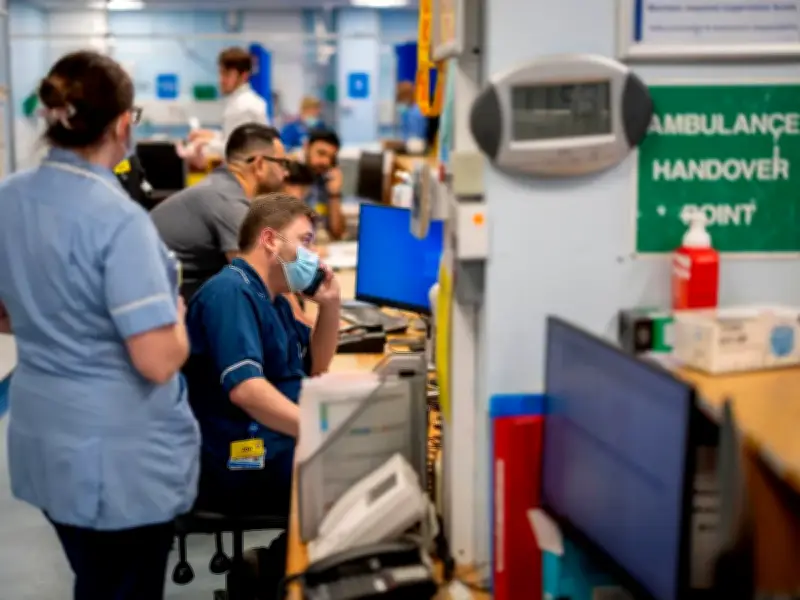
The Royal College of Nursing (RCN) has reported that nurses across England are collapsing at work and suffering seizures as they care for patients in extreme heat. The union has compiled testimonies from members describing conditions in hospital wards and care homes as “unbearably hot” and “not fit for humans”.
Record heatwaves and rising temperatures
Two record-breaking heatwaves in May and June led to more than 2,800 excess deaths across the country. An amber warning for heat across large parts of England will come into force again on Thursday morning, with temperatures forecast to reach 36C or potentially higher. Rail operators are warning passengers on some networks to travel only if essential, as services are likely to be disrupted.
Nurses' testimonies highlight unsafe conditions
The RCN compiled a series of testimonies to its advice line, including a nurse who collapsed from dehydration after a long shift on a ward with no ventilation and was admitted to the same organisation where they worked. Pregnant nurses reported that temperatures impacted their health, while two nurses with pre-existing conditions reported seizures due to excessive heat. Others reported broken air conditioning, fans, or ventilation, with some unable to open windows. Multiple nurses reported working in rooms exceeding 30C, with one forced to work in a place at 36C. A nurse in an NHS cancer service reported feeling “nauseous, dizzy and faint” after temperatures exceeded 33C. One community health centre nurse said: “It gets to the point you dread going to work, especially when wearing PPE (personal protective equipment) and providing patient care. We drip with sweat from head to toe.”
Union and expert calls for action
RCN chief executive and general secretary Professor Nicola Ranger said: “When nursing staff are collapsing, feeling dizzy, sick or even being admitted to the very hospitals they work in because their workplaces cannot handle the heat, it shows just how badly they are being failed.” She added: “These testimonies should be a wake-up call. Swathes of the NHS and social care estate are in disrepair following decades of underinvestment and are utterly unprepared for extreme temperatures. It’s becoming an impossible and inhumane place to work or receive care, with vulnerable patients, including the elderly and those recovering from surgery, receiving care in temperatures that risk making them sicker. It’s unacceptable.” She urged employers to abide by legal duties to make workplaces safe, including installing air conditioning, improving ventilation, ensuring water and heat-appropriate uniforms, and guaranteeing risk assessments, especially for pregnant or vulnerable workers.
Matthew Hopkins, director of the NHS Alliance ambulance and acute network, said NHS organisations were pushing for increased capital money from the Government to deal with hospital maintenance. Speaking on the NHS Alliance’s Health on the Line podcast, he said some members report backlog maintenance costs exceeding £100 million, forcing boards to trade off between fixing roofs for winter and installing air conditioning.
Ruth Wilkinson, head of policy and public affairs at the Institution of Occupational Safety and Health, said employers can take proactive steps such as adjusting work hours, providing cooling stations, and encouraging hydration. She noted that heat stress can lead to dehydration, heat exhaustion, or heat stroke.
Health and Social Care Secretary Yvette Cooper said: “The extreme heat is hitting public health and our NHS. Across the NHS and social care, staff are doing a remarkable job to respond to rising A&E attendances and ambulance call-outs, heat problems amongst the elderly and difficult working conditions. I want to thank them for all their work. But I have also been clear that the NHS now needs to plan for summer pressures in the way we currently plan for winter pressures. That includes making sure buildings are more resilient in these new extreme heat conditions as well as responding to additional patient needs.”




