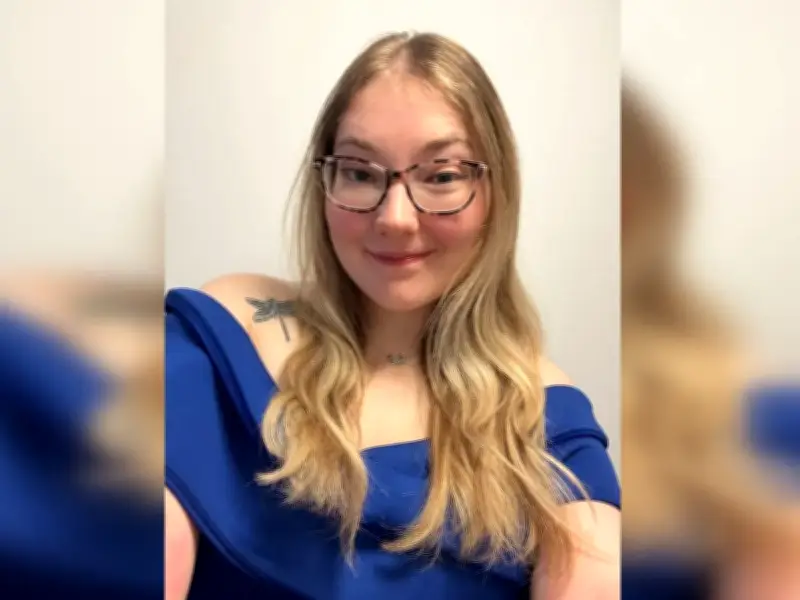
Kiera Tonks was 20 when doctors discovered she had chronic myeloid leukaemia (CML) after she experienced disturbing nightmares for six months. Now 23, she wants to raise awareness of blood cancers and encourage young people not to dismiss worrying symptoms because of their age.
At the time of her diagnosis, Kiera was studying Environmental Health at Liverpool John Moores University and working three jobs, including at a nightclub. She told the ECHO: “I was having nightmares, which was really unusual for me. It wasn't just a scary dream - it's like I was waking up and seeing things in the room with me.
“That went on for about six months. I was very stressed at the time, but when things calmed down and I was still sitting bolt upright in bed, I knew something was wrong.”

Blood test and hospital referral
Kiera went to see her GP, who suggested she have a blood test. She received a phone call afterwards which initially seemed relatively routine. She said: “It was really chill. They told me I was a little bit anaemic, and they were concerned about my white blood cell count and to go to hospital to get more checks.
“They told me A&E were expecting me and to pack a bag and take a friend.”
She went to the Royal Liverpool Hospital and was ushered into a cubicle after waiting just 10 minutes in the waiting room. Doctors explained that a healthy white blood cell count would normally be around between 4,000 and 11,000 cells per microlitre of blood, while an infection could cause it to be lower. Kiera’s count was more than 300,000.
Diagnosis and treatment
On October 4, 2023, Kiera was told she had chronic myeloid leukaemia. Doctors told her that, if she had to “pick a cancer”, CML was one of the more treatable forms.
Looking back, Kiera said many of the other symptoms she had experienced had seemed to have perfectly reasonable explanations. She said: “I was working three jobs, one of them was at a nightclub. I put my tiredness down to working nights. Bruising, I was putting down to carrying crates of beer, mopping and cleaning. Backache, I put down to lifting canisters.
“It all made sense. There was nothing that made me question anything was wrong, apart from the nightmares, which aren't a normal symptom of leukaemia. It's like my body was trying to tell me something was wrong.”
On the Friday, she underwent a bone marrow biopsy before being discharged. Kiera took a month away from university and her three jobs before returning to her studies. She now takes one tablet a day - a tyrosine kinase inhibitor (TKI), a type of targeted treatment used to manage CML. While life has continued largely as normal, she still experiences longer-term symptoms including backache and exhaustion.
Raising awareness
Kiera, who maintains a positive outlook on life, said: “Life has gone on, just with hospital mingled in there. I saw this quote and it said, 'you can either wallow when something bad happens, or you can turn into Deadpool'. Apparently I took the Deadpool option.
“I'll die with cancer, but not of it. When I tell people that I have cancer, they don't believe me. I live a normal life, and it's not the be all end all. It's scary, but it will be okay.”
She has received support from the Teenage Cancer Trust and said she had met many young people who had experienced delays or dismissals when seeking medical advice. Kiera is now keen to challenge the perception that cancer is something that only affects children or older adults.
She said: “When you think of young children with cancer, a good majority is leukaemia. And then you might not be too shocked if an older person has cancer. But in between that, it's kind of forgotten about.
“I've made so many friends through cancer. So many of them were dismissed, just because of their age. Many went with a lump somewhere and were told they were too young to get cancer.”
When asked what advice she would give to a young person worried about a symptom, she said: “Just keep pushing for answers. You know your body better than anyone. If things don't seem right, they're probably not.
“Use [Jess's Rule] to your benefit. If you keep getting brushed off it could be so much worse.”

Jess’s Rule is an NHS England initiative introduced following the death of Jessica Brady, who died from cancer aged 27 in December 2020. In the five months before her death, Jessica had 20 consultations with her GP practice, but her cancer was not diagnosed until she was admitted to hospital with stage 4 adenocarcinoma. The initiative encourages healthcare professionals to stop and “reflect, review and rethink” when a patient presents three times with the same or worsening symptoms. This can include considering further tests, a face-to-face examination, seeking a second opinion or making a specialist referral.
Now, three years on from her diagnosis, Kiera is building her career in environmental health while continuing to manage her cancer. She said organisations including Clatterbridge Cancer Centre and Teenage Cancer Trust had played a huge role in helping her come to terms with her diagnosis.
She added: “I would love to express how much all of the staff at Clatterbridge and Teenage Cancer Trust do for us young people. I don't think they get recognised for it.
“They gave me an opportunity to meet other people with cancer and not wallow in self-pity, but know it's going to be okay.”