
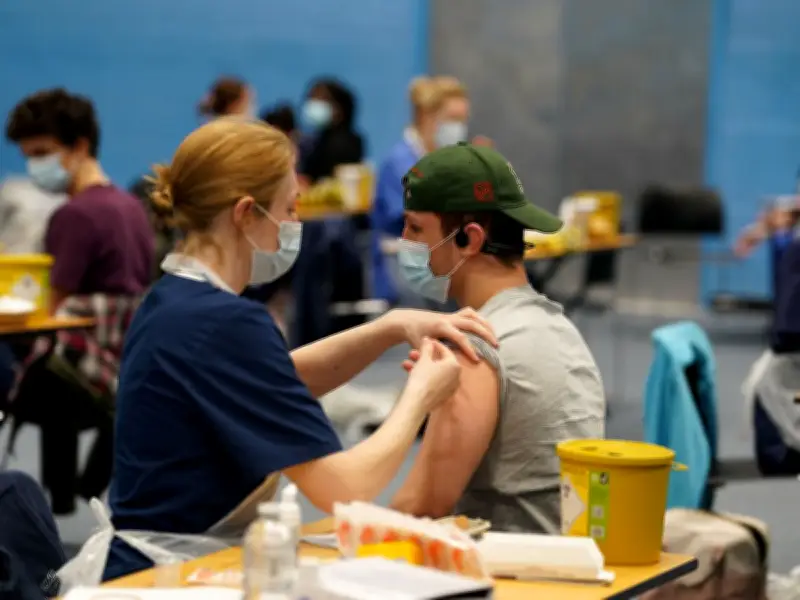
Health officials have urged parents and carers of more than 45,000 teenagers in Greater Manchester to ensure they accept an NHS offer of the meningococcal B (MenB) jab.
Year 13 pupils and those under 25 starting university this autumn were offered their first dose from Monday (July 20), with a second dose set to be given in August. Two doses, at least 28 days apart, are needed for full protection.
Outbreaks prompt vaccination drive
It comes after a series of outbreaks of meningitis, with the most serious being in Kent earlier this year which left two teenagers dead. Juliette Kenny, 18, died in the Kent outbreak and her family have been campaigning for teenagers and young people to be routinely given access to the MenB vaccine.
The Kent outbreak was the fastest growing and largest seen in the UK, and other smaller clusters of meningitis in young people since then have been bigger than expected. The disease is serious and potentially life-threatening - and can result in life-changing disabilities such as amputations, hearing loss and brain damage, and death in around 10 per cent of cases.
Risk for university students
Now, following a rise in MenB cases this year, NHS Greater Manchester is urging young people to accept the offer of a MenB jab to keep them protected from the disease before students start university, where close and prolonged contact in halls of residence and at social events can increase the risk of contracting MenB.
Dr Claire Lake, Deputy Chief Clinical Officer for NHS Greater Manchester said: “Meningococcal B disease is a rare but very serious infection which is fatal in up to 10% of cases and can cause life-long injury. While outbreaks are uncommon, recent outbreaks show that when they do occur, they can be devastating.
“The risk is higher amongst young people starting university where close and prolonged contact with lots of new people increases the chances of being exposed to the meningococcal bacteria.
“Vaccination remains our best defence against becoming seriously unwell from meningitis, that’s why we are urging parents and carers to ensure their eligible young people book appointments for their MenB vaccines as soon as possible and to get both doses to ensure maximum protection.
“Whilst vaccination prevents many infections, it is also important that young people and their families continue to be aware of symptoms of meningitis – seeking urgent medical help if they are concerned.
“And remember, by getting two doses you’re not only protecting yourself from MenB, you’re also saving the lives of your friends and everyone around you.”
Symptoms and eligibility
Symptoms of MenB appear suddenly. According to the NHS, they include: a high temperature (fever), very cold hands and feet, a stiff neck, joint and muscle pain, a severe headache that is getting worse, eye pain when looking at bright lights, seizures, sickness and diarrhoea, confusion, being very sleepy or difficult to wake, and spots or a rash that doesn’t fade when pressed with a glass.
Those eligible for the jab in year 13 will be contacted directly through the NHS App, text, email or letter, according to the health service. New undergraduates including new international students will be contacted by UCAS or their university.
The MenB vaccination programme will run until March 31, 2027. Vaccines can be booked via the online national booking system, walk-in clinics and pop-up clinics.
Future routine programme recommended
It comes as Government advisers told the NHS it should be offering teenagers vaccinations against MenB. The Joint Committee on Vaccination and Immunisation (JCVI) made the recommendation, which needs approval from the Government. It would mean that teens should get a jab around the age of 15, with catch-up programmes for those who would otherwise miss out.
The JCVI is recommending the following: a booster jab around age 15 for those who had a MenB jab as a baby (those born on or after May 1 2015). The first cohort this recommendation applies to will turn 15 in 2030. Children who missed the jab as a baby will be offered two doses.
In addition, the JCVI says it “strongly supports” giving two doses of the MenB vaccine to children born on or before April 30 2015. They would get this when they are around age 15. This group were not offered the vaccine on the NHS as babies and so have missed out on protection as infants. Offering jabs when they hit their teens protects them at the point they are next most at risk.
Because it could take a while for any programme to be implemented, the JCVI would also like to see a catch-up programme to ensure anyone who misses a vaccine does not lose out.
Professor Wei Shen Lim, chairman of the JCVI, said: “Following the meningitis outbreaks in early 2026, a one-off programme for two-doses of MenB vaccine is being offered to eligible young people this summer.
“We encourage everyone who is eligible to book an appointment online to receive the vaccine at a local pharmacy, in time for the second dose to be received before heading off to university or college. For protection, two doses of the MenB vaccine are necessary, at least 28 days apart.
“Additionally, JCVI has now also provided Government with a recommendation and additional considerations for a future routine MenB adolescent vaccination programme for those aged around 15 years. (The Department of Health) will now consider this with a decision to be made in due course.”




