
The National Institute for Health and Care Excellence (NICE) has endorsed two non-invasive diagnostic tests for endometriosis, including a saliva test, which could dramatically cut the typical nine-year delay in diagnosis. The draft guidance, published on 7 July 2026, allows NHS doctors to use Endotest, which analyzes saliva for microRNA markers, and EndoSure, which measures gut electrical signals via abdominal sensors.
How the New Tests Work
Endotest detects minute biological markers in saliva that indicate endometriosis is likely present. The sample is sent to a lab, and results guide further diagnosis. EndoSure requires patients to fast for six to eight hours, then drink water during a 45-minute procedure while sensor pads on the stomach record gut activity. Results are immediate. Both tests will receive NHS funding while additional evidence is gathered.
Impact on Patients
Endometriosis affects one in ten women of childbearing age in the UK, with diagnosis typically taking over nine years. Currently, diagnosis requires a laparoscopy under general anaesthetic. Dr Anastasia Chalkidou, NICE healthtech programme director, said: "A diagnosis of endometriosis can for some women take the best part of a decade, with the UK average standing at nine years and four months, and rising to 11 years for those from ethnically diverse communities. That delay means living with chronic pelvic pain that affects daily life, relationships and work. These technologies have the potential to change that."
A survey of over 10,000 women by the All-Party Parliamentary Group found that more than half visited their GP over ten times before diagnosis. The new tests are intended to support, not replace, clinical diagnosis and should only be used when endometriosis is suspected despite a normal examination.
Patient Stories
Ami Robertson, 23, from Glasgow, experienced symptoms from age 16 but was dismissed with irritable bowel syndrome. After using the non-invasive test, she received a diagnosis. She said: "I spent years being told my pain was something else entirely. I started to doubt myself... When I finally had the test, it took less than an hour and gave me something I'd never had before: concrete evidence I could take to my doctor."
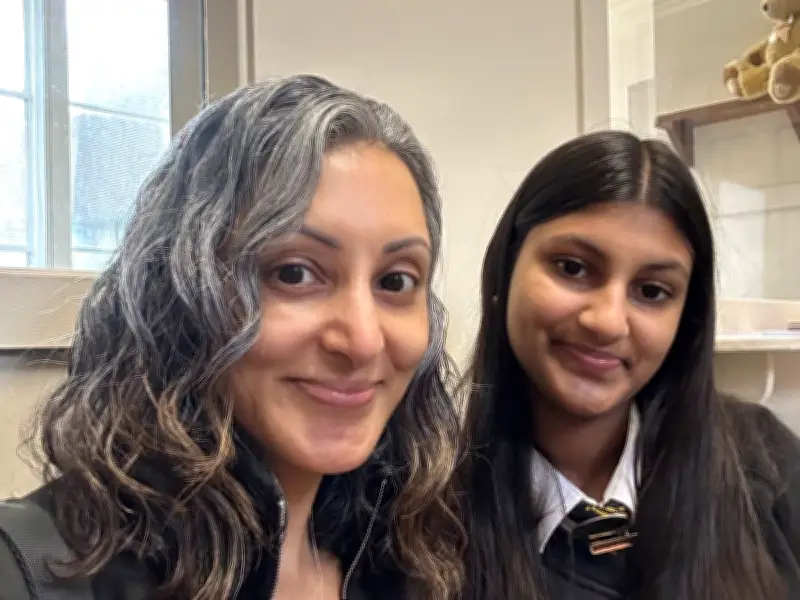
Simran Chavda, 15, from Huddersfield, suffered severe pelvic pain from age 13. Her mother, GP Sharan Uppal, said: "We were hitting roadblocks everywhere... When the test came back strongly positive, it gave me the empowerment to go back to our GP and push for a referral." Simran added: "Getting my diagnosis honestly felt like the best thing in the world."
Ebony Dowdell, 20, from Southampton, waited eight years for diagnosis despite periods lasting up to four months. She ultimately needed robotic surgery costing over £20,000. She said: "If I had a quicker diagnosis I don't think it would have got to that point... Having a diagnosis makes you feel human."
Expert Commentary
Dr Gail Busby, consultant gynaecologist at Manchester University NHS Foundation Trust, said: "These tests are a game-changer because they give us answers much earlier, without the need for invasive surgery, and that means we can start the right treatment sooner. An earlier diagnosis doesn't just change one person's life, it frees up appointments and surgical slots for everyone waiting for care."




