
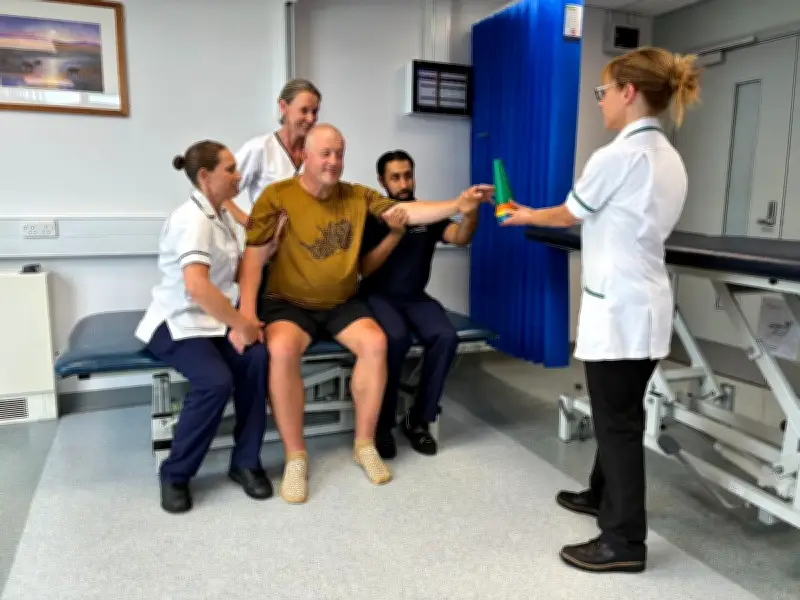
The Chartered Society of Physiotherapy (CSP) has warned that cuts to NHS services are leaving patients with unnecessary disability. A poll of 550 physiotherapists in England found that 47% believed patients were experiencing increased disability because of the loss of rehabilitation space.
Stroke survivor forced to learn walking in corridor
Former sports coach Dave Duxbury, 63, from Oxenhope, West Yorkshire, suffered a stroke last September. He was left with no movement in his right arm and leg and had to learn to walk again in a hospital corridor because the dedicated rehabilitation room was too small. He now pays privately for physiotherapy after his NHS treatment was discontinued.
Dave told the Mirror: “For me it was highly embarrassing because I had always been fit, as a former sports coach. The physios went above and beyond but the set up just wasn’t fit for purpose.” During his NHS sessions, he described the embarrassment of struggling and crying on public hospital staircases while people passed by. On one set of old stairs, Dave was so tall that when he stood upright as instructed, his head went through a suspended ceiling tile.
Recruitment freezes and reduced rehabilitation space
The CSP said NHS services were freezing recruitment and cutting back rehabilitation space. Its poll found that 79% of NHS physiotherapists are concerned staffing levels are insufficient to meet patient need, and one in five reported that waiting times had increased. Some 72% reported recruitment freezes in their service, up from 63% in 2025, and more than a third said that posts have been “deleted”. As a result, 32% said there was reduced time with patients, and 34% reported dedicated rehabilitation space had been lost.
Rob Yeldham, director at the CSP, said: “More services are freezing recruitment, deleting physiotherapy posts and cutting rehabilitation space at a time when demand continues to grow. The result is that patients are waiting longer for treatment, receiving less rehabilitation, recovering more slowly and some are living with avoidable disability as a result.”
Patient now pays privately for care
Dave Duxbury was discharged from Airedale Hospital after three months and then received physio sessions in the community for three months. He now pays privately for weekly physiotherapy and travels 45 minutes to receive it. He said: “After 12 weeks they’re kind of - ‘I’m really sorry but we have to move on to other patients.’ The NHS can’t do what they need to do. People shouldn’t have to pay to go private.”
Dave added: “I can’t speak highly enough of the physios - it’s just there’s not enough of them. I was lying in bed thinking ‘the end is nigh’ and very much thinking the glass was half full. They worked on the mental side with me. I’m still struggling walking and have limited movement in my right arm, but I’m back driving and I’m very positive.”
The CSP said the poll comes as the NHS seeks to move more care away from hospital and into the community, but it warned that the ambitions may not be achieved while physiotherapy posts and rehabilitation spaces are “eroded”.
A Department of Health and Social Care spokesperson said: “Community health services, including rehabilitation services, play a vital role in helping people recover, regain independence and avoid unnecessary hospital admissions. We recognise the importance of these services as a fundamental part of the health and care system and are taking action to strengthen community care, improve access and support our ambition to deliver more care closer to people's homes. Through our plans for the NHS, backed by record investment, we are building a health service that is fit for the future and ensuring patients can access the care and support they need, when they need it.”




