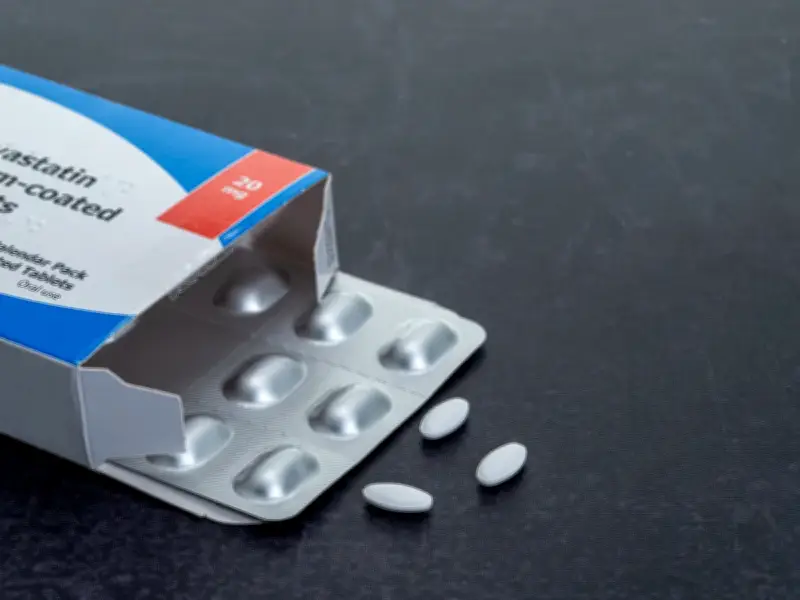
An NHS GP has explained the only circumstance under which he would stop taking statins, the cholesterol-lowering drugs used by more than 8 million people in the UK. Dr Mark Porter said there is no doubt that statins have major health benefits.
Statins such as Atorvastatin, Rosuvastatin, and Simvastatin are prescription medications used primarily to lower blood cholesterol levels, specifically low-density lipoprotein (LDL, or “bad” cholesterol), and to prevent serious cardiovascular events like heart attacks, strokes, and peripheral arterial disease.
Longer use means greater protection
Dr Porter said that probably not enough people are on the medication and that being on it for a longer time adds to the benefits. “Put simply, the longer you take a statin, the greater the cumulative protection you are likely to receive against cardiovascular events such as heart attack and stroke. And this protection extends into old age, according to recent studies, the latest of which (the Stream trial) was presented at the American Heart Association congress in Chicago this month.”
The Stream trial looked at just under 2,000 people with an average age of 78 for up to four years, all taking statins to prevent their first cardiovascular event. When the researchers compared outcomes, they found that 12.7 per cent of those who stopped their statin had a heart attack or stroke, or died, compared with 9.2 per cent of those who continued taking it.
One extra event per 40 people who stop
Dr Porter explained that the lead investigator of Stream, Professor Nicolas Rodondi from the University of Bern, estimated that over two years one additional major cardiovascular event or death would occur for every 40 people who discontinued their statin.
He said: “What’s more, the researchers did not find any significant gain from stopping the statins other than taking one fewer pill a day — both groups had similar quality of life and risk of problems such as falls and pain.”
Evidence also suggests that over-80s taking statins, even if they have had a heart attack or stroke, see benefits. Dr Porter said: “There is an increased risk of having another stroke or heart attack if they come off their statins.”
The one reason to stop
Dr Porter did say there was one circumstance when he would stop taking them: “I started a statin a few years ago and intend to stay on it for as long as I have a decent quality of life and a few years of life expectancy to enjoy it. If I were in a nursing home with dementia, terminally ill with cancer or facing some other life-limiting condition, it would be among the first drugs I’d stop. Until that time I will keep taking mine.”
He added: “That’s not so much because I want to live longer, but because I don’t want to be maimed late in life by heart disease or stroke. Lots of my patients have told me over the years that either seems a nice way to go when you are approaching the end of your life. And I agree, provided it occurs while you are asleep and it’s fatal, but that’s not what happens in most cases. Most people now survive such events and many are left with some form of long-term disability.”
Research shows starting as early as possible with statins is of benefit. Dr Porter said: “As a rough guide, a statin will reduce your five-year risk of having your first stroke or heart attack, or another if you have already had one, by about 30 per cent. However, this benefit is likely to increase the longer you take the drug, and become even more significant as your baseline risk increases inexorably with age: 30 per cent of not much isn’t much, but 30 per cent of a lot is a lot.”
He concluded: “So if you are going to start a statin, and you tolerate it without any significant side-effects, as most people do, to maximise any protection take it when first eligible and continue for as long as you think your quality of life is worth protecting. The drug may not help — you could still have a stroke or heart attack and be left with a disability if you do, or succumb to something other than cardiovascular disease — but for some it will. How lucky, or unlucky, do you feel?”