
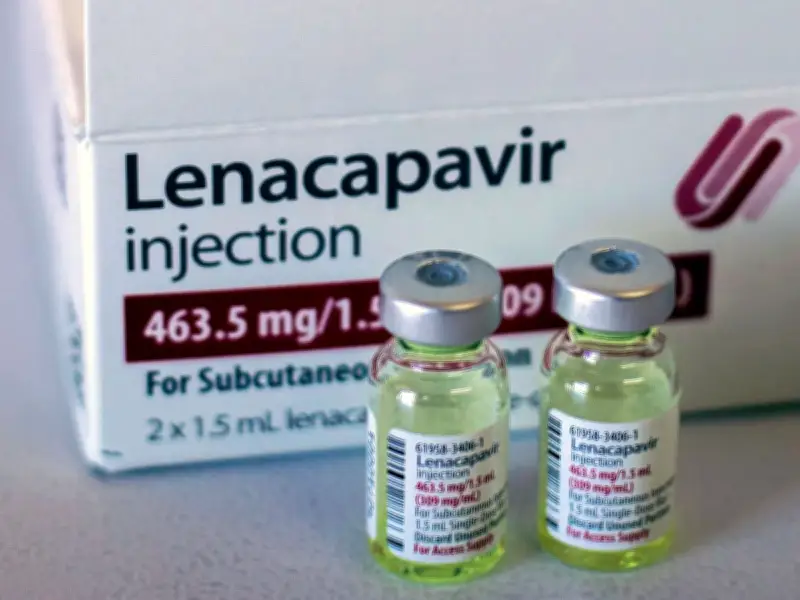
Around 92 eligible patients in England will be contacted in the coming weeks to receive Lenacapavir, a new drug for drug-resistant HIV, marking a landmark NHS move. The treatment is being offered for the first time on the NHS in England to people whose virus has mutated to become resistant to standard antiretroviral drugs.
New hope for patients with resistant HIV
Around 100,000 people in England have HIV, and while most have it controlled by medication and cannot pass on the virus, a minority have a mutated form that is resistant to standard treatments, allowing the disease to progress to life-threatening illness. These unwell patients will now be urgently contacted to begin treatment with Lenacapavir.
One woman already receiving the medicine, who asked to be referred to only as Jane, told the Mirror that it has saved her life. Born with HIV infection, Jane was prescribed multiple medications throughout childhood, developed a fear of swallowing large tablets, and eventually became resistant to first-line treatments. Before accessing Lenacapavir via a compassionate access programme, her immune system was dangerously low and she was regularly admitted to hospital with complications. Following treatment, she now has undetectable HIV levels and her immune system has recovered.
How Lenacapavir works
Lenacapavir targets the virus's protective outer shell, known as the capsid, preventing it from reproducing. This differs from existing NHS drugs, which target the enzymes HIV uses to make copies of itself. Patients will initially take a tablet for two days, then a follow-up tablet on day eight, followed by two injections before switching to an injection every six months.
Health Minister Baroness Merron said: "For people living with drug-resistant HIV this landmark treatment will totally transform their lives and, even better, it’s available on the NHS. We're determined to end new HIV transmissions by 2030 and this life-saving drug alongside our new HIV Action Plan, demonstrates this government’s commitment to give people living with HIV every opportunity to live long and healthy lives."
Impact and next steps
One in ten of all new HIV diagnoses in the UK involve a virus with some level of drug resistance to antiretroviral drugs. Around 100 people a year in England are likely to need Lenacapavir because they have become resistant to all medications. Around 300 people are expected to be offered it in the next three years.
John Stewart, NHS England director for specialised commissioning, said: "This trailblazing new drug, approved for the first time by the NHS, is offering a lifeline to those people for whom options are limited, as conventional HIV treatments do not work. And it gives them the opportunity to live a normal, healthy and long life." Daniel Fluskey, director at the National AIDS Trust, said: "This is a huge decision for people who need life-saving treatment and takes us a step closer to ensuring that no one dies from AIDS-related illnesses here in the UK. Over years too many people have lost loved ones, family, and friends because of a lack of access to medicine and the harm caused by stigma, prejudice, and discrimination. So when a new life-saving treatment is available it must get to the people who need it."
Targeting these patients could help NHS England meet its pledge to end all HIV transmissions in the community by 2030. Despite global strides since 2000, about 1.3 million people contracted HIV last year, and more than 600,000 died from AIDS-related illnesses. Lenacapavir received official backing last July from the World Health Organisation for HIV prevention.




