
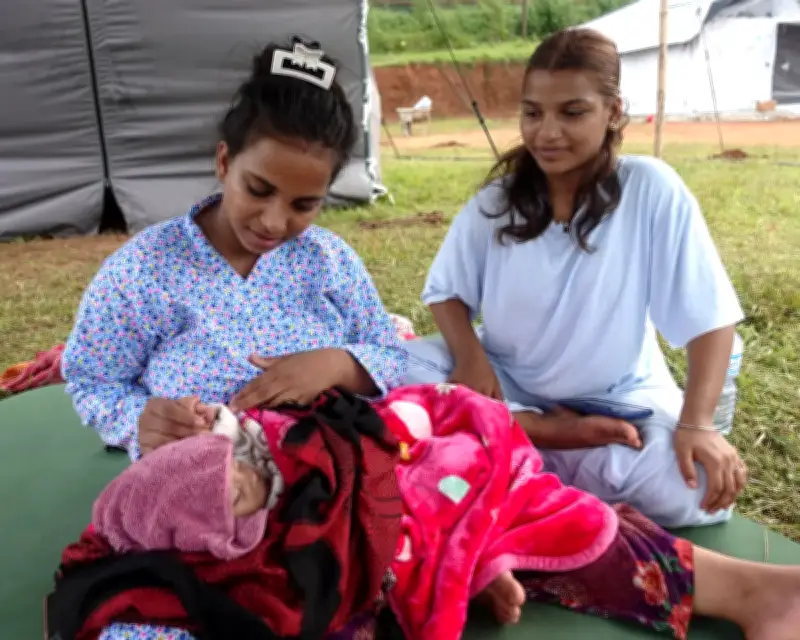
Young mothers in Nepal are recounting their harrowing experiences of last month's catastrophic flash floods, which devastated the Himalayan border region with Tibet. Among them is Pooja Pariyal, 21, who spent three days stranded on the roof of Trishuli hospital with her three-month-old daughter, Ridhika, while floodwaters churned her town into a sea of mud.
“Those three days were living hell for me, with no food, no working toilet and no one to help with the baby,” she says. “I had nothing to clean my baby’s soiled clothes. My milk supply had reduced because I was hungry and this poor little thing would cry her lungs out.”
Pariyal was one of about 50 patients—including five newborn babies—and medical staff trapped at the hospital. At night, the group rested in the wards, but by day they climbed to the roof, scanning the sky for helicopters. On the fourth day, an army helicopter evacuated them. Ridhika was later diagnosed with pneumonia.
Living in Temporary Shelters
Pariyal and her baby now live with about 125 other people, sharing 25 tents at the Lamibagaichha holding centre in Bidur, a couple of miles south of Trishuli. Her rented house was destroyed, so she is not entitled to government compensation. “Maybe I will go back to my parents’ house when they get rehoused,” she says.
Kalpana Nepali, 23, from Rasuwa district, is seven months pregnant and living in another temporary shelter in Nuwakot, where men, women, and children sleep together on the floor. She was making soup when her husband called from the hydropower tunnel to warn her to reach higher ground. “God knows how I managed to walk uphill in my nightdress. Maybe because I had a life to save before mine.”
Impact on Pregnant Women
Aditi Aryal, a communications analyst at the UN Population Fund in Nepal, says 5,030 pregnant women are among those affected, with an estimated 750 having complications and 550 due to give birth next month. Pregnant women in shelters are being assigned to the nearest functioning health centre, and those with high-risk pregnancies will be airlifted to Kathmandu a week before their due dates.
Renuka Nepali, 27, escaped with her 12-year-old son and eight-month-old daughter after hearing shouts of “Daudanu-daudanu [run-run]!” She recalls her heavily pregnant friend and neighbour who could not outrun the flood. “She was swallowed by the flood while trying to grab a branch or something to hold on to.”
Ongoing Humanitarian Crisis
More than 1,400 people have died, more than 5,700 are missing, and over 80,000 are still in need of humanitarian assistance, according to the latest Unicef assessment. Lila Pieters Yahia, the United Nations resident coordinator in Nepal, warns that pregnant and lactating women “might have a higher chance of experiencing trauma, shock and postpartum depression due to what they have experienced during pregnancy.”




