
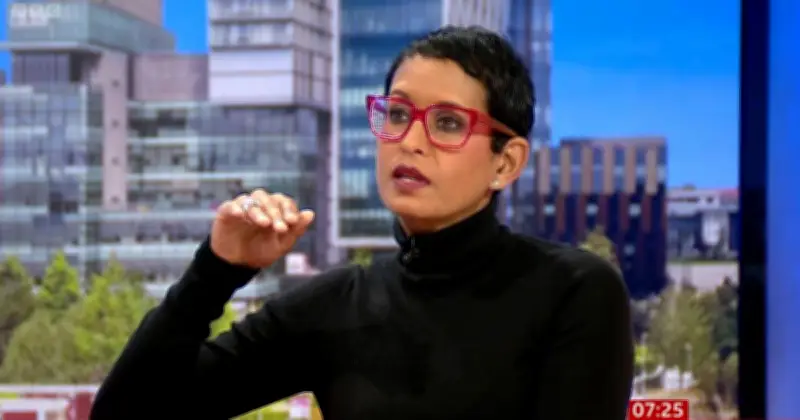
BBC Breakfast presenter Naga Munchetty has disclosed that she fainted shortly before going on live television, as she opened up about her long struggle with adenomyosis. The condition, often described as the 'evil twin sister of endometriosis', causes the uterine lining to grow into the muscle wall of the womb, leading to severe pain.
Fainting Incident Before Work
Speaking on the White Wine Question Time podcast with Kate Thornton, Munchetty said: 'I fainted just in the last month when I had a period again, just before work. And, you know, I was really ill.' She explained that she often downplays her pain to avoid constant complaints, but acknowledged the toll it takes on her mental health.
Munchetty, 50, has previously described becoming 'conditioned to accept' the pain, yet admitted it can 'come at any time', including during live broadcasts. She recalled episodes where she would 'come off set to throw up' while presenting BBC Breakfast, thinking she was 'passing out'.
Decades Without Diagnosis
Despite visiting doctors numerous times, Munchetty did not receive her adenomyosis diagnosis for 32 years. She told The Times: 'If you're curled up on the floor screaming, sweating, flooding, passing out, vomiting, that is debilitating. But you end up normalising that pain.' She added that she also 'probably' has endometriosis, a related condition where tissue similar to the womb lining grows elsewhere.
Symptoms of adenomyosis include painful periods with heavy bleeding, pelvic pain, bloating, and discomfort during sex. It is more commonly diagnosed in women over 30.
Impact on Mental Health and Self-Perception
Munchetty reflected on how the condition affects her self-esteem, saying: 'It makes you feel like you're doing less well than other women. I would look at you, Kate, you know. We're not dissimilar ages. I would look at you and go, 'She's doing brilliantly. She's coping. Look how far she's got. You know, I'm not doing well enough'. I'd look at my peers and think, 'Well, they're just cracking on with it. Why is it affecting you so much?''
The NHS advises seeking urgent medical help if pelvic or period pain is severe or worse than expected, and painkillers have not helped.




