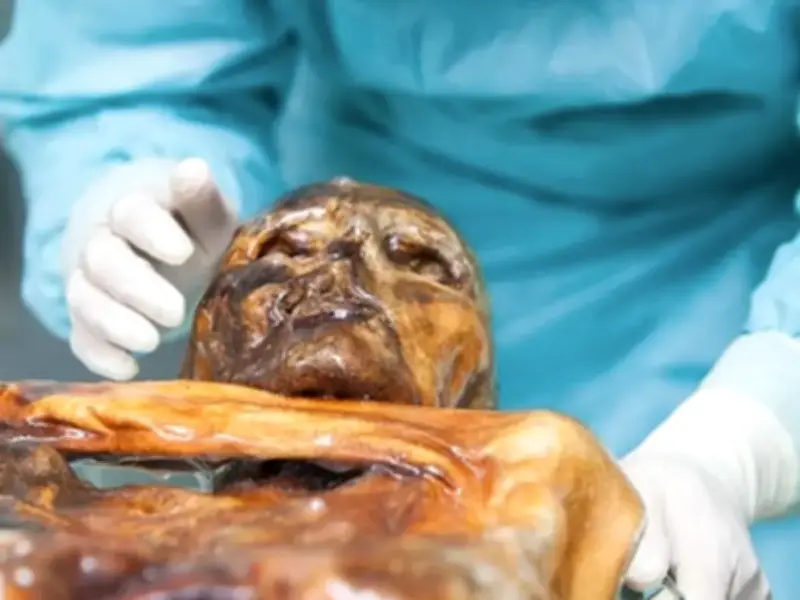
Experts fear that the online sale of mummified body parts could trigger a global outbreak of deadly fungal diseases. Toxic fungi can survive in mummified human tissue for centuries, and some ancient remains, such as those of Egyptian King Tutankhamun, have been found riddled with diseases or mould.
Health risks of handling ancient remains
Biomedical Egyptologist Sofia Aziz said: "I don't think mummified human remains should be sold at all. Every one of these was a person, not a souvenir."
Decaying body parts carry traces of highly toxic chemicals like arsenic and mercury, which have been found in 19th-century embalming fluids. Touching mummified remains has had deadly consequences in the past, most famously the "curse of Tutankhamun," which was feared to have struck down British archaeological patron Lord Carnarvon in 1923. He died weeks after entering the tomb with Howard Carter. His official cause of death remains sepsis and pneumonia triggered by an infected mosquito bite, but some experts speculated airborne fungal spores contributed.
Historical cases and modern trade
In 1973, 10 out of 12 scientists died after inhaling Aspergillus spores after opening the 15th-century tomb of King Casimir the Fourth of Poland. Kirsty Squires, a professor of human bioarchaeology at the University of Staffordshire, said these fatal lessons can't be forgotten.
She told the Sun: "Private collectors may be unaware that human remains can present health hazards and may be reluctant to report an illness or suspected exposure because of the potential legal, reputational or financial consequences of disclosing their acquisition."
Prof Squires conducted a study this year published in the International Journal of Cultural Property, analysing 128 online sale posts from 2015 to 2025 advertising remains from humans and animals. The trade has grown with social media, moving from forums and the dark web to Facebook and Instagram groups.
Transport and exposure risks
Mummified remains are often shipped in parcels or boxes like ordinary online items. Prof Squires added: "The real risk is modern mould and bacteria, which grow on remains after they have left their burial and been kept somewhere damp. These are the same kinds of mould found in damp homes. Dried tissue also crumbles easily, so the spores can be breathed in. The people most exposed are the ones who don't know what they're handling. Postal workers, couriers and customs officers have no idea what's in the box, and no protection."