
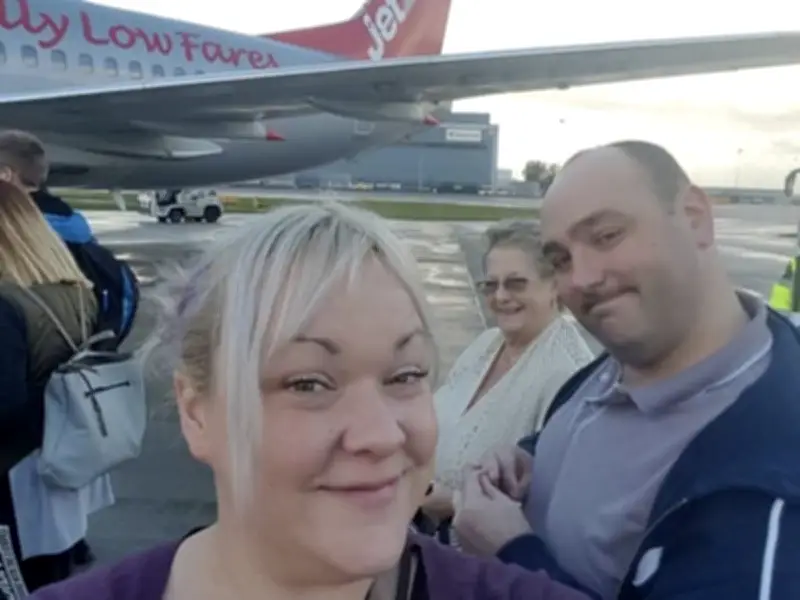
Nia Jones, a mother from Ruthin, Wales, blacked out on a flight to Barcelona and was later diagnosed with multiple endocrine neoplasia type four (MEN4), an ultra-rare condition estimated to affect just 100 people worldwide.
Sudden Collapse on Plane
In June 2015, Jones was on a flight to Barcelona for a city break, having just returned from Paris with her daughter the day before. She began uncontrollably shaking, lost consciousness, and woke up lying in the aisle with a thumping headache. The plane made an emergency landing in France, where she was rushed to hospital.
Jones recalled: "Everything went black. When I woke up, I was lying in the middle of the plane aisle with a thumping headache. Blurry faces came into view and a woman said gently that I was in Paris." She briefly turned blue during the incident.
Months of Mystery Health Struggles
Multiple brain scans found nothing unusual, and Jones returned home via Eurostar, hoping it was a one-off. However, she suffered further seizures, leading doctors to diagnose her with epilepsy. She said: "I had to give up my driving licence in case it happened again. It was so stressful."
Six months later, she blacked out again at home. Blood tests revealed abnormally high calcium levels, which can cause seizures.
Diagnosis of Ultra-Rare Condition
Jones was eventually diagnosed with multiple endocrine neoplasia type four, a condition with fewer than 100 confirmed cases globally. It involves mutations in the tumour suppressor gene, increasing the risk of tumours in endocrine organs like the thyroid, pancreas, and ovaries.
She said: "I was speechless. The consultant didn't know if it had caused my epilepsy, but my high calcium levels could cause seizures."
Successful Surgery and Recovery
Jones underwent surgery to remove three parathyroid glands in her neck to regulate calcium levels. Since then, she has not had a single seizure and regained her driving licence. She said: "I want to speak out about my condition, as it's so rare. People could be living with it without knowing. I'm proof that with the right treatment, there is chance to live a normal life."




