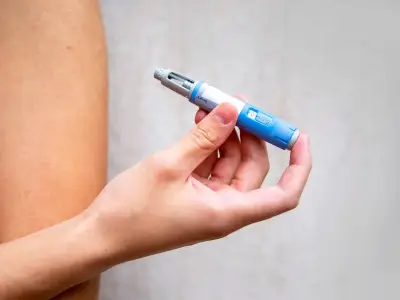
Women taking popular weight-loss injections are being urged to follow new advice that could have serious implications for anyone hoping to start a family. Health officials have reminded patients that some medicines used to manage weight and diabetes are not suitable at certain stages of pregnancy planning.
Northern Ireland's Department of Health published the reminder after the Medicines and Healthcare products Regulatory Agency (MHRA) issued guidance on contraception and GLP-1 medicines. The advice covers several treatments, including Mounjaro, Wegovy, Ozempic, Saxenda and Victoza, and says they should not be used during pregnancy, while trying to conceive or while breastfeeding.
Chief Pharmaceutical Officer's warning
Professor Cathy Harrison, Northern Ireland's Chief Pharmaceutical Officer, said: "With use of weight loss medication on the rise in Northern Ireland and across the UK, it is timely that MHRA have issued this reminder to women who use these medications.
"The reminder is clear; do not take GLP-1 medicines if you are pregnant, trying to get pregnant or breastfeeding. If you get pregnant while using them, you should speak to your healthcare professional and stop the medicine as soon as possible."
Professor Harrison added: "All patients, on any form of medication, should read the patient information leaflet, or speak with a healthcare professional as part of the prescribing process."
Mounjaro-specific advice
The MHRA says there is not enough safety information to establish whether taking these medicines during pregnancy could harm an unborn baby. Its guidance says women taking Mounjaro, whose active ingredient is tirzepatide, should stop it at least one month before trying to become pregnant.
There is also a specific warning for women who take the contraceptive pill alongside Mounjaro. The MHRA advises using an additional barrier method, such as condoms, for four weeks after starting treatment and for four weeks after every dose increase, or discussing a non-oral contraceptive option with a healthcare professional.
NHS guidance and next steps
NHS guidance also says tirzepatide should not be used during pregnancy because there is not enough information to confirm it is safe for the baby. Anyone who thinks they may be pregnant while taking it should contact their doctor or prescriber straight away rather than making decisions about their treatment without medical advice.
The MHRA says GLP-1 medicines should only be obtained with a prescription following a consultation with a healthcare professional. Patients are also urged to read the information leaflet supplied with their medicine and speak to their prescriber or pharmacist if they have questions about contraception, pregnancy or breastfeeding.