
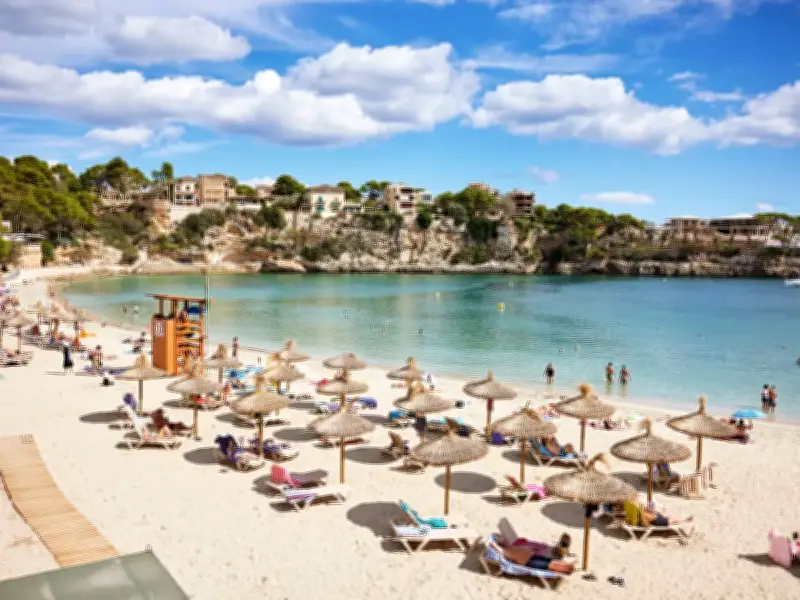
At least six people have been affected by a measles outbreak in Mallorca, prompting authorities to make face masks compulsory in all health centres. The first case was a young child on holiday who attended the paediatric emergency department at Son Espases University Hospital on July 19.
Community outbreak declared
The Balearic Regional Ministry of Health reported that the cases are linked, as all patients were treated at the same hospital, but the source of infection does not originate from the healthcare setting. It has therefore been classified as a community outbreak.
Five of the six affected individuals have not been vaccinated against measles, while there is no record of vaccination for the sixth. The nationality of the tourist has not been released.
Control measures activated
The Directorate-General for Public Health, in coordination with the Balearic health service (IBSalut), has activated a monitoring and control plan. This includes immediate prevention measures, contact tracing, and a recommendation for close contacts to monitor their health for 23 days following exposure, particularly those who are unvaccinated.
An internal recommendation has been issued for the use of FFP2 face masks in all healthcare settings, along with mandatory self-monitoring for symptoms and a review of vaccination status for all staff at health centres and hospitals in Mallorca.
Travel advice
Travel Health Pro, backed by the Foreign Office, warns that measles is a highly infectious viral illness with potentially serious complications. It spreads through airborne droplets from coughing, sneezing, or contact with mouth or nose secretions.
Initial symptoms include fever, runny nose, red eyes, and cough, followed by a rash that starts on the face and spreads. People are infectious from the day symptoms appear until four days after the rash starts. The incubation period is about ten days, but can range from seven to 18 days.
Complications can include ear infections, diarrhoea, pneumonia, and convulsions. Rarely, encephalitis or sub-acute sclerosing pan-encephalitis can occur. The risk of death is higher for children under one year and adults. Measles can be more severe in immunosuppressed individuals and during pregnancy, increasing risks of miscarriage, stillbirth, or preterm delivery.
Travellers with no history of measles or incomplete vaccination may be at risk when visiting countries with reported cases. All UK travellers are advised to ensure they are up to date with the MMR or MMRV vaccines.




