
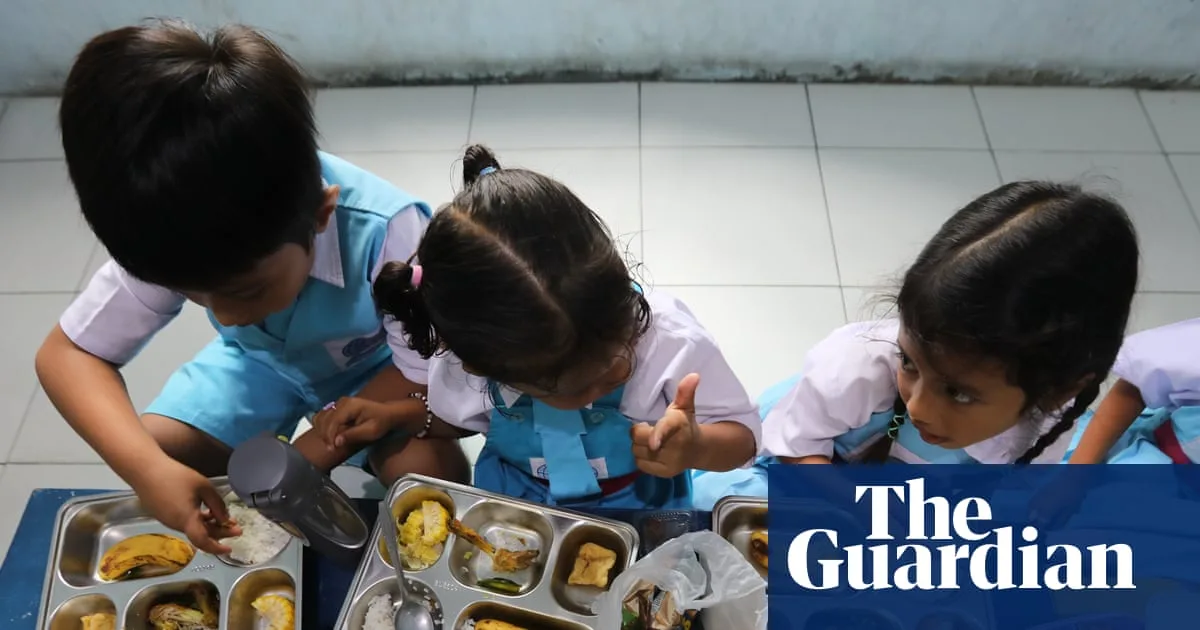
Thousands of children in Indonesia have fallen ill after consuming meals from the government's flagship free school meals programme, launched with fanfare by President Prabowo Subianto in January. The £3.2bn scheme aims to combat malnutrition and stunted growth, reaching 39 million students, toddlers, pregnant women and new mothers, with plans to expand to 83 million by year end.
However, consecutive food poisoning outbreaks have marred the programme. In October, 16-year-old Nabila and 500 other students in West Java became violently ill after eating a school meal. Those affected were treated at emergency shelters and hospitals. Aep Kunaepi, who worked at a shelter, said: ‘I’ve seen nothing like it, even during Covid-19.’ The Indonesian Education Monitoring Network has documented over 15,000 poisoning cases nationwide, with outbreaks in West Java, Yogyakarta, Central Java and Sumatra.
Complaints on social media have included maggots in tempeh, shards of glass in rice and food trays washed in dirty water. Last month, more than 1,300 children fell ill in Cipongkor, West Java. Jakarta-based nutritionist Dr Tan Shot Yen criticised the government's focus on scale: ‘This programme’s implementation has been careless. Bacterial contamination like salmonella or E coli could become endemic if unchecked.’
President Prabowo has downplayed the issue, stating that of over a billion meals served, poisoning cases represent just 0.0017% – ‘quite a proud achievement’. He also claimed the policy improved school attendance. Facing mounting anger, he drafted a decree on new food safety regulations last week. The national nutrition agency (BGN) pledged to reach ‘zero incidents’ through stricter hygiene and smaller kitchen operations, planning to expand to 32,000 kitchens by next year.
BGN spokeswoman Dian Fatwa said investigations found improper storage, poor sanitation and late delivery often caused incidents. The agency suspended 132 kitchens, with 27 retrained and cleared. Fatwa acknowledged imperfections but said they are ‘improving constantly’. The agency's official count of 6,517 cases by end-September is lower than NGO figures.
Experts argue the new safeguards came too late. Diah Saminarsih, founder of the Centre for Indonesia's Strategic Development Initiatives, accused the ‘gigantic’ programme of being dangerously rushed, questioning accountability. Political researcher Made Supriatma said the programme was meant as a ‘quick win’ for Prabowo's first 100 days but backfired, turning into a ‘huge problem’ with public anger. Concerns also emerged about police and military running some kitchens, which Supriatma called a ‘reversion to authoritarianism’.




