
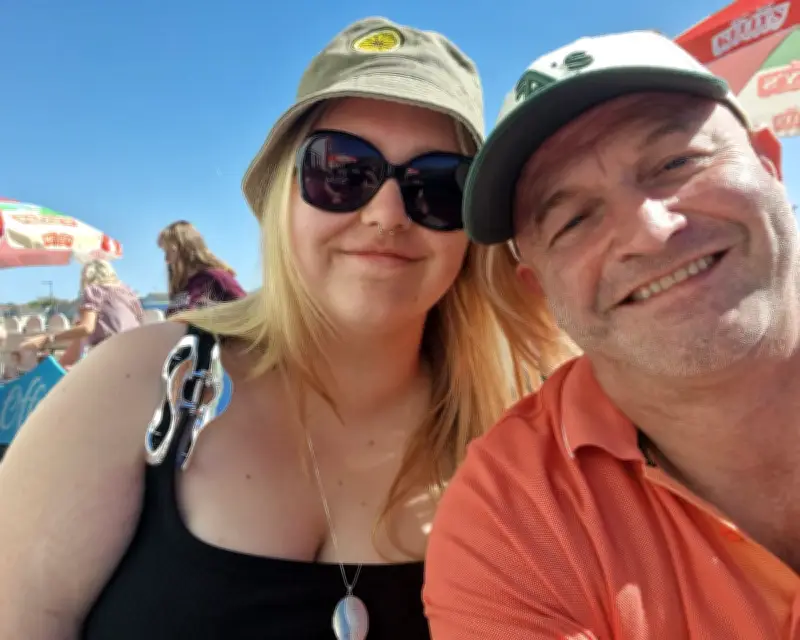
Darren Rosheski has spoken out about the death of his partner, Helen Dutton, who died in August 2021 after a GP misdiagnosed her rectal cancer as irritable bowel syndrome. He reached an out-of-court settlement with the NHS for an undisclosed sum in January, but said: “I would rather be poor and have Helen still around. A family has been destroyed by a doctor’s negligence. I don’t care about the compensation. I just wish she was here now.”
GP misjudged symptoms
Dutton, a 35-year-old finance manager and mother of one, first saw a GP in late 2016 with symptoms including back pain, passing blood and altered bowel habits. The GP judged these as signs of IBS and haemorrhoids, recommending no further action. Two years later, she saw a different GP and was referred to Tameside hospital in Greater Manchester. In January 2019, a physical examination, CT and MRI scans, and a colonoscopy confirmed bowel cancer that had already begun to spread.
Three weeks later, doctors at Manchester's Christie cancer hospital told Dutton she had advanced stage 4 rectal cancer. She underwent chemotherapy, radiotherapy and surgery, and was given the all-clear in June 2020. However, the cancer returned two months later, and she died aged 40 in August 2021.
NHS payout figures revealed
New figures obtained by Bolt Burdon Kemp solicitors via a freedom of information request to NHS Resolution show that NHS England has paid almost £190m over the last five years to settle 870 claims involving misdiagnosis or delayed diagnosis of cancer. Total costs, including legal fees, rose from £32m in 2020-21 to £41.3m in 2024-25. The average cost of settling actions jumped from £199,896 in 2020-21 to £241,705 in 2024-25 – a 20% rise.
Olivia Boschat, a solicitor at Bolt Burdon Kemp, said: “These figures are really alarming because they reveal that mistakes by NHS clinicians, in either misdiagnosing cancer or taking too long to diagnose it, are having devastating consequences for people’s health and lives.” She added: “Behind these figures lie heartbreak, tragedy and, in some cases, lives cut short – lives that could have been saved but, because of errors and negligence, were ended prematurely.”
Impact on families
Rosheski and his daughter have suffered serious mental health problems since Dutton's death. He has diagnosed PTSD and complex grief, and has only worked for a month since her death. He said: “I lost her because nobody listened to her. It came down to the GP not listening to her. They should have investigated her when she first saw the GP. Passing blood is a serious thing, isn’t it?”
Guy Forster, president of the Association of Personal Injury Lawyers, said: “Some surviving victims need additional care, therapies and specialist equipment if the delay in diagnosis means they now have mobility or continence issues, for example. Some will be out of work for a long time. For those who have lost loved ones as a result of delays, lives will be turned upside down.”
NHS response
A Department of Health and Social Care spokesperson said: “Early and accurate diagnosis is key to effective cancer treatment. This hasn’t happened in enough cases, and this government is determined to address this. But we are making progress. In the last year, 82,000 more people received a timely diagnosis for suspected cancer or were given the all-clear compared to the year before. Through Jess’s rule we are supporting GPs in taking a ‘fresh eyes’ approach to cancer detection, and our national cancer plan will give family doctors digital tools to spot and flag concerning symptoms or test results earlier.”




