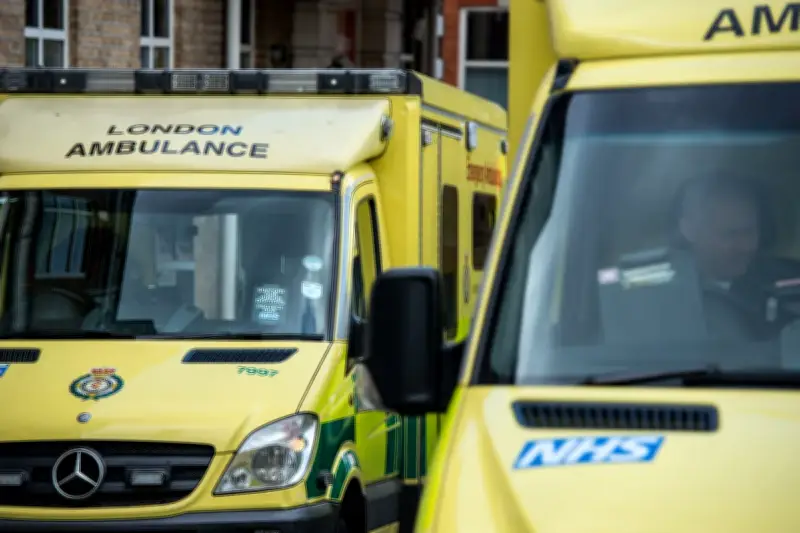
The London Ambulance Service (LAS) has declared a critical incident after handling more than 7,000 emergency calls for three consecutive days, a volume that exceeds typical New Year's Eve demand.
Control room staff fielded 7,326 calls on Monday, 7,366 on Tuesday and 7,369 on Wednesday. On a standard busy day, the service expects around 5,500 calls, meaning crews are currently dealing with roughly 500 more calls a day than they were just last week.
Surge driven by severe winter illnesses
The spike in demand has been driven largely by a sharp rise in severe winter illnesses. Life-threatening emergencies involving breathing difficulties have jumped by almost 20 per cent so far this November compared with the same period last year. Overall, Category 1 calls—the most urgent "life or death" emergencies, such as cardiac arrests—are up 10 per cent year-on-year.
Declaring a critical incident signals that severe pressure is affecting vital services and allows the LAS to take extra steps to manage the crisis, including drafting in additional staff and speeding up hospital handovers.
Extra measures to manage pressure
Chief Operating Officer Craig Harman warned that colder temperatures and an early wave of respiratory and viral infections were putting immense strain on the capital's emergency response, with "no sign of easing in November".
“The number of calls has remained very high for several days, so we have declared a critical incident to take extra steps to reach patients who need us most urgently,” Mr Harman said. “Colder weather can have a serious impact on people’s health, particularly older people, young children and those with existing health conditions.”
To ease the pressure on frontline crews, the LAS is drafting more clinicians into control rooms to assess and treat patients over the phone when an ambulance is not strictly necessary. The service is also putting extra crews on the road as part of its winter plan and working closely with London hospitals to prevent ambulances from queuing outside A&E departments.
Winter plan measures and public advice
Measures in the London Ambulance Service winter plan include putting additional ambulances on the road at times of peak demand, increasing the number of clinicians caring for patients over the phone, using trusted AI tools to support the recording of patient notes, and working closely with hospitals to support faster patient handovers at A&E departments.
Mr Harman urged Londoners to look out for vulnerable neighbours and relatives during the cold snap, adding: "Help us by only calling 999 if it is a life-threatening emergency."
Declaring a critical incident allows the service to take extra steps like stopping all non-essential activity and putting managers back into patient-facing roles. People should still call 999 in a life-threatening emergency, but Londoners can help protect the emergency response for the sickest patients by choosing the right service for their needs.
People are being asked to only call 999 for a serious or life-threatening emergency. For less urgent health concerns, they should contact NHS 111, a GP or a local pharmacy. Those eligible for a flu vaccination are encouraged to take up the offer as soon as possible, as it is one of the best ways to protect vulnerable people this winter.
London Ambulance Service has been working with partners across the capital for months to prepare for winter and increased pressure on urgent and emergency care.